


 SPARK Website
A Traveler's Guide to Navigating Airports Like a Pro
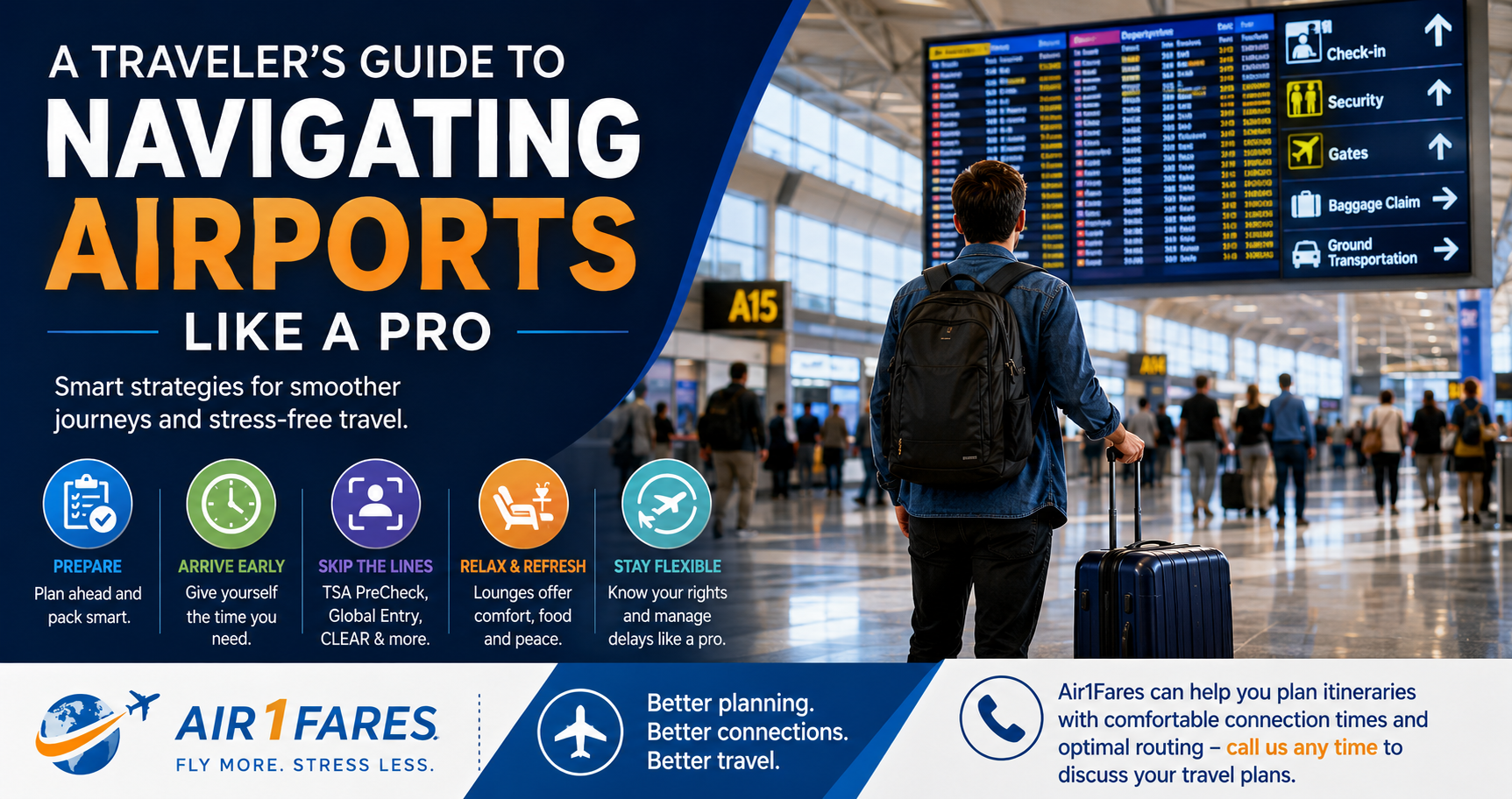
Airports are among the most complex environments in modern life — simultaneously massive logistics operations, small cities, and transit hubs connecting millions of people to hundreds of destinations. For infrequent travelers, airports can feel overwhelming. For frequent flyers, navigating them efficiently is an art form developed through experience. This guide bridges the gap, offering strategies to move through airports with confidence and minimal stress.
Preparation Before You Leave Home
The airport experience begins long before you arrive at the terminal. The single most impactful thing you can do is prepare thoroughly at home. Start with documentation: ensure your passport is valid with at least six months beyond your travel dates if you're traveling internationally (many countries require this). Download your boarding pass to your phone and save it in your wallet app or as a screenshot — this ensures access even if you lose cellular service.
Research your specific airport in advance. Major hubs like Atlanta's Hartsfield-Jackson, Chicago O'Hare, and Dubai International are enormous, with multiple terminals connected by trains, buses, or long walks. Knowing which terminal your airline operates from, where baggage claim is located, and how to access ground transportation saves significant time and confusion.
Pack your carry-on thoughtfully with security in mind. Keep your electronics, liquids bag (3-1-1 rule: containers of 3.4 ounces or less, in 1 quart-size bag, 1 bag per person), and shoes accessible so you can remove them quickly at the security checkpoint. Nothing creates friction at security like digging through a packed bag for a laptop buried at the bottom.
How Early to Arrive
The standard advice of "two hours for domestic, three hours for international" is a reasonable baseline, but context matters enormously. If you're traveling from a small regional airport on a Tuesday morning, an hour and a half is probably sufficient. If you're flying internationally from Los Angeles on the Friday before Thanksgiving, four hours might not be excessive.
Consider: how long does it take to get to the airport? Have you checked in online? Do you have checked baggage? Are you a TSA PreCheck or Global Entry member? Members of trusted traveler programs move through dedicated security lanes with dramatically reduced wait times — no removing shoes, laptops, or liquids — and can comfortably arrive 75 minutes before domestic departures.
TSA PreCheck, Global Entry, and Other Expedited Programs
TSA PreCheck allows U.S. citizens and permanent residents to pass through dedicated security lanes at most major airports. The application costs $85 for a five-year membership and requires an online application and brief in-person appointment at an enrollment center. The time savings — particularly during peak travel periods — is remarkable. Dedicated PreCheck lanes at major airports routinely have wait times under five minutes while standard lanes can stretch to an hour.
Global Entry, at $100 for five years, includes TSA PreCheck and adds expedited customs processing upon returning from international trips. Rather than waiting in potentially long customs lines, Global Entry members use automated kiosks that process in about two minutes. For any traveler who takes more than one or two international trips per year, Global Entry pays for itself in time and stress reduction.
CLEAR, a separate private service costing $189 per year, uses biometric verification to skip to the front of the security line. Combined with TSA PreCheck, CLEAR members often bypass standard lines entirely. Many credit cards now include CLEAR membership as a benefit.
Navigating Large Hub Airports
The world's busiest hub airports require specific strategies. At major connecting hubs, the key challenge is often making tight connections. When booking connecting flights, give yourself adequate time — airlines show the minimum connection time required for their own operations, but this doesn't account for gates being far apart, delays on the inbound flight, or your own pace.
If you have a tight connection, ask flight attendants before landing which gate your connecting flight departs from and the fastest route to reach it. Most will know, and even a 30-second conversation can save you ten minutes of confused searching. If you're in economy, wait for the plane to be parked and then politely ask passengers ahead of you if you may pass — most will accommodate someone who explains they're catching a tight connection.
Many large airports have apps with detailed terminal maps, real-time security wait times, and even indoor navigation. Download your airport's official app before traveling.
Airport Lounges: A Sanctuary Worth Knowing About
Airport lounges offer complimentary food, beverages, comfortable seating, reliable wifi, and a calm atmosphere removed from terminal crowds. Access was once limited to first and business class travelers, but the landscape has changed dramatically. Several premium credit cards now include lounge access as a benefit — the Chase Sapphire Reserve, American Express Platinum, and Capital One Venture X all include access to extensive lounge networks.
Day passes for non-members typically cost $30–$50 and provide excellent value if you have a long layover. For a three-hour connection, spending $35 on lounge access for unlimited food, quality coffee, and comfortable seating compares favorably to $15 airport sandwiches and uncomfortable gate chairs.
Managing Delays and Cancellations
Delays happen. The traveler's job is to remain calm and respond strategically. If your flight is significantly delayed or cancelled, your first move should be to simultaneously stand in the rebooking line at the gate and call the airline's reservations line. In-person agents often have limited authority; phone agents can access the same systems and sometimes have more flexibility.
Know your rights. DOT regulations in the United States require airlines to provide certain remedies for cancellations, though these are more limited than European passenger rights rules. Compensation is generally required only for delays caused by the airline (mechanical issues, crew problems) rather than weather events or air traffic control issues.
Travel insurance that includes trip delay coverage reimburses reasonable expenses — hotels, meals, transportation — when delays exceed a specified threshold, typically six to twelve hours.
Making Layovers Enjoyable
A long layover doesn't have to mean boredom. Major international airports have evolved into significant destinations in their own right. Singapore's Changi Airport features an indoor waterfall, a butterfly garden, movie theaters, swimming pools, and dozens of restaurants. Dubai International has a sprawling duty-free complex, fine dining, and an entire hotel within the terminal. Amsterdam's Schiphol houses a legitimate art museum.
For layovers of eight hours or more in international airports, consider exiting into the city. Many countries offer transit visas or visa-free access for short layovers, and seeing even a small slice of an unfamiliar city is more rewarding than spending eight hours in an airport terminal. Just confirm entry requirements for your passport and give yourself ample time to return through international security.
With preparation, the right memberships, and the right mindset, airports transform from sources of stress into mere transitions between your real life and your adventures. Air1Fares can help you plan itineraries with comfortable connection times and optimal routing — call us any time to discuss your travel plans.

 عربي
عربي