


 SPARK Website
Connecting the Future: Key Drivers of Data Center Structured Cabling Market Growth
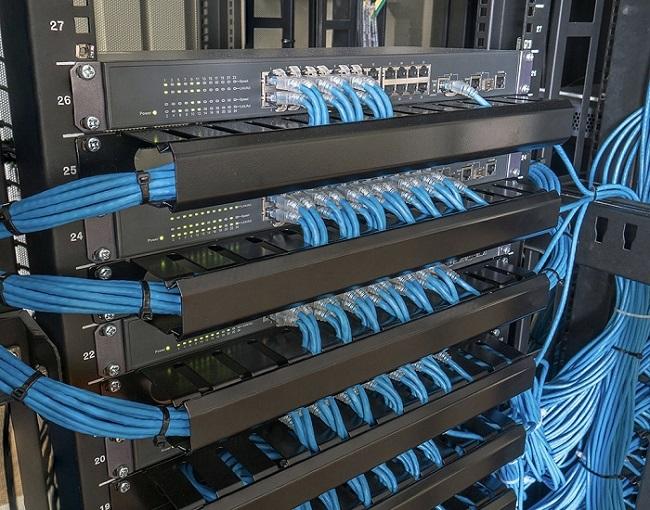
The global market for data center structured cabling is experiencing robust and sustained expansion, propelled by the relentless growth of the digital economy. A primary driver behind the impressive Data Center Structured Cabling Market Growth is the ongoing construction of new hyperscale data centers. The explosive growth of cloud computing, social media, video streaming, and e-commerce has led to an insatiable demand for data processing and storage. To meet this demand, cloud giants like Amazon, Microsoft, Google, and Meta are investing billions of dollars annually in building massive new data center facilities around the world. Each of these new builds represents a massive greenfield opportunity for the structured cabling market, as they require hundreds of thousands of kilometers of high-performance copper and fiber optic cables, along with all the associated connectors, patch panels, and racks, to connect tens of thousands of servers. This hyperscale construction boom is the single largest volume driver for the market, creating a consistent and high-volume demand for cabling products.
Another powerful driver of market growth is the continuous cycle of technology upgrades and network speed migrations within existing data centers. The IT industry is in a perpetual race for faster performance, and this directly translates into a need for more capable physical infrastructure. As network speeds inside the data center migrate from the once-standard 10 Gbps to 40 Gbps, 100 Gbps, and now towards 400 Gbps and 800 Gbps, the existing cabling infrastructure often becomes a bottleneck. An older fiber plant designed for 10 Gbps may not be able to support the higher bandwidth and lower signal loss tolerances required for 100 Gbps or 400 Gbps networking. This forces data center operators to undertake "rip and replace" or significant upgrade projects, creating a strong and continuous "brownfield" or replacement market. This upgrade cycle is not just driven by a desire for speed but by the requirements of new applications like artificial intelligence (AI) and machine learning (ML), which demand extremely high-bandwidth, low-latency networks to function effectively, thus accelerating the need for next-generation cabling.
The rise of edge computing is opening up an entirely new and rapidly growing segment for the structured cabling market. In contrast to the massive, centralized hyperscale model, edge computing involves deploying smaller, distributed data centers closer to the sources of data generation and consumption. These edge sites are essential for enabling low-latency applications such as the Internet of Things (IoT), autonomous vehicles, real-time analytics, and augmented reality. While each individual edge data center is small, the sheer number of them is projected to be enormous, creating a massive new addressable market. These sites require the same principles of high-performance, reliable structured cabling as their larger counterparts, but often with products that are more compact, ruggedized, and designed for deployment in non-traditional environments. The proliferation of thousands of these micro data centers at the base of cell towers, in factory floors, and in retail locations represents a significant, long-term growth driver that complements the centralized hyperscale build-out.
Finally, the increasing adoption of higher-density data center architectures is itself a driver for more advanced and higher-value cabling solutions. As data center operators try to fit more computing power into a smaller physical footprint to save on real estate and power costs, they are moving towards higher-density server racks. This trend, combined with the move to higher network speeds, necessitates a shift towards more sophisticated cabling solutions. It is accelerating the transition from bulky copper cables to more space-efficient fiber optics. It is also driving the adoption of pre-terminated, modular cabling systems. These factory-built and tested systems can be deployed much faster and with greater reliability than traditional field-terminated cabling, which is a critical advantage in today's fast-paced data center construction projects. The demand for these higher-value, higher-density solutions not only increases the total market value but also shifts the competitive landscape towards vendors who can provide these more advanced and integrated systems.
Explore Our Latest Trending Reports:
Optical Network Hardware Market

 عربي
عربي