


 SPARK Website
How to Build a Future-Ready Android App: A Strategic Guide for Business Leaders
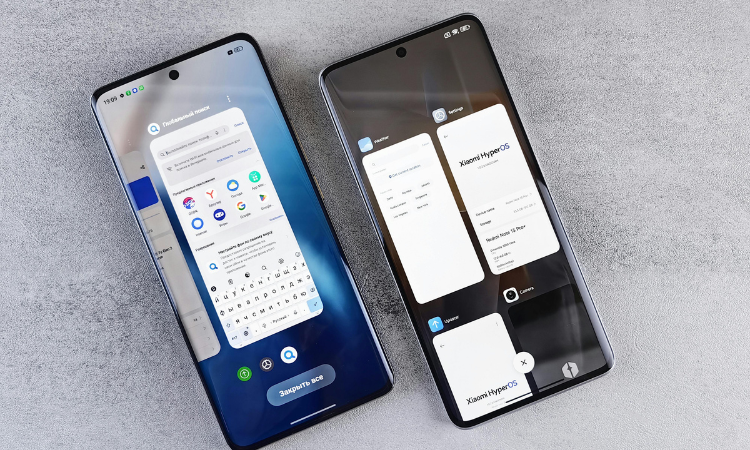
The mobile-first era isn't coming — it's already here. With over 3.9 billion active Android devices worldwide, businesses that fail to invest in a robust mobile strategy are quietly handing market share to competitors who do. Yet, the real challenge isn't just building an app. It's building the right app, with the right architecture, the right team, and the right long-term vision.
For founders, CTOs, and enterprise decision-makers, this guide cuts through the noise and focuses on what actually matters when commissioning an Android application in 2026.
Why Android Still Dominates Enterprise Mobile Strategy
Android's global market share consistently hovers above 70%, making it the default choice for businesses targeting diverse geographies — particularly across Asia, Africa, Latin America, and Eastern Europe. But market share alone doesn't tell the full story.
Android's open ecosystem allows for deeper device integrations, broader customization, and faster go-to-market timelines compared to more restrictive platforms. For industries like logistics, healthcare, fintech, and field operations, this flexibility is not a luxury — it's a competitive necessity.
Enterprises also benefit from Android's compatibility with MDM (Mobile Device Management) solutions, which makes fleet-wide deployment, security enforcement, and remote management significantly more efficient. If your business runs distributed operations, Android isn't just a preference; it's a practical decision.
Common Mistakes Businesses Make Before Development Begins
Most mobile projects don't fail during development — they fail before a single line of code is written. Strategic misalignment at the planning stage is the root cause of costly overruns, feature bloat, and eventual product abandonment.
Skipping the Discovery Phase
The discovery phase is where business goals get translated into technical requirements. Skipping it — or rushing through it — leads to scope creep, misunderstood user journeys, and misaligned feature priorities. A well-executed discovery phase should result in detailed user personas, user flow diagrams, and a prioritized product backlog.
Underestimating Backend Complexity
Many stakeholders focus heavily on the user interface while underestimating backend infrastructure. An app that looks polished but crashes under load, exposes sensitive data, or struggles with third-party API integrations will erode user trust faster than no app at all. Scalable cloud architecture, secure API design, and proper database structuring deserve as much attention as UI/UX.
Choosing Development Partners Based on Price Alone
Cost-efficiency matters, but selecting a development partner purely on the lowest bid often results in technical debt that costs three to five times more to fix than it would have to build correctly from the start. Evaluating a team's portfolio, code quality, communication practices, and post-launch support model is far more predictive of success than their hourly rate.
What a High-Quality Android App Development Process Looks Like
Understanding the development lifecycle helps business leaders ask better questions, set realistic expectations, and make faster decisions when bottlenecks emerge.
Phase One: Strategy and Architecture
Before any design mockup or code sprint begins, the technical architecture must be defined. This includes decisions around native versus cross-platform development, choice of programming language (Kotlin is now the industry standard for native Android), database design, and third-party service integrations.
Architecture decisions made here will determine how well your app scales, how easily new features can be added, and how secure the application will be over its lifetime.
Phase Two: UX Design and Prototyping
User experience design is not about aesthetics alone — it's about reducing cognitive load and guiding users toward key actions with minimal friction. Wireframes and interactive prototypes should be tested with real users before development begins. This is where working with a team experienced in Material Design 3 guidelines pays dividends, as it ensures your app feels native, intuitive, and consistent across device sizes.
Phase Three: Agile Development and QA
Modern Android development follows agile methodologies — typically two-week sprint cycles where working features are delivered incrementally. This approach allows stakeholders to course-correct early rather than discovering misaligned features at launch.
Quality assurance should run parallel to development, not after it. Automated testing frameworks, device compatibility testing across Android versions, and performance benchmarking on real hardware should all be standard practice. If a development team doesn't have a dedicated QA process, that's a red flag.
Phase Four: Launch, Monitoring, and Iteration
A successful launch is just the beginning. Post-launch monitoring using tools like Firebase Analytics, Crashlytics, and custom dashboards helps product teams identify friction points, track user retention, and prioritize the next development cycle.
Businesses that treat their app as a living product — continuously iterating based on usage data and user feedback — consistently outperform those that treat mobile as a one-time project.
Evaluating the Right Development Partner
Choosing the right team to build your Android application is one of the most consequential decisions in your mobile strategy. The ecosystem is crowded with vendors, freelancers, and agencies that vary enormously in capability and reliability.
When evaluating potential partners, look for demonstrable experience in your industry vertical. A team that has built applications for e-commerce behaves very differently from one specializing in enterprise SaaS or healthcare platforms. Domain expertise accelerates delivery and reduces the risk of fundamental design errors.
Transparency in communication is another critical factor. Can the team articulate technical trade-offs in business language? Do they proactively surface risks or wait to be asked? The best development partnerships function less like vendor-client relationships and more like strategic collaborations.
Working with a recognized top Android app development company also means access to specialized talent across Kotlin development, API integration, cloud infrastructure, and security compliance — all under one roof, rather than cobbled together from multiple freelancers.
Look for teams that maintain clean, well-documented codebases. Request code samples or ask about their version control practices, CI/CD pipelines, and deployment workflows. These aren't just technical details — they're indicators of professional maturity and long-term reliability.
Security and Compliance: Non-Negotiable in 2026
Data privacy regulations have grown more stringent across every major market. GDPR in Europe, PDPB in India, CCPA in California, and sector-specific regulations in healthcare and finance all impose real obligations on businesses that collect and process user data through mobile applications.
Security must be embedded into the development process from day one — not treated as a checkbox at the end. This includes encrypted data storage, secure communication protocols (TLS 1.3+), certificate pinning, role-based access controls, and regular penetration testing.
Businesses operating in regulated industries should also ensure their development partner understands compliance frameworks relevant to their sector. A data breach or regulatory violation doesn't just damage reputation — it carries significant financial and legal consequences.
Measuring ROI on Your Android Investment
Business leaders rightfully ask: how do we measure the return on a mobile application investment? The answer depends on your business model, but a few universal metrics apply.
User retention rate, session frequency, feature adoption rate, and conversion rate (for transactional apps) are the primary indicators of product-market fit. For internal enterprise tools, metrics like task completion time, error reduction rate, and employee adoption rates matter more.
Establishing baseline KPIs before development begins — and tracking them consistently after launch — enables teams to make evidence-based decisions about where to invest in future development cycles.
Building for Longevity, Not Just Launch
The most successful mobile products are built with longevity in mind. That means modular architecture that supports new features without requiring a full rebuild, a design system that can scale with your brand, and a backend infrastructure that grows with your user base.
It also means choosing a development partner who will still be there two years after launch — for updates, security patches, OS compatibility changes, and feature expansions. Many businesses overlook this continuity when evaluating vendors, only to find themselves rebuilding from scratch when their original team disappears.
Mobile is no longer a supplementary channel. For most businesses, it's the primary interface through which customers engage, employees operate, and data flows. Treating it with the same strategic seriousness as your core product or sales infrastructure isn't optional — it's the baseline for staying competitive in a market that won't wait.

 عربي
عربي