


 SPARK Website
Live Aquarium Plants in Australia: The Complete Guide to Building a Thriving Planted Tank
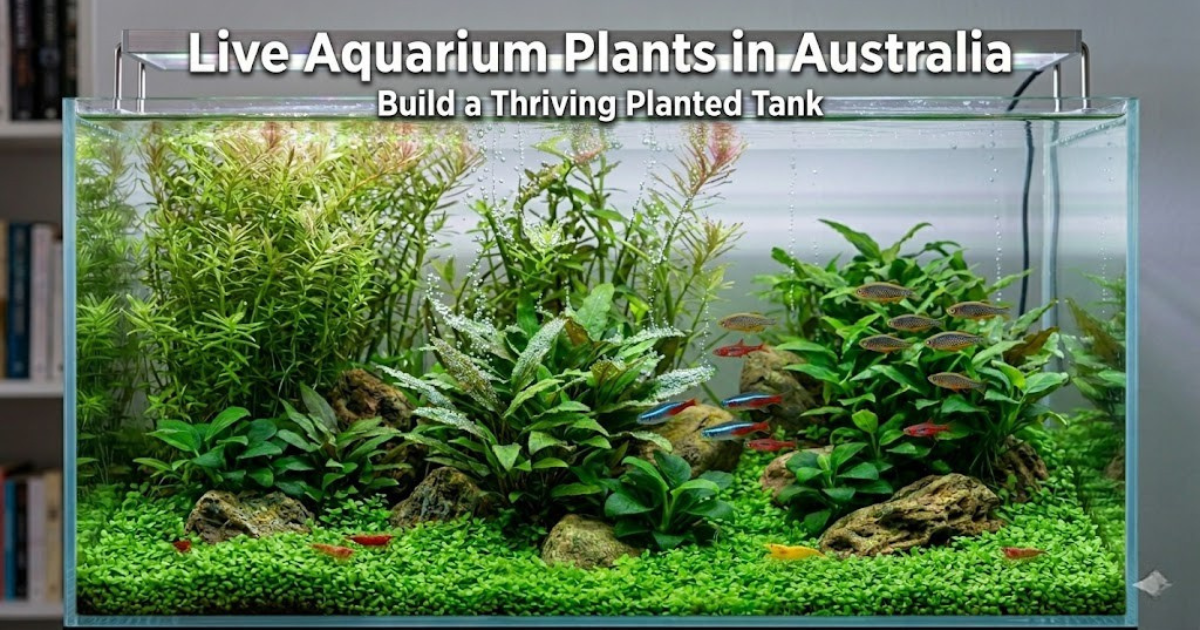
There's a moment every aquarist remembers — the first time they saw a truly planted tank. Not the plastic greenery stuffed into the corner of a cheap fish tank at a shopping centre, but a genuine aquascape: lush, layered, and alive. Carpets of dwarf baby tears. Feathery stems of hornwort catching the light. A piece of driftwood draped in Java moss, with a betta gliding serenely through it all.
If that sounds like something you'd want in your home, you're not alone. Across Australia, more and more hobbyists are making the switch from artificial décor to live aquarium plants — and once you understand the benefits, it's easy to see why.
Live plants do far more than look beautiful. They absorb nitrates and ammonia, acting as a natural filtration system that keeps your water chemistry stable between tank maintenance sessions. They produce oxygen during daylight hours, directly benefiting the fish that share the space. They also offer shelter and breeding sites for a wide range of species, reducing stress and encouraging more natural behaviour. In short, a well-planted aquarium is a healthier aquarium.
This guide is for anyone considering live aquarium plants in Australia — whether you're setting up your very first fish aquarium or upgrading an existing tank to something truly spectacular.
Choosing the Right Tank Size
Before you think about plants, substrate, or lighting, you need to think about space. Tank size is the single most important decision you'll make, and it's one that beginning hobbyists often get wrong — usually by going too small.
Why Bigger Is Often Better
Counterintuitively, a large aquarium fish tank is often easier to maintain than a smaller one. Larger volumes of water are far more forgiving of fluctuations in temperature, pH, and ammonia levels. A small error in a 20-litre tank can spell disaster within hours; the same mistake in a 200-litre tank may barely register. If you're planning a planted setup with a variety of fish, aim for at least 100 litres — more if your space allows.
The Popularity of the 4ft Fish Tank
One of the most popular choices among Australian hobbyists is the 4ft fish tank, and it's not hard to understand why. At roughly 120 centimetres in length, a 4ft tank offers enough visual canvas to create meaningful aquascapes with depth, layers, and contrast. It holds a volume that's typically between 200 and 300 litres (depending on depth and width), giving you considerable flexibility in stocking. It's also a practical size — large enough to feel impressive, but not so large that it dominates a living room or becomes unmanageable.
For those with dedicated fish rooms or larger living spaces, stepping up to a large fish tank of 5 or 6 feet opens even more possibilities. Schools of rummy-nose tetras, pairs of discus, or an entire biotope replicating an Amazonian river become achievable at that scale.
Budget Considerations
Tank pricing in Australia varies considerably. You can find cheap fish tanks through classified listings, second-hand shops, or clearance sales at aquarium retailers — and these can be excellent value, provided you check them carefully for leaks and structural integrity. If you're buying new, brands like Aqua One offer a solid range of starter and mid-range aquariums with good build quality and decent included filtration. The Aqua One aquarium range is widely available across Australia and is a reasonable starting point for anyone who wants a reliable, out-of-the-box setup.
That said, don't let budget dictate everything. A cheap fish tank that's the wrong size or shape for your goals will cost you more in the long run — in livestock, replanting, and frustration.
The Best Live Plants for Australian Aquarists
Australia's climate is warm, and many popular aquarium plants originate from similarly tropical regions, which makes a good number of species well-suited to local conditions. Here are some reliable choices across different experience levels.
Beginner-Friendly Options
Java Fern (Microsorum pteropus) — Virtually indestructible. Java fern tolerates low light, a wide pH range, and infrequent fertilisation. Attach it to driftwood or rock rather than planting it in substrate, and it will thrive with minimal intervention.
Anubias — Another slow-growing, low-maintenance plant that does exceptionally well attached to hardscape. Anubias barteri and Anubias nana are both widely available and nearly bulletproof.
Amazon Sword (Echinodorus spp.) — A classic background plant for large tank fish setups. Given a nutrient-rich substrate and moderate lighting, Amazon swords grow into impressive specimens that anchor the rear of any aquascape.
Java Moss — Brilliant for covering driftwood, spawning surfaces, and creating natural-looking ground cover. Java moss also provides excellent shelter for fry and shrimp.
Intermediate Choices
Cryptocoryne spp. — Crypts are patient plants. They may melt slightly when first introduced (a normal process known as "crypt melt"), but once established, they produce dense, attractive rosettes in shades of green, brown, and red. They work beautifully in the midground of a 4ft fish tank layout.
Vallisneria — A tall, grass-like plant that creates stunning movement in the water column. It spreads via runners and can fill the background of a large aquarium fish tank surprisingly quickly under moderate lighting.
Rotala spp. — These stem plants offer warm reds and oranges under good lighting and CO2 supplementation. They're excellent for adding colour contrast to predominantly green layouts.
Advanced Carpeting Plants
Dwarf Baby Tears (Hemianthus callitrichoides) — The holy grail of carpeting plants. Requires high light, consistent CO2, and good water circulation to thrive. When it works, the effect is extraordinary — a dense, bright green lawn across the tank floor.
Monte Carlo (Micranthemum tweediei) — Slightly easier than dwarf baby tears, Monte Carlo produces a similarly lush carpet with a bit more tolerance for variable conditions. A popular choice for Dutch and nature-style aquascapes.
Setting Up Your Planted Tank: A Step-by-Step Overview
Getting a planted tank right from the start is considerably easier than troubleshooting problems later. Here's a simplified overview of the process.
Step 1: Choose Your Substrate
For a planted aquarium, substrate matters enormously. Plain gravel offers no nutrition and will eventually lead to stunted growth in heavy root-feeders. Active substrates — such as ADA Aqua Soil, Tropica Substrate, or similar alternatives — buffer pH, provide nutrients, and encourage strong root development. They're an investment, but one that pays dividends throughout the life of the tank.
Step 2: Install Hardscape Before Plants
Position your rocks and driftwood first, while the tank is dry. This is far easier than trying to rearrange hardscape once plants and substrate are in place. Consider the rule of thirds — placing your focal point off-centre creates a more natural, visually engaging composition.
Step 3: Plant in Dry or Low Water
Many experienced aquascapers plant their tanks dry, or with just enough water to keep roots moist. This makes precise placement much simpler and significantly reduces the likelihood of plants floating free once you flood the tank.
Step 4: Flood and Cycle
Fill the tank slowly and begin the nitrogen cycle before adding any livestock. Whether you cycle with bottled bacteria, a small amount of fish food, or a seeded filter from an established tank, patience at this stage pays off handsomely. A fully cycled aquarium is a stable one.
Lighting, Filtration, and Water Chemistry
Lighting
Light is the engine of a planted tank. Without sufficient intensity and the right spectrum, even the hardiest plants will struggle to photosynthesise effectively. Modern LED units have transformed the hobby — they're energy-efficient, produce minimal heat, and offer programmable photoperiods. Aim for a photoperiod of 8–10 hours per day and avoid placing the tank in direct sunlight, which encourages algae rather than plant growth.
Filtration
Good filtration is non-negotiable, particularly in large tank fish setups where waste can accumulate quickly. External canister filters are popular in planted aquariums because they're powerful, quiet, and can be adjusted to minimise surface disturbance (which would otherwise off-gas CO2). When you buy fish tank equipment, invest in filtration rated for at least double your tank volume — it's one area where over-specifying is rarely a mistake.
CO2 and Fertilisation
Plants need carbon dioxide to photosynthesise, and in densely planted aquariums, the natural CO2 from fish respiration often isn't sufficient. Pressurised CO2 systems allow you to deliver consistent levels throughout the day, dramatically improving plant growth and colour. Liquid fertilisers — either all-in-one solutions or separate macro and micro nutrient formulations — round out a plant's nutritional needs alongside a quality substrate.
Common Mistakes to Avoid
Even experienced aquarists fall into a few predictable traps with planted tanks. Here are the most common — and how to sidestep them.
Buying incompatible plants. Not every beautiful plant will suit your tank's conditions. Always research temperature range, lighting requirements, and substrate preferences before purchasing. A plant that needs high CO2 and intense light will languish and rot in a low-tech setup, potentially polluting the water.
Overstocking too soon. Fish produce ammonia, and a newly planted tank's biological filtration may not yet be fully established. Add fish gradually, monitor water parameters weekly, and resist the temptation to fill your fish aquarium all at once.
Neglecting maintenance. Planted tanks are lower-maintenance than bare tanks in some respects, but they're not zero-maintenance. Regular water changes (typically 30–50% weekly for planted setups), trimming, and removal of decaying leaves are all part of the routine.
Ignoring algae early. A small algae problem is far easier to address than an entrenched one. Keep an eye on the tank's photoperiod, ensure nutrients are balanced, and don't leave uneaten food to decompose in the substrate.
Where to Source Quality Live Plants in Australia
Sourcing healthy, pest-free live plants is one of the most important steps in setting up a successful planted tank. Local fish shops vary enormously in the quality of their plant stock — some carry a fantastic range, whilst others offer only a handful of species in varying health.
Online retailers have become increasingly popular for this reason. They often carry a wider variety, including tissue culture plants (which are free from pests, snails, and algae spores — a genuine advantage for new setups). One well-regarded destination for Australian aquarists is School of Scape, which specialises in live aquarium plants Australia-wide and offers a curated range suited to everything from beginner nano tanks to ambitious large aquarium fish tank projects. The benefit of sourcing from a specialist is that you're far more likely to receive healthy, accurately labelled plants that are genuinely suited to aquatic conditions — not terrestrial plants that have been sold under misleading labelling, which is unfortunately more common than many beginners realise.
When receiving mail-order plants, inspect them carefully upon arrival, quarantine them briefly if possible, and rinse thoroughly before introducing them to an established tank.
FAQ
How many live plants do I need for a healthy aquarium? There's no fixed rule, but a useful guideline is to plant densely from the outset — particularly in new setups. Dense planting outcompetes algae for nutrients and establishes faster, creating a more stable environment. For a 4ft fish tank, this might mean 30–50 individual plants or clumps depending on species size.
Can live plants survive without CO2 injection? Yes. Many species — including Java fern, Anubias, Vallisneria, and most Cryptocoryne varieties — thrive in low-tech, non-CO2 setups. However, high-light demanding plants like carpeting species generally require supplemental CO2 to grow well and avoid losing ground to algae.
Are live plants compatible with all fish? Most community fish are perfectly compatible with live plants. However, some species — such as goldfish and certain cichlids — are known plant destroyers. Research your fish's natural behaviour before committing to a heavily planted layout.
What's the difference between tissue culture plants and regular aquatic plants? Tissue culture plants are grown in sterile laboratory conditions and are free from pests, pathogens, algae, and unwanted hitchhikers like snails. They're an excellent choice for new tanks or anyone who wants to avoid introducing problems from outside.
How do I prevent my plants from melting after purchase? Some melting is normal, particularly in Cryptocoryne species, as plants adjust from their growing conditions to your tank's parameters. Remove dead leaves promptly, maintain stable water chemistry, and be patient — most plants recover and begin putting out new growth within 2–4 weeks.
Final Thoughts
A well-planted aquarium is one of the most rewarding projects a home aquarist can take on. It's part science, part art, and a genuine exercise in patience — but the results are unlike anything artificial décor can replicate. Whether you're working with a modest nano tank or a grand 4ft fish tank centrepiece, live plants have the power to transform a collection of fish into something that genuinely feels alive.
Start with robust, forgiving species, invest in good lighting and substrate, and don't rush the process. The aquascape of your imagination is entirely achievable — it just takes a little knowledge, the right plants, and time.
This article is intended for informational purposes and reflects general best practice in the planted aquarium hobby. Individual tank conditions vary, and it is always advisable to research specific species requirements before purchasing.

 English