


 SPARK Website
What soil conditions affect swimming pool construction in Madhya Punjab?
Introduction
Swimming pool construction in Punjab requires careful evaluation of soil conditions to ensure a strong and long-lasting structure. Soil plays a critical role in determining the stability, durability, and overall performance of a swimming pool. Punjab’s diverse soil types, ranging from clay to sandy and loamy soils, can significantly impact construction methods. Understanding these soil characteristics helps in planning the right foundation, preventing structural issues, and ensuring the pool remains safe and durable for years.
Why Soil Conditions Matter in Pool Construction
Soil is the base on which the entire pool structure depends. Poor soil conditions can lead to:
- Structural cracks
- Uneven settling
- Water leakage
- Increased maintenance issues
Proper soil analysis is essential before starting any construction work.
Common Soil Types in Punjab
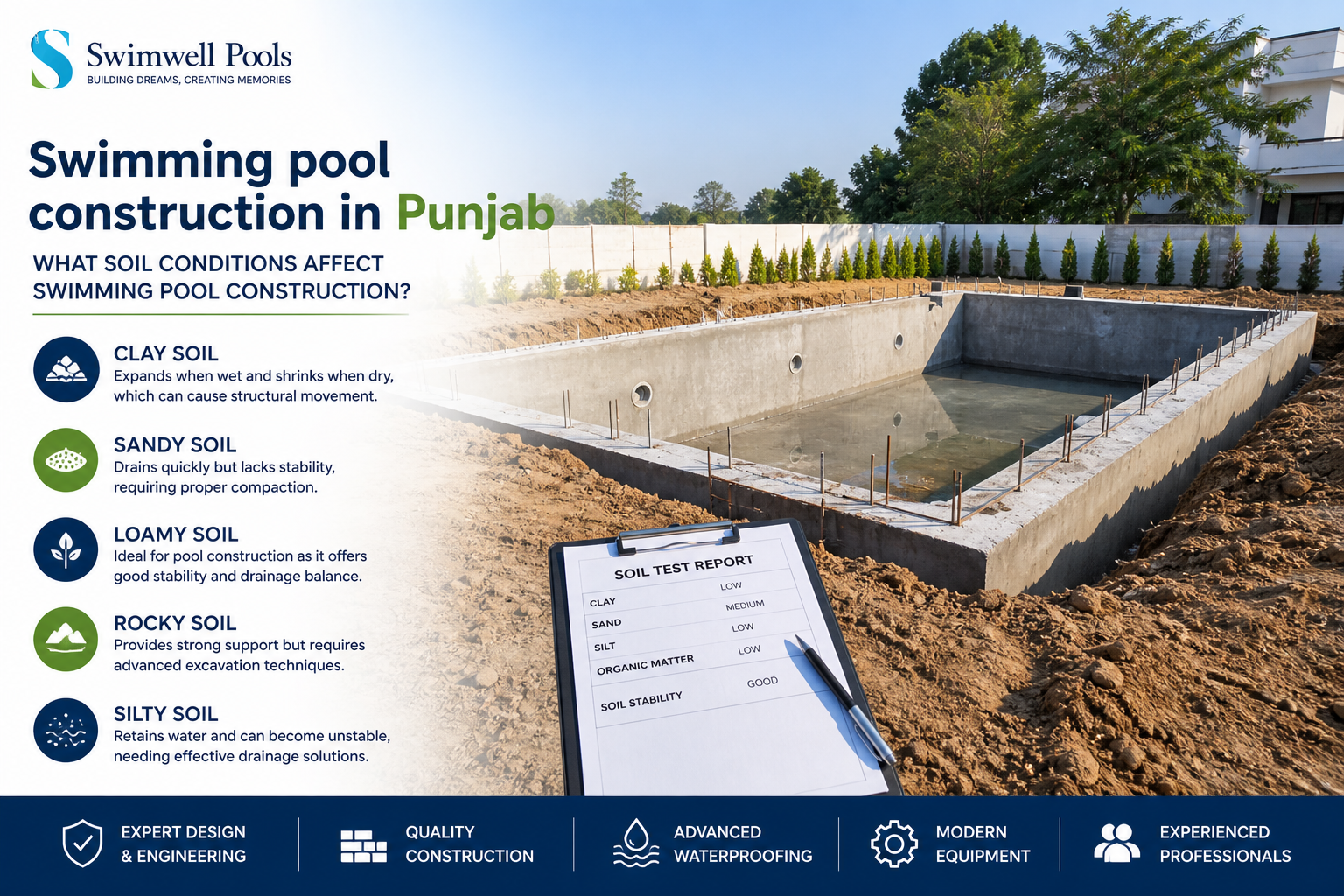
1. Clay Soil
Clay soil is commonly found in many parts of Punjab and poses challenges due to its expansion and contraction properties.
Challenges:
- Swelling when wet
- Shrinking during dry conditions
- Increased pressure on pool walls
Solution: Reinforced structural design and proper drainage systems are required.
2. Sandy Soil
Sandy soil offers good drainage but lacks stability.
Challenges:
- Loose structure
- Difficulty in maintaining shape during excavation
- Risk of shifting
Solution: Soil stabilization and proper compaction techniques are necessary.
3. Loamy Soil
Loamy soil is a balanced mix of sand, silt, and clay and is considered ideal for construction.
Advantages:
- Good stability
- Balanced drainage
- Easier excavation
This soil type is generally favorable for pool construction.
4. Rocky Soil
Rocky soil provides strong support but can be difficult to excavate.
Challenges:
- Time-consuming excavation
- Requirement of heavy machinery
- Increased complexity in shaping the pool
Solution: Advanced excavation techniques and proper planning are essential.
5. Silty Soil
Silty soil retains water and can become unstable when wet.
Challenges:
- Poor drainage
- Increased risk of erosion
- Reduced load-bearing capacity
Solution: Proper drainage systems and soil reinforcement methods are required.
Impact of Soil Conditions on Pool Construction
1. Foundation Strength
Soil type determines the strength and design of the pool foundation.
2. Excavation Process
Different soils require different excavation methods and equipment.
3. Waterproofing Requirements
Certain soils increase the need for advanced waterproofing techniques.
4. Drainage Systems
Proper drainage is essential to prevent water accumulation around the pool.
Techniques to Overcome Soil Challenges
To address soil-related issues in Swimming pool construction in Punjab, professionals use:
- Soil testing and analysis
- Reinforced concrete structures
- Proper compaction methods
- Advanced drainage systems
- High-quality waterproofing
These techniques ensure long-term durability and stability.
Importance of Soil Testing
Before starting construction, soil testing helps determine:
- Load-bearing capacity
- Moisture content
- Soil composition
This information guides the design and construction process.
Common Mistakes to Avoid
Avoid these common mistakes:
- Skipping soil testing
- Ignoring drainage planning
- Using improper construction techniques
- Choosing low-quality materials
- Overlooking professional guidance
These errors can lead to structural issues and costly repairs.
Benefits of Proper Soil Management
Effective soil management ensures:
- Strong and stable foundation
- Reduced risk of cracks and leaks
- Improved durability
- Long-term performance
Growing Demand for Pools in Punjab
Punjab is witnessing increased demand for swimming pools due to:
- Luxury residential developments
- Growth in hospitality sector
- Rising interest in fitness and recreation
- Modern lifestyle trends
This makes proper construction planning even more important.
Conclusion
Swimming pool construction in Punjab is greatly influenced by soil conditions, making proper analysis and preparation essential. From clay and sandy soils to rocky and silty terrains, each type presents unique challenges that must be addressed with the right techniques. By focusing on soil testing, proper foundation design, and advanced construction methods, these challenges can be effectively managed. Working with experienced professionals like Swimwell Pools ensures that your pool is built on a strong foundation, delivering durability, safety, and long-term satisfaction.
FAQ
1. What soil conditions affect Swimming pool construction in Punjab?
Soil conditions affecting Swimming pool construction in Punjab include clay, sandy, loamy, rocky, and silty soils, each impacting stability and construction methods differently.
2. Why is soil testing important for Swimming pool construction in Punjab?
Soil testing helps determine load-bearing capacity and stability for Swimming pool construction in Punjab, ensuring a strong foundation.
3. Which soil is best for Swimming pool construction in Punjab?
Loamy soil is considered best for Swimming pool construction in Punjab due to its balanced properties and stability.
4. How does clay soil affect Swimming pool construction in Punjab?
Clay soil can expand and shrink, affecting the structure in Swimming pool construction in Punjab if not properly managed.
5. How can soil challenges be managed in Swimming pool construction in Punjab?
Soil challenges in Swimming pool construction in Punjab can be managed through soil testing, proper drainage, and reinforced construction techniques.
Read Our Previous Blog --------------->Who are the best swimming pool contractors in Maharashtra?

 عربي
عربي