


 SPARK Website
What are the essential components of IVF Laboratory Design?
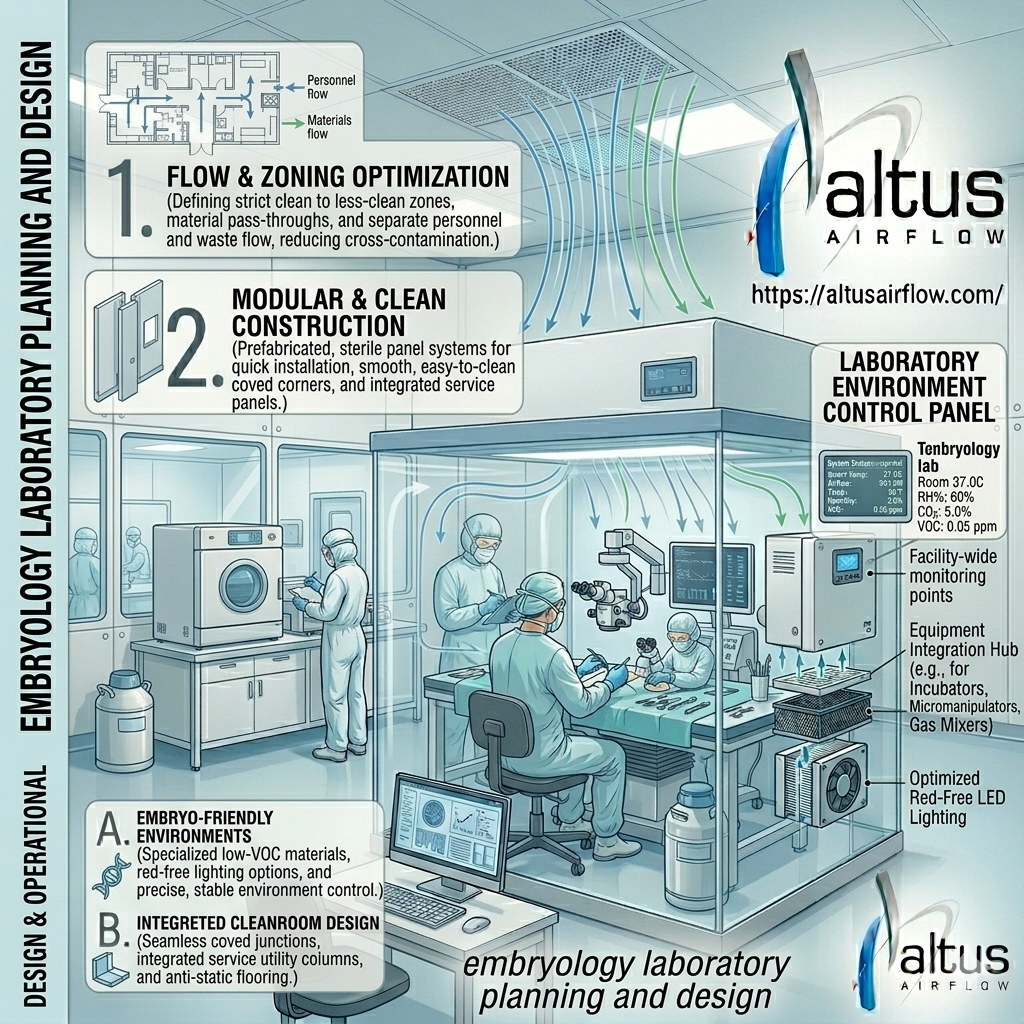
INTRODUCTION
The success of assisted reproductive technology (ART) procedures depends heavily on the quality, functionality, and environmental control of the laboratory where embryos, eggs, and sperm are handled. A well-planned IVF Laboratory Design serves as the foundation for achieving high fertilization rates, optimal embryo development, and improved clinical outcomes. Unlike standard medical laboratories, IVF laboratories require specialized infrastructure, advanced air quality systems, strict contamination control measures, and carefully designed workflows to support delicate reproductive procedures.
Why IVF Laboratory Design Is Important
An IVF laboratory is the heart of every fertility clinic.
Key Objectives Include:
- Protecting embryos
- Supporting fertilization
- Maintaining environmental stability
- Improving treatment outcomes
A properly designed laboratory enhances the success of ART procedures.
Laboratory Layout and Space Planning
Effective space planning is the first step in creating a functional IVF laboratory.
Benefits of Proper Layout Planning:
- Smooth workflow
- Reduced contamination risks
- Efficient equipment placement
- Better staff productivity
An organized layout improves operational efficiency.
Zoning and Functional Segregation
Different laboratory activities require separate controlled environments.
Common Zones Include:
- Embryology laboratory
- Andrology laboratory
- Cryopreservation area
- Preparation room
- Equipment storage area
Proper zoning helps maintain environmental control.
Embryology Laboratory
The embryology laboratory is the most critical area.
Primary Functions:
- Oocyte handling
- Fertilization procedures
- Embryo culture
- Embryo assessment
This area requires the highest level of environmental control.
Andrology Laboratory
The andrology laboratory focuses on sperm processing.
Activities Include:
- Semen analysis
- Sperm preparation
- Sample evaluation
Separate andrology areas improve workflow and contamination control.
Cryopreservation Room
Cryopreservation supports long-term storage of reproductive materials.
Used For:
- Embryo storage
- Oocyte storage
- Sperm storage
Specialized storage systems ensure sample safety.
Controlled Air Quality Systems
Air quality is one of the most important components of IVF Laboratory Design.
Air Quality Goals:
- Remove contaminants
- Control particles
- Reduce VOCs
- Maintain cleanliness
Clean air directly affects embryo development.
HVAC Systems
HVAC systems maintain environmental stability.
HVAC Functions Include:
- Air circulation
- Temperature control
- Humidity regulation
- Pressure management
Reliable HVAC systems support laboratory performance.
HEPA Filtration Systems
HEPA filtration removes microscopic airborne particles.
Benefits Include:
- Improved air cleanliness
- Reduced contamination
- Enhanced embryo protection
HEPA filtration is essential for IVF laboratories.
Activated Carbon Filtration
Carbon filtration removes chemical contaminants.
Advantages Include:
- VOC reduction
- Odor removal
- Improved air quality
Chemical control helps protect sensitive embryos.
Positive Pressure Environment
Positive pressure prevents contaminated air from entering critical areas.
Benefits Include:
- Enhanced cleanliness
- Better contamination control
- Stable laboratory conditions
Pressure management is a key cleanroom principle.
Temperature Control Systems
Embryos require stable temperature conditions.
Proper Temperature Management Helps:
- Maintain cell viability
- Improve embryo development
- Support laboratory consistency
Temperature stability is crucial.
Humidity Control Systems
Humidity affects both equipment and environmental quality.
Benefits Include:
- Improved laboratory stability
- Better material performance
- Reduced contamination risks
Humidity control supports optimal operations.
Cleanroom-Compatible Construction Materials
Material selection significantly impacts laboratory performance.
Preferred Materials Include:
- Non-porous surfaces
- Low-VOC materials
- Chemical-resistant finishes
Proper materials improve cleanliness and durability.
Seamless Wall Systems
Wall surfaces must support strict hygiene requirements.
Features Include:
- Easy cleaning
- Smooth finishes
- Reduced particle accumulation
Seamless walls help maintain cleanroom conditions.
Specialized Flooring Systems
Laboratory flooring contributes to contamination control.
Flooring Characteristics:
- Seamless construction
- Chemical resistance
- Easy maintenance
Proper flooring enhances hygiene.
Laboratory Workstations
Workstations support day-to-day laboratory procedures.
Requirements Include:
- Ergonomic design
- Easy accessibility
- Cleanable surfaces
Efficient workstations improve productivity.
IVF Laboratory Equipment Integration
Equipment placement is a major design consideration.
Common Equipment Includes:
- Incubators
- Microscopes
- Laminar flow workstations
- Cryogenic storage systems
Proper integration improves workflow efficiency.
Incubation Systems
Incubators provide controlled environments for embryo development.
Functions Include:
- Temperature regulation
- Gas control
- Humidity management
Incubators are essential for embryo culture.
Microscopy Systems
Advanced microscopes support fertilization and embryo assessment.
Applications Include:
- ICSI procedures
- Embryo evaluation
- Cell observation
Precision imaging supports successful outcomes.
Laminar Flow Workstations
Laminar flow systems create clean working environments.
Benefits Include:
- Reduced contamination
- Controlled airflow
- Improved sample protection
Workstations support laboratory sterility.
Gas Supply Systems
Certain IVF procedures require specialized gas mixtures.
Gas Systems Support:
- Incubators
- Laboratory processes
- Environmental control
Reliable gas delivery is essential.
Electrical Infrastructure
Reliable electrical systems ensure uninterrupted operation.
Components Include:
- Backup power systems
- UPS solutions
- Dedicated circuits
Power reliability protects valuable samples.
Environmental Monitoring Systems
Continuous monitoring helps maintain laboratory quality.
Parameters Monitored Include:
- Temperature
- Humidity
- Air quality
- Pressure levels
Monitoring supports compliance and consistency.
Data Logging and Record Management
Accurate documentation is essential.
Benefits Include:
- Traceability
- Quality control
- Regulatory compliance
Proper records improve laboratory management.
Safety Systems
Safety features protect staff and laboratory assets.
Common Systems Include:
- Fire protection
- Emergency alarms
- Backup systems
Safety planning reduces operational risks.
Contamination Control Measures
Preventing contamination is a major priority.
Measures Include:
- Controlled access
- Air filtration
- Cleaning protocols
- Environmental monitoring
Contamination control protects treatment outcomes.
Staff Workflow Optimization
Efficient workflows improve productivity.
Workflow Planning Helps:
- Reduce errors
- Improve efficiency
- Support laboratory operations
Workflow design contributes to overall performance.
Regulatory Compliance Components
IVF laboratories must comply with industry requirements.
Compliance Areas Include:
- Environmental controls
- Documentation practices
- Equipment validation
- Quality management
Compliance supports operational excellence.
Quality Control Systems
Quality control ensures consistent laboratory performance.
Activities Include:
- Equipment verification
- Environmental testing
- Process validation
Quality systems improve reliability.
Future Expansion Planning
Laboratories should accommodate future growth.
Planning Includes:
- Equipment upgrades
- Additional workstations
- Technology integration
Scalable designs protect investments.
Energy-Efficient Infrastructure
Sustainability is becoming increasingly important.
Energy-Saving Features Include:
- Efficient HVAC systems
- Smart controls
- Optimized airflow management
Efficiency reduces operating costs.
Smart Technology Integration
Modern laboratories increasingly use digital technologies.
Technologies Include:
- Automated monitoring
- Remote alerts
- Data analytics
Smart systems improve operational control.
Benefits of a Well-Designed IVF Laboratory
A comprehensive IVF laboratory offers significant advantages.
Benefits Include:
- Improved embryo viability
- Higher success rates
- Better contamination control
- Enhanced patient confidence
- Regulatory compliance
Good design directly supports clinical success.
Future Trends in IVF Laboratory Design
Laboratory technologies continue to evolve.
Emerging Innovations Include:
- AI-based monitoring
- Advanced cleanroom systems
- Automated laboratory management
- Smart environmental controls
Innovation will continue improving fertility laboratory performance.
Conclusion
The essential components of IVF Laboratory Design include carefully planned layouts, functional zoning, embryology and andrology laboratories, cryopreservation facilities, advanced HVAC systems, HEPA and carbon filtration, positive pressure environments, temperature and humidity controls, cleanroom-compatible materials, specialized equipment integration, environmental monitoring systems, and quality control programs. Each component plays a critical role in protecting embryos, maintaining laboratory stability, and supporting successful fertility treatments.
As fertility clinics continue to expand and adopt advanced reproductive technologies, investing in a well-designed laboratory becomes increasingly important. With expertise in cleanroom engineering, environmental control systems, advanced airflow technologies, and laboratory infrastructure solutions, Altus Airflow delivers high-performance IVF laboratory environments that support clinical excellence and long-term operational success.
Frequently Asked Questions (FAQs)
1. Why is air quality important in IVF Laboratory Design?
Air quality is critical in IVF Laboratory Design because embryos are highly sensitive to airborne particles, VOCs, and contaminants that may affect development and treatment outcomes.
2. What role do HEPA filters play in IVF Laboratory Design?
HEPA filters remove microscopic particles from the air, helping maintain the clean and controlled environment required in IVF Laboratory Design.
3. Why is zoning important in IVF Laboratory Design?
Zoning helps separate embryology, andrology, cryopreservation, and support areas, improving workflow and contamination control in IVF Laboratory Design.
4. What equipment is essential in IVF Laboratory Design?
Essential equipment in IVF Laboratory Design includes incubators, microscopes, laminar flow workstations, cryogenic storage systems, and environmental monitoring devices.
5. How does environmental monitoring support IVF Laboratory Design?
Environmental monitoring helps maintain temperature, humidity, air quality, and pressure levels, ensuring optimal conditions within IVF Laboratory Design.
Read Our Previous Blog------>How do Modular Ophthalmic OT Manufacturers customize OTs for eye hospitals?

 عربي
عربي