


 SPARK Website
Slope Game Physics Explained – How Inertia and Movement Create Its Difficulty
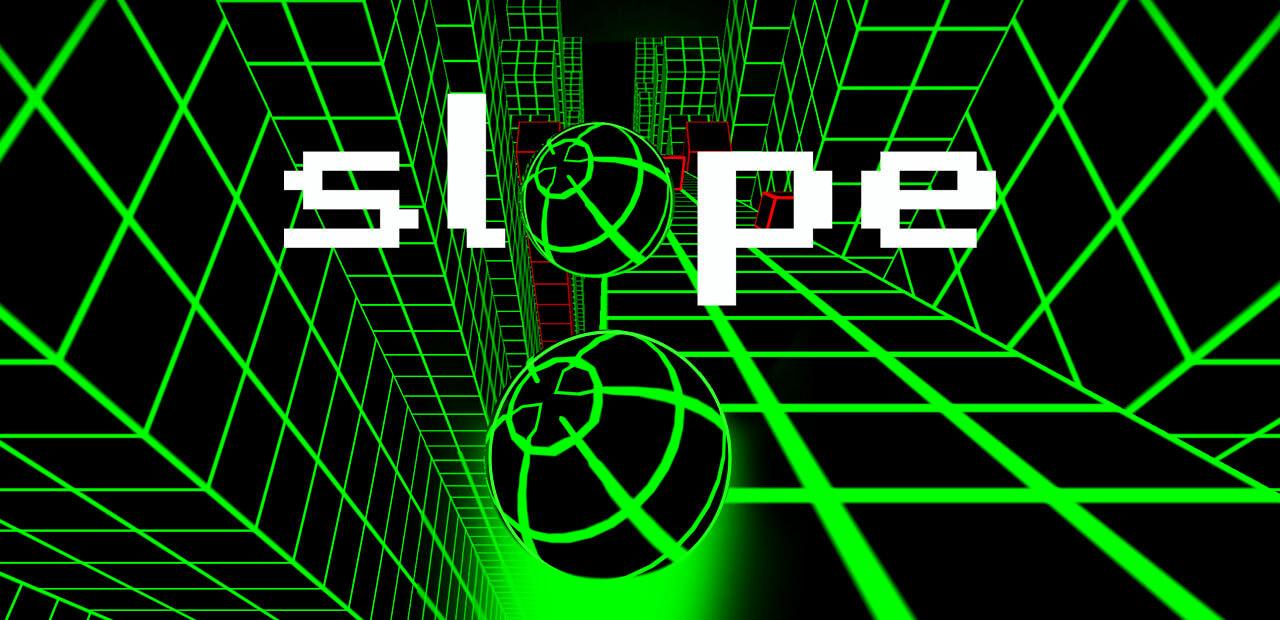
At first glance, Slope Game looks almost too simple to be interesting. A neon ball rolling down an endless track, sharp turns, falling platforms, and nothing else. No story, no upgrades, no complex controls. Just movement. But once you actually start playing, you quickly realize the difficulty doesn’t come from the visuals—it comes from the physics.
The entire experience of Slope is built around one core idea: inertia. The ball never fully stops responding to momentum. Every tiny input you make doesn’t just move the ball—it builds or redirects energy that is already in motion. That’s why the game feels so hard to control even though the controls are only left and right.
Inertia: the invisible force behind every mistake
In real physics, inertia is the tendency of an object to resist changes in motion. In Slope Game, this concept is exaggerated for gameplay purposes. Once your ball starts moving fast, it wants to keep moving fast. If you try to correct direction too aggressively, the ball overshoots. If you hesitate, you lose alignment with the track.
This creates a constant tension between control and loss of control. You are never directly “placing” the ball—you are steering something that already has its own momentum.
That’s why even small movements feel risky.
Acceleration and increasing difficulty
One of the key mechanics in Slope Game physics is continuous acceleration. The longer you survive, the faster the ball becomes. This is where the game stops feeling casual and starts becoming a reaction test.
At low speed, you can afford mistakes. You can correct your direction, recover from bad angles, and react calmly. But as speed increases, everything changes. Reaction time shrinks, and even tiny steering errors become fatal.
The difficulty doesn’t come from new enemies or obstacles—it comes from your increasing inability to control momentum.
Slopes, angles, and trajectory control
Another important factor is how the track itself is designed. The game constantly shifts between slopes, sharp angles, and narrow platforms. These surfaces directly affect the ball’s trajectory.
When the ball hits an incline, gravity and momentum combine, creating sudden changes in speed and direction. If your timing is slightly off, the ball can bounce into an unintended path or fall off entirely.
This means players are not just reacting to the ball—they are predicting how physics will behave in the next fraction of a second.
Why control feels “slippery”
Many players describe Slope as “slippery” or “unfair,” but it’s actually consistent physics doing its job. The challenge is that input delay and momentum are always interacting. When you press a direction, the ball doesn’t instantly respond like a platformer character. Instead, it gradually shifts velocity.
That delay between input and response creates a learning curve. Skilled players don’t just react faster—they learn to anticipate how long it takes for momentum to change direction.
Speed as the real enemy
In most games, enemies or obstacles define difficulty. In Slope Game, speed itself is the enemy. As velocity increases, every element of the game becomes more punishing:
- Turns become sharper
- Platforms feel narrower
- Reaction windows shrink
- Recovery time disappears
At high speed, even perfect inputs can fail if they are slightly late. This is where Slope transitions from a casual reflex game into something closer to a precision physics challenge.
Final thoughts
The genius of Slope Game is that it doesn’t rely on complicated systems. Its difficulty comes from a pure physics loop: inertia, acceleration, and spatial prediction.
You are not just controlling a ball—you are constantly fighting momentum that wants to continue in a straight line. And as speed increases, that fight becomes harder until eventually, it becomes impossible.
That’s why Slope is so addictive. Every failure feels like a physics problem you almost solved correctly.

 English