


 SPARK Website
Russia Diabetes Market Outlook 2034: Growth, Competition for Pharmaceutical, Biotechnology & Biosimilar Companies
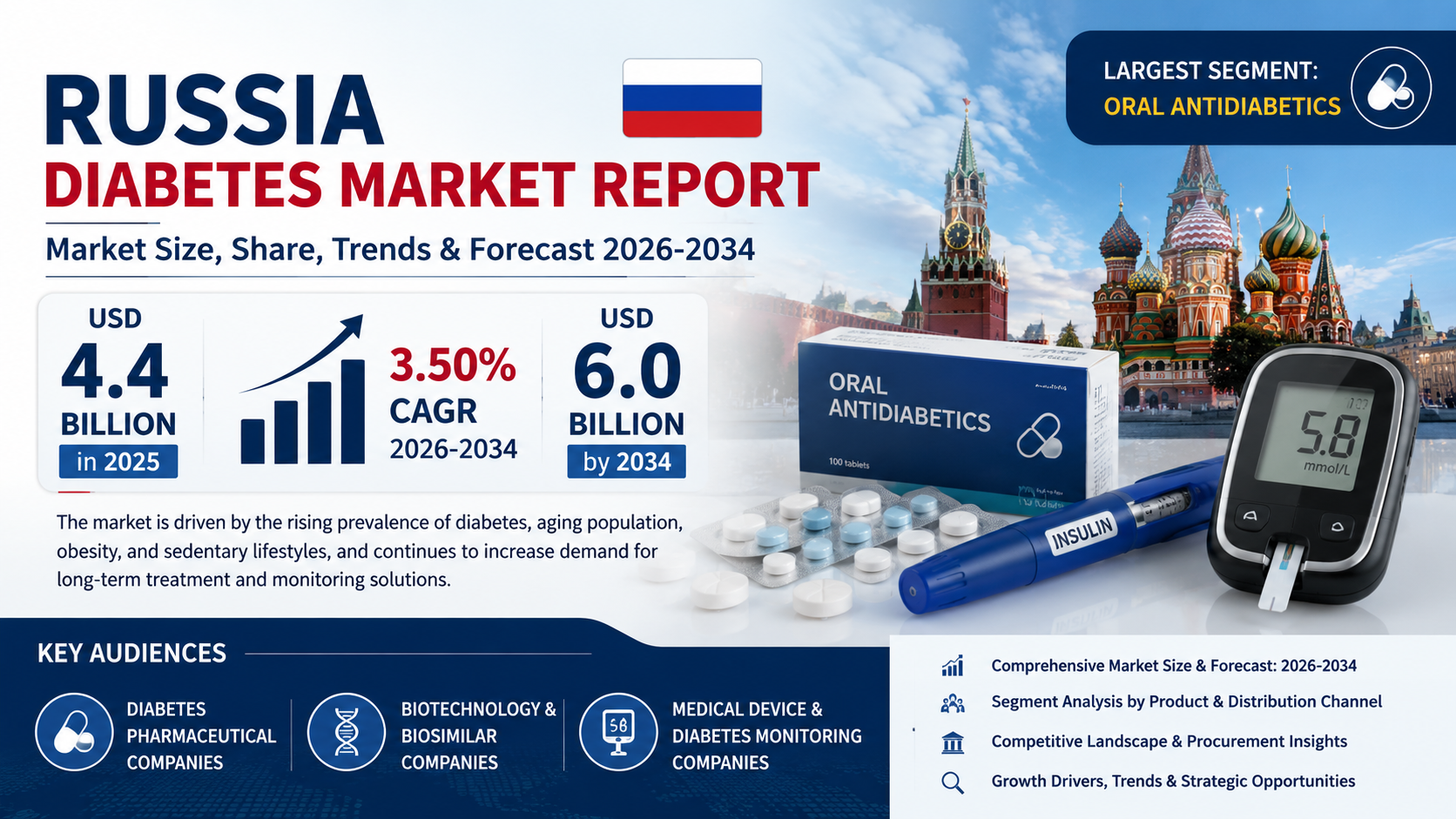
Diabetes is a chronic, metabolic disease characterized by elevated levels of blood glucose (or blood sugar), which leads over time to serious damage to the heart, blood vessels, eyes, kidneys, and nerves. In the context of the Russia diabetes market, this sector encompasses the comprehensive ecosystem of pharmaceutical treatments, insulin therapies, and diagnostic monitoring devices required to manage type-1, type-2, and gestational diabetes. As of 2025, the market is valued at USD 4.4 Billion and is projected to reach USD 6.0 Billion by 2034, reflecting a steady CAGR of 3.50% as the nation grapples with a rising patient base of over 7.6 million registered adults.
How is the Rising Prevalence of Type-2 Diabetes Creating Long-Term Opportunities for Pharmaceutical Companies?
For Diabetes Pharmaceutical Companies, the Russian landscape presents a structural and growing demand driven by demographic shifts. The primary catalyst is an aging population and a significant surge in obesity rates, which are directly linked to the rising incidence of type-2 diabetes.
- Growing Patient Base: With 7.6 million registered diabetic adults in 2024, the "Type-2" segment remains the most significant driver of volume.
- Dominance of Oral Antidiabetics: This segment currently holds a 57.6% revenue share. Market growth for oral medications is fueled by their cost-effectiveness and status as a first-line therapy.
- Reimbursement Frameworks: The expansion of SGLT-2 inhibitor prescriptions under the Vital and Essential Drugs List (VEDL) reimbursement frameworks is a major trend. Pharmaceutical firms focusing on cardiorenal comorbidity treatments are seeing high growth as cardiologist prescriptions expand beyond traditional endocrinology.
- Government Funding: A federal commitment of 5.5 billion RUB announced in November 2024 specifically targets early diagnosis and endocrine center establishment, directly expanding the procurement pool for pharmaceutical manufacturers.
Why Is the Russia Import Substitution Policy Reshaping the Strategy for Biotechnology and Biosimilar Companies?
For Biotechnology & Biosimilar Companies, the Russia diabetes market is currently defined by a move toward domestic self-sufficiency. The government's "import substitution" mandate has accelerated post-2022, creating a permanent advantage for domestic manufacturers in government procurement.
- Full-Cycle Insulin Synthesis: Leading domestic players like GEROPHARM have developed full-cycle insulin synthesis platforms. This allows for the production of insulin from substance to finished dosage form domestically, reducing reliance on imported active pharmaceutical ingredients (APIs).
- Compulsory Licensing and GLP-1s: The Russian Supreme Court has upheld the authority to grant compulsory licenses for essential medicines. This has paved the way for domestic versions of blockbuster drugs like semaglutide (Ozempic) to capture the market without multinational royalty exposure.
- Biosimilar Acceleration: The approval of multiple domestic generics for semaglutide is a key market trend. Biotechnology firms are successfully transitioning their insulin manufacturing expertise into next-generation biologic production, creating a robust domestic GLP-1 revenue stream.
- Shift in Market Share: Domestic manufacturers like Pharmstandard and Geropharm now account for approximately 30-35% of government diabetes drug procurement, a share that is expected to grow as biosimilar portfolios expand.
How Are Technological Advancements in Glucose Monitoring Impacting Medical Device and Monitoring Companies?
For Medical Device & Diabetes Monitoring Companies, the focus is shifting toward digital health integration and domestic R&D engineering. While pharmaceutical treatments lead in value, the diagnostic and monitoring sector is undergoing a high-tech transformation.
- Continuous Glucose Monitoring (CGM) Breakthroughs: Innovative systems like the "CGM Fly" are emerging from Russian R&D centers. These devices are drawing significant attention from regulatory authorities and potential partners, highlighting a massive market opportunity for localized advanced monitoring solutions.
- Infrastructure Buildout: Federal funding is being utilized to establish regional endocrine centers. This buildout creates new institutional demand for high-tech hardware, including CGM devices and insulin pumps, in regional capitals that were previously underserved.
- Digital Health and E-Pharmacy Growth: The e-commerce and tele-pharmacy channel is the fastest-growing segment in the market, with a CAGR of ~6.5%. Digital platforms that integrate AI-driven monitoring and teleconsultation are becoming essential tools for patient retention and adherence.
- Diagnostic Gaps: The government’s focus on pediatric diabetes detection and early diagnosis programs represents a systematic attempt to close the diagnosis gap, which will naturally increase the installed base of monitoring devices.
Sample Request For Your Business
What are the Main Distribution Challenges and Opportunities for Retail and Online Pharmacies?
The distribution of diabetes products in Russia is undergoing a structural shift. While Retail Pharmacies remain the dominant channel with a 50.8% share, digital transformation is rapidly altering the landscape.
- Online Prescription Fulfillment: The e-pharmacy sector is expanding as digital platforms collectively process chronic disease prescriptions. This is particularly effective in Tier-2 and Tier-3 cities where physical pharmacy penetration for specialty medications may be lower.
- Pharmacy Chain Consolidation: Large federal pharmacy chains are improving operational efficiency, which helps maintain the supply of essential oral antidiabetics like metformin and sulfonylureas.
- Supply Chain Resilience: Despite geopolitical sanctions and ruble volatility, the shift toward domestic production and sourcing APIs from India and China has helped stabilize the supply chain for the retail sector.
- Hospital and Institutional Channels: Hospital pharmacies serve a critical role in inpatient management, accounting for 31.1% of the market, primarily fueled by government tender contracts that often bypass traditional retail distribution.
Conclusion:
The Russia diabetes market is currently navigating a period of profound transformation. Driven by a projected growth to USD 6.0 Billion by 2034, the market is being reshaped by the dual forces of an aging population and a robust government mandate for pharmaceutical import substitution. For domestic biotechnology firms, the rise of biosimilars and compulsory licensing offers a path to market dominance, while medical device companies are finding new frontiers in localized digital monitoring. As Russia continues to invest in regional endocrine infrastructure and digital health platforms, the market stands as a resilient and evolving landscape for both domestic champions and strategic global suppliers.

 عربي
عربي