


 SPARK Website
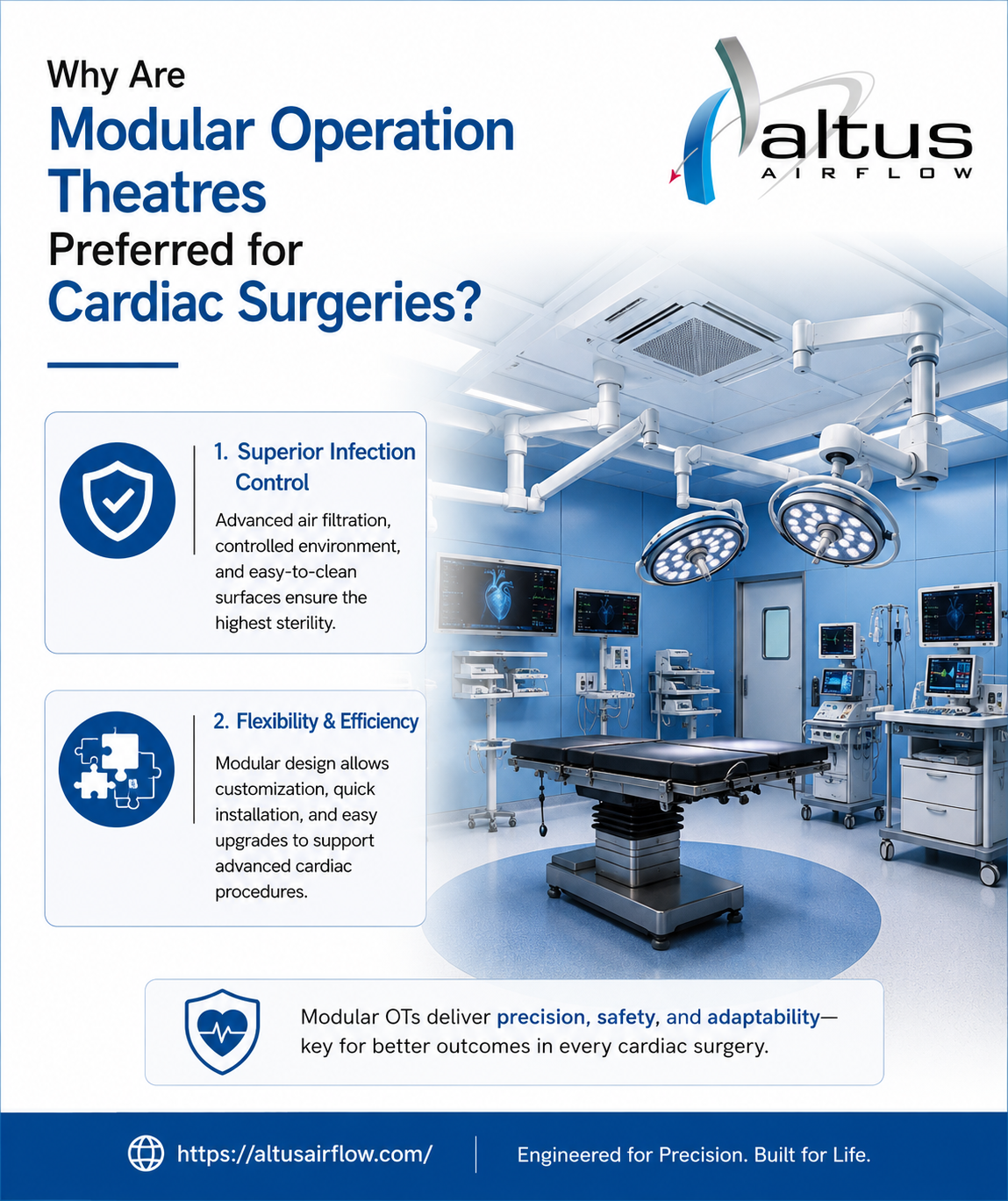
Why Are Modular Operation Theatres Preferred for Cardiac Surgeries?
Introduction
Cardiac surgeries are among the most complex and high-risk procedures performed in modern healthcare facilities. These surgeries require precision, advanced technology, strict infection control, and seamless coordination between surgical teams. To meet these critical demands, hospitals are increasingly adopting the Cardiac Modular Operation Theatre concept instead of relying on conventional operating rooms. Companies like Altus Airflow are helping healthcare institutions establish advanced surgical environments designed specifically for cardiac care and high-performance medical procedures.
A cardiac operation theatre must maintain highly controlled environmental conditions throughout every surgery. Even minor contamination, airflow disturbance, or equipment inefficiency can significantly affect patient safety and surgical outcomes. Traditional operation theatres often struggle to provide the level of sterility, flexibility, and technological integration required for modern cardiac procedures. This is where modular OT systems offer major advantages.
This blog explains why modular operation theatres are preferred for cardiac surgeries, their essential features, and how they improve surgical safety, operational efficiency, and long-term hospital performance.
Understanding Cardiac Surgery Requirements
Cardiac surgeries involve procedures performed on the heart, major blood vessels, and related cardiovascular structures. These surgeries often require:
- Highly sterile environments
- Advanced medical equipment
- Continuous patient monitoring
- Precision-based surgical techniques
- Controlled airflow systems
- Reliable power support
- Efficient surgical workflow
Since cardiac procedures are extremely sensitive, operation theatres must be designed to support both patient safety and surgical accuracy.
What Is a Modular Operation Theatre?
A modular operation theatre is a modern surgical setup constructed using prefabricated modular components that create a controlled and sterile surgical environment.
These systems generally include:
- Antibacterial wall panels
- Laminar airflow systems
- HEPA filtration
- Hermetically sealed doors
- Integrated lighting systems
- Medical gas pipeline systems
- Anti-static flooring
- Centralized control panels
A Cardiac Modular Operation Theatre is specifically customized to support complex cardiovascular procedures while maintaining advanced infection control and operational efficiency.
Why Cardiac Surgeries Need Specialized OT Infrastructure
Cardiac surgeries are often lengthy and involve critical organs where even small environmental inconsistencies can increase surgical risk.
Specialized OT infrastructure helps ensure:
- Lower infection rates
- Better surgical visibility
- Improved equipment coordination
- Stable environmental conditions
- Enhanced patient monitoring
- Faster emergency response
Modern modular systems are designed to address all these requirements effectively.
Reasons Why Modular OTs Are Preferred for Cardiac Surgeries
1. Superior Infection Control
Infection prevention is one of the biggest priorities during cardiac surgery. Surgical site infections can lead to severe complications, prolonged hospitalization, and increased treatment costs.
Modular OTs help minimize infection risks through:
- Seamless antibacterial surfaces
- Controlled airflow systems
- HEPA filtration
- Easy-to-clean interiors
- Reduced dust accumulation
These features create a cleaner and safer surgical environment.
2. Advanced Airflow Management
Air quality directly affects surgical safety in cardiac procedures.
Traditional OTs may not effectively control airborne contaminants, while modular OTs use advanced airflow systems designed specifically for sterile environments.
Common Features Include:
- Laminar airflow systems
- Positive air pressure control
- High air exchange rates
- HEPA-filtered ventilation
These systems help maintain contamination-free surgical conditions throughout procedures.
3. Better Sterility Standards
A Cardiac Modular Operation Theatre is built using materials specifically selected for healthcare environments.
Key sterility advantages include:
- Smooth seamless surfaces
- Minimal joints and gaps
- Antimicrobial wall panels
- Hygienic flooring systems
This reduces bacterial growth and supports strict sterilization protocols.
4. Integration of Advanced Medical Technology
Cardiac surgeries require multiple advanced medical systems operating simultaneously.
Modular OTs support seamless integration of:
- Patient monitoring systems
- Surgical imaging equipment
- Medical gas pipelines
- Communication systems
- Surgical lighting
- Control panels
Integrated infrastructure improves workflow efficiency and equipment accessibility.
5. Improved Surgical Workflow
Efficient workflow is essential during cardiac procedures where timing and coordination are critical.
Modular layouts improve:
- Staff movement
- Equipment placement
- Emergency access
- Surgical coordination
An organized environment helps reduce delays and improves overall surgical performance.
6. Faster Construction and Installation
Traditional OT construction can take significant time and may disrupt hospital operations.
Modular systems use prefabricated components that allow:
- Faster installation
- Reduced construction waste
- Better quality consistency
- Minimal operational disruption
Hospitals can operationalize cardiac OTs more quickly using modular solutions.
7. Easier Maintenance
Conventional OTs often require repainting, repairs, and surface restoration over time.
Modular OTs use durable materials that are:
- Corrosion resistant
- Easy to clean
- Low maintenance
- Long-lasting
This reduces maintenance costs and downtime.
8. Energy Efficiency
Modern cardiac OTs consume substantial energy due to continuous operation of HVAC systems, lighting, and medical equipment.
Modular operation theatres help improve energy efficiency through:
- Optimized airflow systems
- Energy-efficient lighting
- Advanced HVAC control systems
This reduces long-term operational costs for hospitals.
9. Flexibility for Future Upgrades
Healthcare technology evolves rapidly, especially in cardiac care.
Modular infrastructure allows hospitals to:
- Upgrade systems easily
- Expand OT capacity
- Integrate new technologies
- Modify layouts with minimal reconstruction
This flexibility supports long-term scalability.
10. Compliance with Modern Healthcare Standards
Hospitals must comply with strict healthcare regulations related to infection control, ventilation, and patient safety.
Modular OTs are designed according to modern healthcare standards from the beginning, helping hospitals maintain compliance more effectively.
Common Cardiac Surgeries Performed in Modular OTs
Modular cardiac OTs support a wide range of procedures, including:
- Coronary artery bypass grafting (CABG)
- Heart valve replacement
- Congenital heart defect repair
- Heart transplant surgery
- Pacemaker implantation
- Aortic aneurysm repair
- Minimally invasive cardiac surgery
- Hybrid cardiac procedures
These surgeries require highly controlled environments that modular systems are designed to provide.
Key Features of a Modern Cardiac OT
Laminar Airflow System
Ensures continuous clean airflow within the OT.
HEPA Filters
Remove airborne contaminants and maintain sterile conditions.
Hermetically Sealed Doors
Prevent external contamination from entering the OT.
Modular Wall Panels
Provide antibacterial and easy-to-clean surfaces.
Anti-Static Flooring
Improves safety and minimizes dust accumulation.
Shadowless Surgical Lighting
Provides clear visibility during precision-based procedures.
Integrated Control Panels
Enable centralized management of OT systems.
Challenges with Conventional Cardiac OTs
Many traditional operation theatres face limitations that can affect surgical efficiency and sterility.
Common challenges include:
- Inconsistent airflow control
- Higher maintenance requirements
- Difficulty maintaining sterility
- Poor equipment integration
- Limited flexibility for upgrades
- Increased contamination risk
As healthcare standards become stricter, these limitations make modernization increasingly necessary.
Importance of Air Quality in Cardiac Surgery
Airborne contamination can significantly impact cardiac surgery outcomes.
Proper air management helps:
- Reduce surgical infections
- Maintain sterile conditions
- Protect open surgical sites
- Improve patient recovery
Modular OTs are specifically engineered to maintain optimal air quality throughout surgical procedures.
Future Trends in Cardiac OT Infrastructure
Healthcare facilities are increasingly adopting advanced technologies to improve cardiac surgery environments.
Future trends include:
- Smart OT automation
- AI-assisted surgical systems
- Real-time environmental monitoring
- Touchless controls
- Digital integration platforms
- Advanced infection prevention systems
Modular infrastructure provides the adaptability required for these innovations.
Factors Hospitals Should Consider Before Choosing an OT System
Hospitals planning cardiac OT projects should evaluate:
- Infection control capability
- HVAC system quality
- Technology integration
- Maintenance requirements
- Energy efficiency
- Scalability
- Compliance standards
- Construction timelines
Selecting the right OT infrastructure directly affects patient safety and long-term operational efficiency.
Conclusion
The growing complexity of cardiac surgeries has increased the demand for highly controlled and technologically advanced surgical environments. A Cardiac Modular Operation Theatre offers superior infection control, advanced airflow management, efficient equipment integration, and long-term flexibility compared to conventional operation theatres.
Healthcare institutions looking to modernize their surgical infrastructure can benefit from advanced modular OT solutions provided by Altus Airflow, helping hospitals achieve higher standards of cardiac care, surgical precision, and patient safety.
FAQs
1. What is a Cardiac Modular Operation Theatre?
A Cardiac Modular Operation Theatre is a specialized surgical environment designed with modular systems, advanced airflow management, and integrated medical technology for safe and efficient cardiac surgeries.
2. Why are modular OTs preferred for cardiac surgeries?
They provide better infection control, advanced airflow systems, improved sterility, and efficient integration of surgical equipment.
3. What type of airflow system is used in modular cardiac OTs?
Most modular cardiac OTs use laminar airflow systems combined with HEPA filtration.
4. How do modular OTs help prevent infections?
They use antibacterial surfaces, seamless construction, and controlled air circulation to reduce contamination risks.
5. Are modular cardiac OTs energy efficient?
Yes, they use energy-efficient HVAC systems and lighting solutions that reduce operational costs.
Read Our Previous Blog ---------------> What surgeries are performed in a cardiac OT?

 English