


 SPARK Website
Dermatology Devices Market Size to Reach USD 41.13 Billion by 2033, Growing at a CAGR of 11.6%
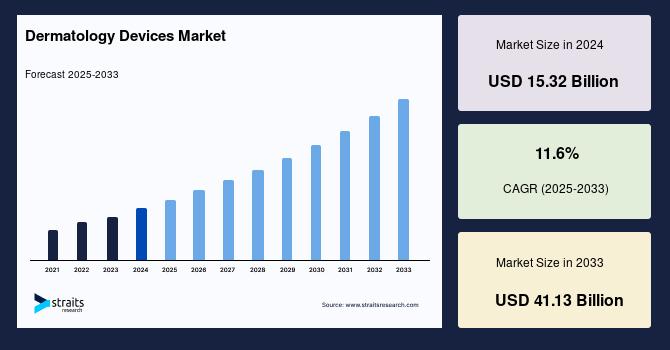
The global dermatology devices market is experiencing significant growth due to increasing prevalence of skin disorders, rising demand for aesthetic procedures, and continuous advancements in dermatological technologies. According to the latest report by Straits Research, the market was valued at USD 15.32 billion in 2024 and is projected to grow to USD 17.1 billion in 2025, reaching USD 41.13 billion by 2033, expanding at a CAGR of 11.6% during the forecast period.
For detailed insights, visit: https://straitsresearch.com/report/dermatology-devices-market
Market Drivers
The growing prevalence of skin-related conditions such as acne, psoriasis, eczema, skin cancer, and pigmentation disorders is a major factor driving the dermatology devices market. Increasing exposure to pollution, ultraviolet radiation, and changing lifestyles are contributing to the rising incidence of dermatological issues worldwide.
Another key driver is the increasing demand for cosmetic and aesthetic procedures. Consumers are increasingly seeking non-invasive and minimally invasive treatments for skin rejuvenation, anti-aging, scar reduction, and hair removal. Advanced dermatology devices offer improved treatment outcomes, shorter recovery times, and enhanced patient comfort, further boosting adoption.
Technological advancements in laser therapy, imaging systems, and diagnostic devices are also accelerating market growth. Artificial intelligence-based skin diagnostics and advanced laser technologies are improving the accuracy and effectiveness of dermatological treatments. Growing awareness regarding skincare and appearance enhancement is further supporting market expansion.
For sample access, visit: https://straitsresearch.com/report/dermatology-devices-market/request-sample
Market Challenges
Despite strong growth potential, the dermatology devices market faces several challenges. High costs associated with advanced dermatology devices and aesthetic procedures can limit adoption, particularly in developing regions.
Stringent regulatory approval processes for medical devices also pose challenges for manufacturers. Obtaining approvals for new technologies requires significant investment and time, which can delay product launches.
Additionally, the risk of side effects and complications from certain dermatological treatments may impact consumer confidence. A shortage of skilled dermatologists and trained professionals in some regions can further restrict market growth.
Market Segmentation
The dermatology devices market is segmented based on product type, application, and end user.
By product type, the market includes diagnostic devices and treatment devices. Treatment devices dominate the market due to increasing demand for laser therapies, skin rejuvenation procedures, and aesthetic treatments. Diagnostic devices are also gaining traction with the growing focus on early detection of skin cancer and other dermatological conditions.
Based on application, the market is segmented into skin cancer diagnosis, acne, psoriasis, skin rejuvenation, warts, and others. Skin rejuvenation holds a significant share due to the rising popularity of anti-aging and cosmetic treatments. Acne treatment devices are also widely adopted, especially among younger populations. Skin cancer diagnosis is witnessing rapid growth due to increasing awareness regarding early disease detection.
By end user, the market includes hospitals, private clinics, and specialty dermatology clinics. Specialty dermatology clinics dominate the segment owing to their focus on advanced skincare treatments and cosmetic procedures. Hospitals also account for a significant share due to their ability to manage complex dermatological conditions.
Regional Insights
Regionally, the dermatology devices market is analyzed across North America, Europe, Asia-Pacific, Latin America, and the Middle East and Africa.
North America holds a dominant share of the market, supported by advanced healthcare infrastructure, high adoption of aesthetic procedures, and strong presence of leading market players. The region also benefits from growing awareness regarding skin health and early diagnosis.
Europe represents another significant market, driven by increasing demand for cosmetic treatments and favorable healthcare systems. Asia-Pacific is expected to witness the fastest growth during the forecast period due to rising disposable incomes, growing medical tourism, and increasing awareness regarding skincare in countries such as China, India, and South Korea.
Latin America and the Middle East and Africa are emerging markets, offering growth opportunities due to improving healthcare infrastructure and expanding access to dermatological treatments.
Key Players Analysis
The dermatology devices market is highly competitive, with companies focusing on innovation, technological advancements, and strategic collaborations. Major companies operating in the market include Alma Lasers Ltd, Cutera Inc., Cynosure Inc., Lumenis Ltd, Valeant Pharmaceuticals International Inc., Avita Medical Ltd, Lutronic Corporation, Syneron Medical Ltd, GE Healthcare Ltd, and Philips Healthcare.
These companies are investing in research and development to introduce advanced diagnostic and treatment solutions. Expanding product portfolios, enhancing laser technologies, and strengthening distribution networks are key strategies adopted to maintain competitive advantage.
Conclusion
The global dermatology devices market is poised for substantial growth, driven by increasing prevalence of skin disorders, rising demand for cosmetic procedures, and technological innovations in dermatological care. While challenges such as high costs and regulatory complexities remain, ongoing advancements in treatment technologies and growing awareness regarding skin health are expected to support long-term market expansion.
Frequently Asked Questions (FAQs)
What is the expected market size of the dermatology devices market by 2033?
The market is projected to reach USD 41.13 billion by 2033.
What is the CAGR of the dermatology devices market?
The market is expected to grow at a CAGR of 11.6% during the forecast period.
Which product segment dominates the market?
Treatment devices hold the largest market share due to increasing demand for aesthetic and skin treatment procedures.
What are the key drivers of the market?
Key drivers include rising prevalence of skin disorders, increasing demand for cosmetic procedures, and technological advancements.
Who are the key players in the market?
Leading companies include Alma Lasers Ltd, Cutera Inc., Lumenis Ltd, and Philips Healthcare.
About Us
Straits Research is a leading research and intelligence organization, specializing in analytics, advisory services, and providing comprehensive market research reports.
Contact Us
Email: sales@straitsresearch.com
Tel: +1 646 905 0080 (U.S.), +44 203 695 0070 (U.K.)

 English