


 SPARK Website
Creative Enzymes Expands Purification Services with Flexible, Case-by-Case Approach
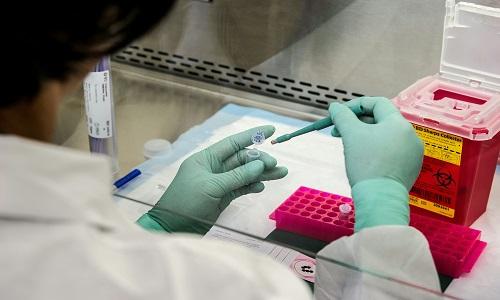
Creative Enzymes, as a leader in the bio-enzyme industry, has recently expanded its enzyme purification services once again. However, this service expansion is not solely about scaling up. In many projects, converting crude expression products into usable, high-purity enzymes is often far more difficult than it initially appears. This is typically where project progress begins to slow down — especially when enzyme activity starts to decline during the purification process.
The changes mostly pertain to how different purification steps are approached on a day-to-day basis. Chromatography and refolding are now treated as variable steps, with most changes being made based on how a specific protein is responding. What is often most important is how enzyme activity is maintained when scaling up from small batch work to larger batches.
Purification is still what most often brings projects to a standstill, even with the newer high expression systems. From a theoretical design perspective, it is a pretty straightforward and manageable workflow, but things rarely go as intended. Proteins are unpredictable and minor and even imperceptible structural differences can lead to significant changes in recovery or activity.
Standard kits work well for straightforward projects. However, when proteins display unusual charge distribution, hidden hydrophobic regions, or a tendency to aggregate, these kits quickly reach their limits. The challenge intensifies further when dealing with inclusion bodies or applications that demand tight endotoxin control.
To address these limitations, Creative Enzymes takes a more flexible approach to purification. Most projects start with a basic look at the enzyme itself—such as the type of tag used, its overall charge, and how stable it is under typical conditions. From there, the workflow is adjusted step by step rather than following a fixed protocol.
In practice, enzyme purification technologies do not rely on a single method. Enzyme purification by affinity chromatography is often used as a starting point, especially for tagged proteins. Depending on the results, additional steps such as ion exchange or size-based separation may be introduced. In some cases, hydrophobic interaction methods are also considered if standard approaches do not perform well.
Additional techniques, including immunoprecipitation or salting-out, may be applied when needed, though not every project requires them.
Some targets are simply harder to work with. When proteins end up in inclusion bodies, extra steps are usually needed first. Solubilization and refolding, for example, often come before purification can really move forward. At this point, endotoxin levels sometimes start to matter more, especially in later-stage work where requirements tend to be stricter.
This method has been applied to a variety of projects. Consider one: a recombinant oxidoreductase expressed in E. coli needed repeated adjustments during purification. The final workflow — affinity capture followed by polishing steps — produced high-purity samples while retaining most of the enzyme's activity.
In a separate instance, a manufacturing project required a large quantity of lipase from fermentation broth. Through adjustments to fractionation and downstream polishing steps, the team was able to achieve consistency in batch stability and satisfactory process scale-up at both small and large scales.
For proteins expressed as inclusion bodies, a tailored refolding strategy recovered active enzyme, enabling further structural and functional studies.
Dr. Charles, Head of Purification Sciences at Creative Enzymes, commented:
"Purification is often treated as a routine step, but in practice it tends to shape how reproducible a process becomes. Small differences between proteins can lead to very different outcomes, so relying on a single fixed workflow is rarely effective. In our experience, making adjustments early—whether that involves buffer conditions, temperature, or chromatography steps—can help avoid larger issues later on. The requirements also vary depending on whether the goal is small-scale research or larger production."
Creative Enzymes is based in New York and works on enzyme-related products and services for both research and industrial use. Its clients include academic laboratories as well as companies involved in drug development and manufacturing. Depending on the project, support may range from early-stage research to larger-scale production.

 عربي
عربي