


 SPARK Website
Dark Store Market Size to Reach USD 378.24 Billion by 2033, Growing at a CAGR of 38%
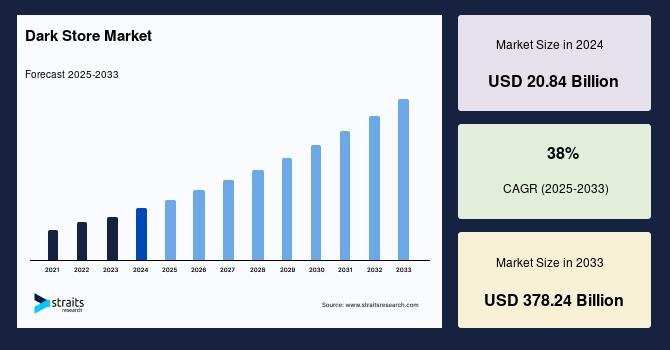
The global dark store market is undergoing explosive growth, fueled by the rapid expansion of e-commerce, increasing demand for ultra-fast delivery, and evolving consumer shopping behaviors. According to the latest report by Straits Research, the market was valued at USD 20.84 billion in 2024 and is projected to surge to USD 28.76 billion in 2025, reaching an impressive USD 378.24 billion by 2033, expanding at a remarkable CAGR of 38% during the forecast period.
For detailed insights, visit: https://straitsresearch.com/report/dark-store-market
Market Drivers
The growing demand for quick commerce and same-day delivery services is a primary driver of the dark store market. Consumers increasingly expect faster delivery times, especially for essential goods such as groceries, dairy, and meat. Dark stores—dedicated fulfillment centers optimized for online orders—enable retailers to meet these expectations efficiently.
Another significant factor driving growth is the rapid adoption of digital platforms and mobile applications. The rise of online grocery shopping, accelerated by changing lifestyles and increased internet penetration, has created a strong demand for streamlined logistics and last-mile delivery solutions. Companies are investing heavily in dark store infrastructure to reduce delivery times and improve operational efficiency.
Urbanization and busy lifestyles are also contributing to market expansion. Consumers prefer the convenience of ordering essentials online rather than visiting physical stores. This trend is particularly prominent in densely populated urban areas where time-saving solutions are highly valued.
For sample access, visit: https://straitsresearch.com/report/dark-store-market/request-sample
Market Challenges
Despite its rapid growth, the dark store market faces several challenges. High operational and infrastructure costs associated with setting up and maintaining dark stores can impact profitability. These facilities require advanced inventory management systems, logistics networks, and real estate in strategic locations.
Another challenge is the complexity of last-mile delivery. Ensuring timely and cost-effective delivery, especially in congested urban areas, requires efficient logistics planning and coordination. Additionally, labor shortages and rising delivery costs can further strain operations.
Regulatory issues and zoning restrictions in certain regions may also limit the establishment of dark stores. Concerns regarding urban congestion and environmental impact are prompting authorities to impose stricter regulations.
Market Segmentation
The dark store market is segmented based on category, age group, and distribution channel.
By category, the market includes meat, dairy, and grocery products. The grocery segment dominates the market due to high demand for daily essentials. Dairy and meat products are also significant contributors, requiring efficient cold chain logistics to maintain product quality.
Based on age group, the market is categorized into elderly, children, and adults. The adult segment holds the largest share, driven by higher adoption of online shopping and digital platforms. The elderly segment is also growing, as convenient home delivery services cater to their mobility needs.
By distribution channel, the market includes in-store pickup, curbside pickup, and home delivery. Home delivery dominates the segment, driven by increasing consumer preference for doorstep delivery. Curbside pickup is also gaining traction, offering a balance between convenience and cost-effectiveness.
Regional Insights
Regionally, the dark store market is analyzed across North America, Europe, Asia-Pacific, Latin America, and the Middle East and Africa.
North America holds a significant share of the market, supported by advanced logistics infrastructure, high e-commerce penetration, and strong presence of key players. Europe also represents a substantial market, driven by increasing adoption of online grocery services and growing demand for quick commerce.
Asia-Pacific is expected to witness the fastest growth during the forecast period, fueled by rapid urbanization, increasing smartphone usage, and expanding e-commerce platforms in countries such as India and China. The region’s large population base and growing middle class further contribute to market expansion.
Latin America and the Middle East and Africa are emerging markets, offering growth opportunities due to improving digital infrastructure and rising consumer awareness.
Key Players Analysis
The dark store market is highly competitive, with key players focusing on expanding their logistics networks, enhancing delivery capabilities, and investing in technology. Major companies operating in the market include Amazon.com, Inc., Auchan, Dunzo Daily, Flipkart, Instacart, Ola Foods, Supermarket Grocery Supplies Pvt Ltd., Swiggy, Target Brands, Inc., Uber, Walmart, Inc., Wolt, and Grab.
These companies are leveraging advanced technologies such as artificial intelligence, data analytics, and automation to optimize inventory management and delivery operations. Strategic partnerships, mergers, and acquisitions are also key strategies adopted to strengthen market presence.
Conclusion
The global dark store market is poised for unprecedented growth, driven by the rapid rise of e-commerce, increasing demand for fast delivery, and evolving consumer preferences. While challenges such as high costs and logistical complexities persist, continuous innovation and investment in infrastructure are expected to drive long-term market expansion.
Frequently Asked Questions (FAQs)
What is the expected market size of the dark store market by 2033?
The market is projected to reach USD 378.24 billion by 2033.
What is the CAGR of the dark store market?
The market is expected to grow at a CAGR of 38% during the forecast period.
Which category dominates the market?
The grocery segment holds the largest share due to high demand for daily essentials.
What are the key drivers of the market?
Key drivers include rising demand for quick commerce, increasing e-commerce adoption, and urbanization.
Who are the key players in the market?
Leading companies include Amazon.com, Inc., Walmart, Inc., Swiggy, and Instacart.
About Us
Straits Research is a leading research and intelligence organization, specializing in analytics, advisory services, and providing comprehensive market research reports.
Contact Us
Email: sales@straitsresearch.com
Tel: +1 646 905 0080 (U.S.), +44 203 695 0070 (U.K.)

 English