


 SPARK Website
Luxury Furniture Market Size to Reach USD 64.93 Billion by 2032, Growing at a CAGR of 5.9%
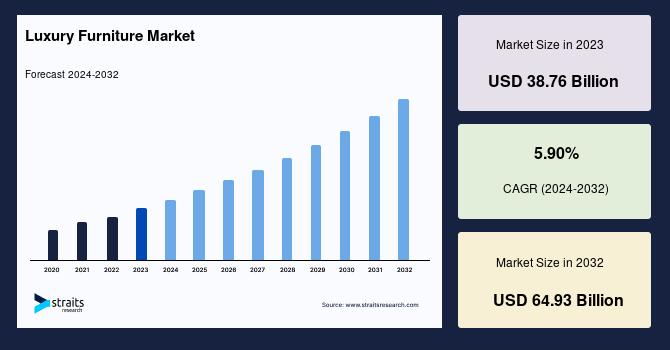
The global luxury furniture market is experiencing consistent growth, driven by rising disposable incomes, increasing demand for premium home décor, and growing consumer preference for high-quality and aesthetically appealing furnishings. According to the latest report by Straits Research, the market was valued at USD 38.76 billion in 2023 and is projected to grow to USD 41.05 billion in 2024, reaching USD 64.93 billion by 2032, expanding at a CAGR of 5.9% during the forecast period.
For detailed insights, visit: https://straitsresearch.com/report/luxury-furniture-market
Market Drivers
The growing demand for premium and customized home interiors is a major factor driving the luxury furniture market. Consumers are increasingly investing in high-end furniture that reflects their personal style and enhances the aesthetic appeal of their living spaces. This trend is particularly prominent among affluent households and urban consumers.
Another key driver is the rapid growth of the real estate and hospitality sectors. Luxury residential projects, hotels, and commercial spaces are incorporating high-end furniture to create sophisticated and comfortable environments. This has significantly boosted the demand for luxury furniture products across various segments.
The influence of interior design trends and social media is also contributing to market growth. Platforms showcasing modern and luxury living spaces are inspiring consumers to upgrade their home décor. Additionally, the increasing popularity of modular and multifunctional furniture is attracting a wider customer base.
For sample access, visit: https://straitsresearch.com/report/luxury-furniture-market/request-sample
Market Challenges
Despite strong growth prospects, the luxury furniture market faces certain challenges. High costs associated with premium materials and craftsmanship may limit adoption among price-sensitive consumers. Additionally, fluctuations in raw material prices, particularly wood and metal, can impact production costs and profit margins.
Supply chain disruptions and logistical challenges may also affect the timely delivery of products. Furthermore, competition from counterfeit and low-cost alternatives can impact the market share of established luxury brands.
Environmental concerns related to deforestation and sustainability are also influencing consumer preferences. Manufacturers are increasingly required to adopt eco-friendly practices and sustainable sourcing of materials.
Market Segmentation
The luxury furniture market is segmented based on product, raw material, distribution channel, and end-user.
By product, the market includes lighting, tables, chairs and sofas, bedroom furniture, cabinets, and accessories and other products. Chairs and sofas hold a significant share due to their essential role in both residential and commercial spaces. Bedroom furniture and tables are also key segments, driven by demand for complete interior solutions.
Based on raw material, the market is categorized into wood, metal, plastic, and other materials. Wood dominates the segment due to its premium appeal, durability, and versatility. Metal furniture is gaining traction for its modern design and strength, while plastic and other materials cater to specific design preferences and cost considerations.
By distribution channel, the market includes home centers, flagship stores, specialty stores, online platforms, and other channels. Specialty stores and flagship stores hold a major share due to their curated product offerings and personalized customer experience. However, online channels are growing rapidly, driven by convenience, digital transformation, and access to a wide range of products.
By end-user, the market is divided into residential and commercial segments. The residential segment dominates the market, driven by increasing home renovation activities and demand for premium home décor. The commercial segment, including hotels, offices, and luxury retail spaces, is also witnessing steady growth.
Regional Insights
Regionally, the luxury furniture market is analyzed across North America, Europe, Asia-Pacific, Latin America, and the Middle East and Africa.
Europe holds a significant share of the market, supported by a strong tradition of craftsmanship, presence of renowned luxury brands, and high consumer spending on premium products. North America also represents a major market, driven by demand for modern and high-end home furnishings.
Asia-Pacific is expected to witness the fastest growth during the forecast period, fueled by rising disposable incomes, rapid urbanization, and increasing demand for luxury lifestyle products in countries such as China and India.
Latin America and the Middle East and Africa are emerging markets, offering growth opportunities due to expanding real estate sectors and increasing adoption of luxury home décor.
Key Players Analysis
The luxury furniture market is highly competitive, with key players focusing on innovation, quality, and brand positioning. Major companies operating in the market include Brown Jordan International, Restoration Hardware, Kimball International Inc., Knoll, Cassina Spa, Grayson Luxury, Lola Furniture, Duresta, JL&IC Furniture Co. Ltd, Muebles Pico, Nella Vetrina, and Molteni Group.
These companies are investing in product design, sustainable materials, and advanced manufacturing techniques to meet evolving consumer preferences. Collaborations with designers, expansion into emerging markets, and digital marketing strategies are key approaches adopted to strengthen market presence.
Conclusion
The global luxury furniture market is poised for steady growth, driven by increasing demand for premium home décor, expansion of real estate and hospitality sectors, and evolving consumer lifestyles. While challenges such as high costs and sustainability concerns persist, innovation and growing online distribution channels are expected to support long-term market expansion.
Frequently Asked Questions (FAQs)
What is the expected market size of the luxury furniture market by 2032?
The market is projected to reach USD 64.93 billion by 2032.
What is the CAGR of the luxury furniture market?
The market is expected to grow at a CAGR of 5.9% during the forecast period.
Which segment dominates the market by product?
Chairs and sofas hold a significant share due to their essential use in residential and commercial spaces.
What are the key drivers of the market?
Key drivers include rising disposable incomes, demand for premium interiors, and growth in real estate and hospitality sectors.
Who are the key players in the market?
Leading companies include Restoration Hardware, Knoll, Cassina Spa, and Molteni Group.
About Us
Straits Research is a leading research and intelligence organization, specializing in analytics, advisory services, and providing comprehensive market research reports.
Contact Us
Email: sales@straitsresearch.com
Tel: +1 646 905 0080 (U.S.), +44 203 695 0070 (U.K.)

 English