


 SPARK Website
Sports Equipment Market Size to Reach USD 695.93 Billion by 2033, Growing at a CAGR of 6.7%
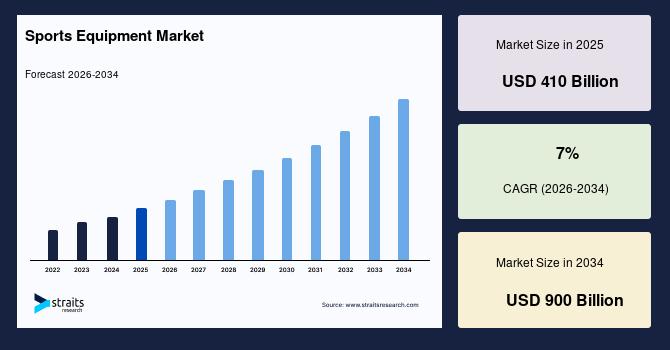
The global sports equipment market is witnessing robust growth, driven by increasing participation in sports and fitness activities, rising health awareness, and the growing popularity of recreational and professional sports worldwide. According to the latest report by Straits Research, the market was valued at USD 388.22 billion in 2024 and is projected to grow to USD 414.24 billion in 2025, reaching USD 695.93 billion by 2033, expanding at a CAGR of 6.7% during the forecast period.
For detailed insights, visit: https://straitsresearch.com/report/sports-equipment-market
Market Drivers
The growing emphasis on health and wellness is one of the primary drivers of the sports equipment market. Consumers are increasingly adopting active lifestyles, leading to higher participation in fitness activities, sports clubs, and outdoor recreational events. This shift is fueling demand for a wide range of sports equipment, from fitness gear to specialized sporting goods.
Another key driver is the rising popularity of organized sports and international sporting events. Increased investments in sports infrastructure, training facilities, and youth development programs are encouraging participation at both amateur and professional levels. Additionally, the influence of social media and fitness influencers has significantly boosted awareness and adoption of sports-related activities.
Technological advancements in sports equipment are also contributing to market growth. Manufacturers are focusing on innovation, incorporating smart technologies, lightweight materials, and performance-enhancing designs to improve user experience. These advancements are particularly evident in fitness equipment and athletic training gear.
For sample access, visit: https://straitsresearch.com/report/sports-equipment-market/request-sample
Market Challenges
Despite strong growth prospects, the sports equipment market faces certain challenges. High costs associated with advanced and premium equipment may limit adoption among price-sensitive consumers. Additionally, fluctuations in raw material prices can impact manufacturing costs and profit margins.
Counterfeit products and the availability of low-cost alternatives in the market also pose significant challenges for established brands. Furthermore, seasonal demand variations and economic uncertainties may affect consumer spending on non-essential items such as sports equipment.
Market Segmentation
The sports equipment market is segmented based on sports type, distribution channel, and end-user.
By sports type, the market includes ball sports, adventure sports, fitness/strength, ball over net games, and athletic training. Ball sports hold a significant share due to the global popularity of games such as football, basketball, and cricket. Fitness and strength equipment are also witnessing rapid growth, driven by increasing gym memberships and home workout trends. Adventure sports and athletic training segments are gaining traction as consumers seek diverse and high-performance activities.
Based on distribution channel, the market is categorized into store-based retail, online retail, and department & discount stores. Store-based retail continues to dominate due to the ability for consumers to physically examine products before purchase. However, online retail is growing rapidly, supported by the expansion of e-commerce platforms, convenience, and wider product availability. Department and discount stores also play a key role in attracting price-conscious consumers.
By end-user, the market is divided into commercial and household segments. The commercial segment, including gyms, sports clubs, and training centers, accounts for a substantial share due to bulk purchasing and frequent equipment upgrades. Meanwhile, the household segment is expanding steadily, driven by the increasing trend of home fitness and personal sports activities.
Regional Insights
Regionally, the sports equipment market is analyzed across North America, Europe, Asia-Pacific, Latin America, and the Middle East and Africa.
North America holds a prominent share of the market, driven by high sports participation rates, advanced infrastructure, and strong consumer spending on fitness and recreational activities. Europe also represents a significant market, supported by widespread engagement in sports and government initiatives promoting physical activity.
Asia-Pacific is expected to witness the fastest growth during the forecast period, fueled by rising disposable incomes, urbanization, and increasing awareness of health and fitness in countries such as China and India. The growing popularity of international sports and expanding middle-class population further contribute to regional growth.
Latin America and the Middle East and Africa are emerging markets, offering growth opportunities due to improving sports infrastructure and increasing interest in recreational activities.
Key Players Analysis
The sports equipment market is highly competitive, with key players focusing on innovation, brand positioning, and strategic partnerships to strengthen their market presence. Major companies operating in the market include Puma SE, Mizuno Corporation, Amer Sports, Nike, Inc., Callaway Golf Co., YONEX Co. Ltd., and Adidas AG.
These companies are investing heavily in research and development to introduce advanced products with improved performance, durability, and user comfort. Collaborations with athletes, sponsorships of sporting events, and expansion into emerging markets are key strategies adopted by industry players.
Conclusion
The global sports equipment market is poised for strong growth, driven by increasing health awareness, rising sports participation, and continuous product innovation. While challenges such as high costs and counterfeit products persist, the market is expected to benefit from expanding distribution channels and growing consumer interest in fitness and recreational activities.
Frequently Asked Questions (FAQs)
What is the expected market size of the sports equipment market by 2033?
The market is projected to reach USD 695.93 billion by 2033.
What is the CAGR of the sports equipment market?
The market is expected to grow at a CAGR of 6.7% during the forecast period.
Which segment dominates the market by sports type?
Ball sports hold a significant share due to their global popularity.
What are the key drivers of the market?
Key drivers include rising health awareness, increasing sports participation, and technological advancements in equipment.
Who are the key players in the market?
Leading companies include Nike, Inc., Adidas AG, Puma SE, Mizuno Corporation, and YONEX Co. Ltd.
About Us
Straits Research is a leading research and intelligence organization, specializing in analytics, advisory services, and providing comprehensive market research reports.
Contact Us
Email: sales@straitsresearch.com
Tel: +1 646 905 0080 (U.S.), +44 203 695 0070 (U.K.)

 English