


 SPARK Website
Digitizing Bricks and Mortar: An Introduction to the Global Proptech Industry
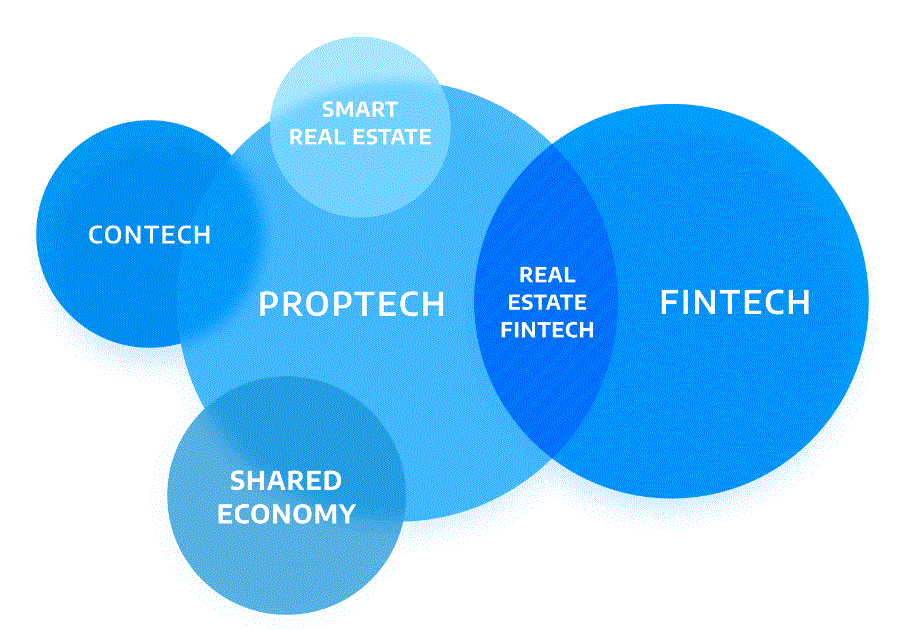
The real estate industry, one of the world's oldest and largest asset classes, is in the midst of a profound and long-overdue technological revolution. At the forefront of this transformation is the global Proptech industry, a dynamic and rapidly expanding sector dedicated to applying technology and innovative new business models to the way we buy, sell, lease, manage, and interact with property. The term "Proptech" (a portmanteau of property and technology) encompasses a broad and diverse range of digital solutions designed to address the inefficiencies, lack of transparency, and poor user experiences that have long characterized the traditional real estate sector. From online platforms that streamline the home buying process and software that optimizes building management, to virtual reality tours and smart home devices, the Proptech industry is injecting a much-needed dose of data-driven efficiency, transparency, and customer-centricity into every facet of the property lifecycle, fundamentally reshaping one of the most important sectors of the global economy.
The ecosystem of the Proptech industry is a vibrant and diverse landscape, populated by thousands of startups, established technology companies, and forward-thinking real estate firms. The Proptech startups are the primary engine of innovation. They are typically agile, tech-focused companies that identify a specific pain point in the real estate value chain and build a software or platform solution to solve it. This includes companies focused on residential real estate ("Resi-tech"), commercial real estate ("CRE-tech"), and even construction ("Con-tech"). A crucial part of the ecosystem is the venture capital community, which has been pouring billions of dollars into promising Proptech startups, fueling their growth and development. The traditional real estate industry incumbents—such as large brokerage firms, property developers, and institutional property owners—are also key players. Initially slow to adapt, many are now actively investing in, partnering with, or acquiring Proptech companies to stay competitive and modernize their own operations. Finally, the major technology giants are also making their presence felt, providing the underlying cloud infrastructure and AI platforms that many Proptech solutions are built upon.
The scope of the Proptech industry is incredibly broad and can be categorized into several key verticals that map to the property lifecycle. The "Search and Discovery" vertical includes online marketplaces and listing portals (like Zillow in the U.S. or Rightmove in the U.K.) that have digitized the process of finding a property to buy or rent. The "Transaction and Financing" vertical focuses on streamlining the complex and paper-intensive processes of buying, selling, and financing property. This includes digital mortgage lenders, online closing platforms, and "iBuyers" (instant buyers) who use algorithms to make instant cash offers on homes. The "Property Management" vertical provides software solutions for landlords and property managers to manage their portfolios, from collecting rent and handling maintenance requests to marketing vacant units. Another major vertical is "Building Operations and Management," which uses technology like IoT sensors and building management systems to improve the efficiency, sustainability, and occupant experience of commercial and residential buildings, often falling under the "Smart Buildings" sub-sector.
The fundamental value proposition of the Proptech industry is its ability to use technology to solve long-standing problems of inefficiency, opacity, and fragmentation in the real estate market. For consumers, Proptech offers greater transparency, more choice, and a more convenient, user-friendly experience. For example, it allows a homebuyer to tour dozens of properties virtually, apply for a mortgage online, and close the transaction digitally, saving a huge amount of time and effort. For real estate professionals and property owners, Proptech provides tools that automate manual tasks, provide data-driven insights, and improve operational efficiency. A property manager can use software to automate rent collection and maintenance scheduling, while a commercial building owner can use IoT sensors to optimize energy consumption and reduce operating costs. By replacing outdated, paper-based processes with streamlined, digital workflows, the Proptech industry is creating a more efficient, transparent, and accessible real estate market for all participants.
Top Trending Reports:
Manufacturing Analytics Market

 English