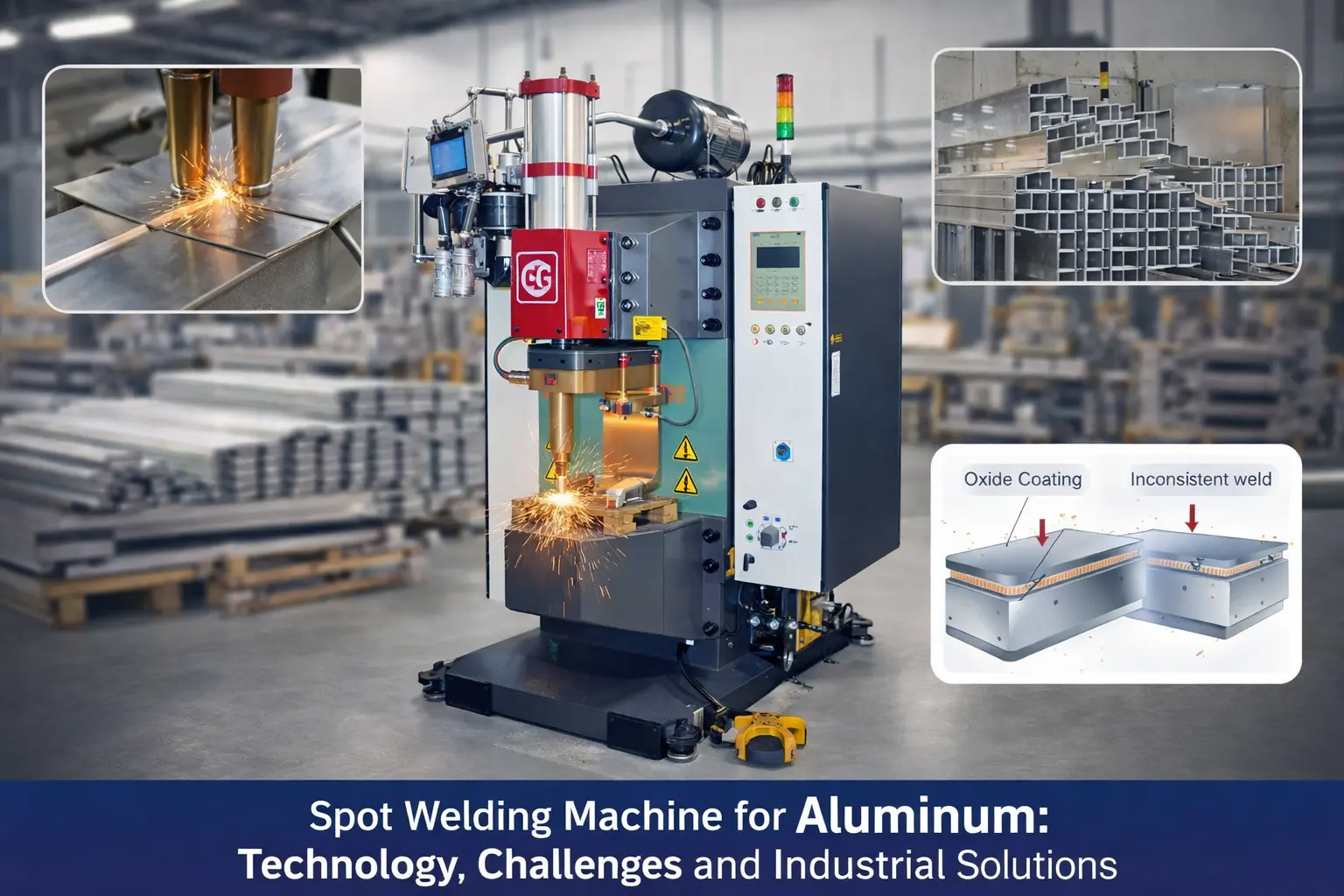
Aluminum has become a cornerstone material in modern manufacturing due to its lightweight strength, corrosion resistance, and suitability for EVs, aerospace structures, and high-efficiency industrial equipment. However, using a spot welder for aluminum is not straightforward its high thermal conductivity, oxide layer, and low electrical resistance make it one of the most challenging materials for resistance welding applications.
For OEMs, automation integrators, and production engineers, achieving stable aluminum spot welding requires not just a machine but a controlled, engineered welding system.
At Heron Welder, we specialize in advanced resistance welding technologies designed specifically to solve these challenges with precision, repeatability, and automation readiness.
Why Aluminum Is Difficult for Spot Welding
Aluminum behaves very differently from steel in resistance welding systems. These material characteristics directly impact weld quality:
1. High Electrical & Thermal Conductivity
Aluminum quickly dissipates heat, making it difficult to concentrate energy at the weld interface. This requires significantly higher current input compared to steel welding.
2. Oxide Layer Barrier
A naturally forming aluminum oxide layer (Al₂O₃) has a much higher melting point than aluminum itself, increasing contact resistance variation and affecting nugget formation stability.
3. Soft Material Behavior
Aluminum deforms easily under electrode force, which can lead to inconsistent contact pressure and electrode sticking if not controlled properly.
Due to these factors, conventional AC spot welders often fail to deliver consistent results in production environments.
How a Spot Welder for Aluminum Works
A spot welder for aluminum uses resistance heating to form a localized weld nugget between overlapping sheets.
The process typically includes:
1. Electrode Clamping (Squeeze Phase)
High electrode force ensures stable contact and reduces surface resistance variations caused by oxidation.
2. High-Current Pulse Heating
A very high current (often 2–3× that used for steel) flows through the joint, rapidly generating heat at the interface.
3. Nugget Formation
The aluminum melts locally and forms a weld nugget under pressure.
4. Forge & Cooling Phase
Electrode force is maintained to solidify the molten metal into a dense, defect-free joint.
This process demands precise timing and current control to avoid porosity, expulsion, or weak fusion zones.
MFDC Technology: The Industrial Standard for Aluminum Spot Welding
Modern production environments rely heavily on MFDC (Medium Frequency Direct Current) spot welding systems for aluminum joining.
Why MFDC is Essential
- Stable DC output (no zero-crossing losses)
- Higher thermal efficiency
- Precise millisecond-level current control
- Reduced spatter and electrode wear
- Consistent nugget formation in multi-layer joints
Compared to traditional AC systems, MFDC welding provides superior control over heat input critical for aluminum’s sensitive thermal behavior.
In high-volume manufacturing, this directly translates into better yield rates and lower rework costs.
Industrial Applications of Aluminum Spot Welding
1. Automotive & Electric Vehicles (EVs)
Aluminum spot welding is widely used in:
- Battery trays
- Lightweight body structures
- Crash management components
EV manufacturers depend on stable weld quality for structural safety and battery performance.
2. Aerospace Engineering
Aircraft structures require:
- High strength-to-weight ratio joints
- Minimal thermal distortion
- Repeatable weld quality
Aluminum spot welding ensures lightweight construction without compromising structural integrity.
3. Industrial Equipment & OEM Manufacturing
Used in:
- HVAC housings
- Electrical enclosures
- Machine frames
- Transport equipment
Automation compatibility makes spot welding ideal for high-volume OEM production lines.
Key Parameters for Aluminum Spot Welding Success
To achieve stable weld quality, engineers must carefully control:
Welding Current
Aluminum requires extremely high current levels to overcome conductivity losses and generate sufficient heat.
Electrode Force
Higher force improves surface contact and reduces variability caused by oxidation layers.
Welding Time
Short, high-intensity pulses are preferred to prevent excessive heat dissipation.
Electrode Design
Copper alloy electrodes with optimized tip geometry are critical for durability and heat distribution.
Even small deviations in these parameters can significantly affect weld nugget consistency.
Common Challenges in Aluminum Spot Welding
Manufacturers frequently face the following issues:
- Inconsistent nugget formation
- Electrode sticking and wear
- Porosity and weak joints
- Heat imbalance in multi-layer assemblies
- Process instability in automated lines
These challenges highlight the need for advanced control systems rather than basic welding equipment.
Heron Welder’s Engineering Approach to Aluminum Spot Welding
At Heron Welder, we design industrial resistance welding systems specifically optimized for aluminum applications.
Our solutions include:
Advanced MFDC Spot Welding Machines
Engineered for high-current stability and precision control in aluminum production environments.
Automated Welding Lines
Integrated systems for OEMs requiring high-speed, repeatable welding in mass production.
Intelligent Welding Controllers
Real-time process monitoring ensures consistent nugget formation and reduces defect rates.
Application-Specific Customization
Tailored solutions for EV, aerospace, appliance, and industrial manufacturing sectors.
By combining mechanical force control, electrical precision, and automation compatibility, Heron systems deliver consistent results even in the most demanding aluminum applications.
Best Practices for Reliable Aluminum Spot Welding
To maximize performance, engineers should follow these guidelines:
- Proper surface cleaning before welding (oxide removal is critical)
- Use MFDC-based welding systems instead of AC machines
- Optimize electrode maintenance schedules
- Ensure stable clamping force in automated setups
- Conduct periodic weld quality inspections
These practices significantly improve production consistency and reduce failure rates.
FAQs: Spot Welder for Aluminum
1. Can aluminum be spot welded effectively?
Yes, but it requires high-current MFDC systems and strict parameter control due to aluminum’s conductivity and oxide layer.
2. Why is aluminum harder to spot weld than steel?
Because aluminum conducts heat and electricity rapidly and has a high-melting oxide layer that interferes with stable nugget formation.
3. What type of spot welder is best for aluminum?
MFDC (Medium Frequency DC) spot welding machines are the most effective for industrial aluminum welding applications.
4. What industries use aluminum spot welding?
Automotive (especially EVs), aerospace, appliance manufacturing, and industrial equipment production.
5. How can weld quality be improved in aluminum spot welding?
By optimizing current, electrode force, weld time, and using advanced welding control systems.
Final Thoughts
A spot welder for aluminum is not just a machine it is a precision-engineered system that must overcome aluminum’s unique physical challenges. Success depends on advanced current control, electrode force management, and process stability.
For manufacturers aiming to improve productivity, reduce defects, and scale automated production, investing in advanced MFDC-based welding technology is essential.
Partner with Heron Welder for Advanced Aluminum Welding Solutions
At Heron Welder, we provide world-class resistance welding systems designed for aluminum and other challenging materials. Whether you are building EV structures, aerospace components, or high-speed automated production lines, our engineering team can help you design the right solution.
Contact Heron Welder today to request a quote or discuss a customized aluminum spot welding solution for your production needs.



 SPARK Website

 English