


 SPARK Website
Optimizing Data Center Fabric with Integrated 100G Optical Solutions
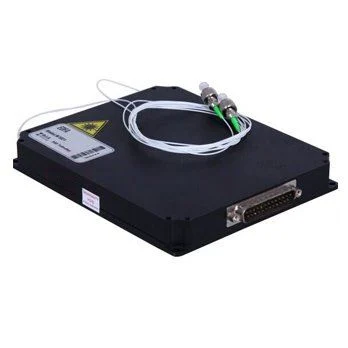
The continuous surge in cloud-based services and big data analytics has placed unprecedented pressure on the physical layer of modern networks. As data centers migrate from 10G and 40G to 100G architectures, the physical limitations of traditional copper—such as signal attenuation and weight—have become significant bottlenecks. To address these challenges, the qsfp28 active optical cable has emerged as a cornerstone technology for short-to-medium range interconnectivity. By integrating high-performance optical transceivers with fixed lengths of fiber optic cable, these assemblies provide a seamless, plug-and-play solution for 100Gbps Ethernet links. Their ability to deliver superior signal integrity over distances that exceed the limits of traditional copper cabling makes them indispensable for modern, high-density network architectures.
Understanding the internal mechanics of these cables reveals why they are preferred over passive alternatives. Unlike Direct Attach Copper (DAC) cables, which rely solely on electrical signals, an Active Optical Cable (AOC) utilizes electrical-to-optical conversion at the cable ends. This allows the data to travel as light pulses through multimode fiber, significantly reducing electromagnetic interference and weight while increasing the maximum reach within a server rack or between neighboring rows of equipment.
Architectural Benefits of Integrated Optical Cables
Modern data centers are often crowded, and managing cable density is a constant challenge. One of the primary advantages of optical assemblies is their physical profile. Fiber optic strands are much thinner and more flexible than the thick copper wires required for 100G transmission. This flexibility allows for tighter bend radii and better airflow within server cabinets, which is critical for maintaining optimal operating temperatures and reducing the energy footprint of cooling systems.
Furthermore, the integration of the transceiver and the fiber into a single bonded unit eliminates the need for cleaning optical connectors. In a standard setup involving separate transceivers and fiber patch cords, any dust or debris on the connector face can cause significant signal loss. With a factory-sealed assembly, the optical interface is protected from the environment, ensuring a reliable connection from the moment it is plugged in. This "set it and forget it" reliability is a major draw for network engineers managing thousands of ports.
Efficiency in High-Density Computing
When comparing various interconnect solutions, performance at scale is the metric that matters most. A 100g qsfp28 aoc cable provides a balanced approach to power consumption and latency. These cables are designed to operate with high-speed VCSEL (Vertical-Cavity Surface-Emitting Laser) technology, which is highly efficient. Because the optical conversion happens within the module itself, the system can maintain a low bit-error rate even at the maximum throughput of 100Gbps.
The use of four independent channels, each operating at 25Gbps, allows for a combined bandwidth that meets the IEEE 802.3bm 100GBASE-SR4 standard. This architecture is perfectly suited for top-of-rack and end-of-row switching, where low latency is required to support real-time data processing and high-frequency trading environments. By minimizing the weight of the cabling infrastructure, operators also reduce the mechanical stress on switch ports, prolonging the lifespan of expensive networking hardware.
Deployment Scenarios for 100G Interconnects
The versatility of these optical assemblies allows them to be deployed in several distinct scenarios. The most common use case is the "switch-to-switch" connection. As data centers migrate from 10G and 40G to 100G cores, the ability to link high-speed switches with minimal configuration is vital. These cables are typically used for distances ranging from 1 meter to 100 meters, covering the vast majority of intra-data center connections.
Another emerging application is in High-Performance Computing (HPC) clusters. In these environments, hundreds or even thousands of servers must work in parallel to solve complex mathematical problems. The low latency and high throughput of optical interconnects ensure that the network does not become a bottleneck for the CPUs and GPUs processing the data. The light weight of fiber also makes it much easier to install across large overhead cable trays compared to traditional copper.
Optimizing Network Reliability and Monitoring
Reliability in a 24/7 data center environment is non-negotiable. Every component must be rigorously tested to ensure it can handle the thermal and electrical stresses of continuous operation. Utilizing a qsfp28 aoc cable ensures that the link is optimized for the specific hardware it is connecting. Since the transceivers are permanently attached, there is no risk of mismatching a transceiver with an incompatible fiber type, which can happen with modular components.
These cables also support Digital Diagnostics Monitoring (DDM), which allows network administrators to monitor the health of the link in real-time. DDM provides data on temperature, supply voltage, and laser bias current. By analyzing these metrics, IT teams can identify potential issues before they lead to a network outage, allowing for proactive maintenance and higher uptime for critical business services.
Future-Proofing the Data Center Infrastructure
As we look toward the future of networking, the move toward 200G and 400G is already underway. However, the 100G standard remains the "sweet spot" for many enterprises due to its balance of cost and performance. Investing in high-quality optical cabling today provides a robust foundation that can support current workloads while maintaining compatibility with existing QSFP28 ports found on the majority of enterprise-grade switches and routers.
The transition from copper to optical is not just about speed; it is about the long-term sustainability of the network. Fiber optics are inherently more scalable and consume less power per gigabit of data transmitted. As data centers continue to grow in size and complexity, the shift toward integrated optical solutions will only accelerate, driven by the need for efficiency, ease of management, and unwavering signal quality.
Installation Best Practices for Optical Cabling
To get the most out of an optical network, proper installation is key. While AOCs are more durable than fragile fiber patch cords, they should still be handled with care. Installers should avoid over-tightening zip ties, which can crush the fiber strands, and should always respect the minimum bend radius specified by the manufacturer. Because the modules are hot-pluggable, they can be added or replaced without powering down the switch, providing maximum flexibility during network upgrades.
In conclusion, the integration of optical technology into a fixed cable format has revolutionized how we think about short-range high-speed links. By combining the speed of light with the simplicity of a copper cable, these solutions provide a path forward for data centers that require 100G speeds without the complexity of traditional fiber optics. Whether for a small server room or a massive cloud facility, the performance benefits are clear, ensuring that data moves at the speed of modern business.

 English