


 SPARK Website
The Hidden Impact of Excessive Daytime Sleepiness on Your Life & Productivity
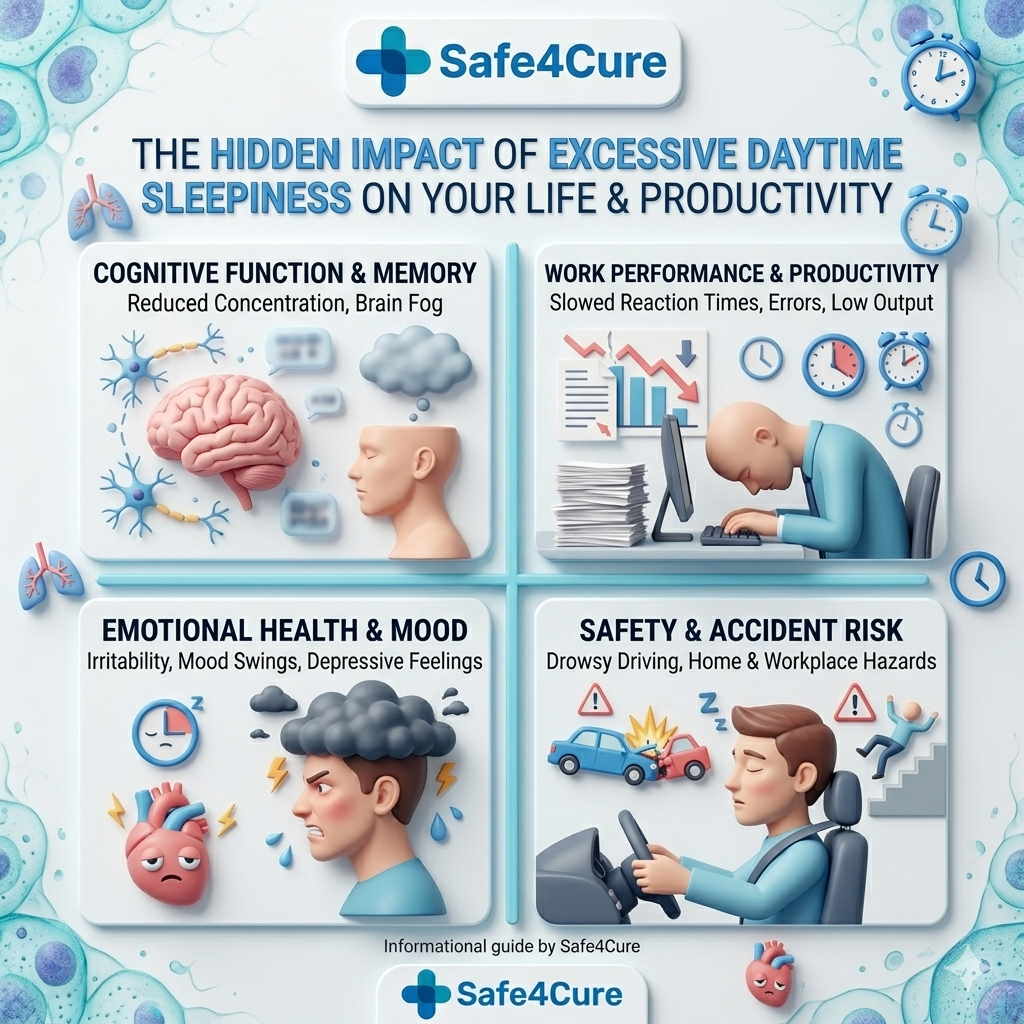
You set three alarms. You still woke up late. You downed two cups of coffee before 9 AM and still found yourself nodding off during an important meeting. Sound familiar? For millions of Americans, this is not just a bad morning — it is everyday life. Excessive daytime sleepiness (EDS) is one of the most overlooked yet profoundly disruptive health conditions in the United States today, quietly eroding careers, relationships, and physical wellbeing one exhausted day at a time.
EDS is far more than feeling tired after a poor night's rest. It is a persistent, overwhelming urge to sleep during waking hours — regardless of how long a person has been in bed. Whether rooted in sleep deprivation, an undiagnosed condition like obstructive sleep apnea, or the side effects of sedating medications, the impact cuts across every dimension of daily functioning. Fortunately, excessive sleepiness treatment options have advanced significantly, including prescription wakefulness agents like Armodafinil pills that are specifically designed to restore daytime alertness in adults with EDS-related conditions.
This blog takes a clear-eyed look at what EDS really is, why it happens, what it does to your life, and how today's medical options — including Armod 50 Mg available at Safe4cure — can help you take your days back.
What Is Excessive Daytime Sleepiness?
Hypersomnia is any condition that makes you feel extremely sleepy during the day, even after what should have been adequate overnight sleep. EDS falls under the broader hypersomnia umbrella and is defined as the inability to stay awake and alert during major waking episodes of the day, resulting in unintended lapses into drowsiness or sleep.
EDS is not a disease in itself — it is a symptom, a signal that something deeper is wrong. According to the American Academy of Sleep Medicine, EDS affects between 10% and 20% of the American adult population. It is the leading reason people visit sleep clinics in the US, and its consequences stretch far beyond just feeling foggy.
Importantly, EDS is the essential symptom of narcolepsy — a neurological disorder in which the brain cannot properly regulate the sleep-wake cycle. But narcolepsy accounts for just a fraction of EDS cases. The majority stem from far more common and often preventable causes.
Real-Life Example: Sarah's Story
Sarah, a 34-year-old marketing manager from Chicago, Illinois, spent two years wondering why she could never seem to "wake up." She slept 8 to 9 hours every night, drank coffee constantly, and still fell asleep during lunch breaks and afternoon calls. Her performance reviews started slipping. She was passed over for a promotion. Her doctor initially dismissed her symptoms as stress. A sleep study eventually revealed she had idiopathic hypersomnia — a condition where the brain generates excessive sleep pressure despite sufficient night-time sleep. With proper diagnosis and a tailored treatment plan that included wakefulness therapy, Sarah's alertness — and her career — turned around completely.
Excessive Daytime Sleepiness Symptoms
Recognizing EDS early is key to getting the right help. The condition presents across a wide spectrum, from mild fatigue to incapacitating drowsiness. Common excessive daytime sleepiness symptoms include:
• Overwhelming urge to sleep during the day regardless of nighttime sleep duration
• Falling asleep unintentionally — during work, driving, eating, or conversations
• Persistent mental fog, slow thinking, and difficulty processing information
• Memory lapses and difficulty retaining new information
• Irritability, emotional reactivity, and mood instability
• Difficulty waking up in the morning even after long sleep
• Needing to nap frequently without feeling refreshed afterward
• Reduced motivation, low energy, and general disengagement
• Slowed reaction times that affect driving and physical tasks
• Microsleeps — brief, involuntary sleep episodes lasting just a few seconds
These symptoms are not merely inconvenient. They are clinically significant. When someone regularly experiences five or more of these, a physician evaluation for underlying sleep disorders — including hypersomnia and obstructive sleep apnea — is strongly warranted.
Excessive Daytime Sleepiness Causes: What Is Really Draining You?
Understanding the root causes of EDS is essential before any treatment can be effective. The following table breaks down the most common causes and how each one drives daytime sleepiness:
|
Cause |
How It Triggers EDS |
Key Notes |
|
Sleep Deprivation |
Getting fewer hours than the body needs night after night |
Most preventable cause; affects 1 in 3 Americans |
|
Obstructive Sleep Apnea (OSA) |
Repeated airway blockages fragment sleep cycles all night |
Often undiagnosed; causes non-restorative sleep |
|
Narcolepsy |
Brain fails to regulate sleep-wake cycles correctly |
EDS is the essential symptom of narcolepsy |
|
Hypersomnia |
Neurological disorder causing excessive sleep regardless of duration |
Distinct from tiredness; unrelenting daytime sleepiness |
|
Sedating Medications |
Antihistamines, antidepressants, and muscle relaxants suppress alertness |
Often overlooked as a daytime sleepiness trigger |
|
Iron / Vitamin D Deficiency |
Nutrients essential for energy metabolism and neurotransmission |
What deficiency causes too much sleep — often iron or Vitamin D |
|
Depression & Anxiety |
Mental health conditions disrupt circadian rhythm and sleep quality |
30-40% of people with depression report hypersomnia |
|
Thyroid Disorders (Hypothyroidism) |
Low thyroid hormone slows metabolism and energy production |
Fatigue and oversleeping are hallmark symptoms |
What Deficiency Causes Too Much Sleep?
One of the most commonly asked questions by Americans experiencing chronic fatigue is: what deficiency causes too much sleep? The answer is more nuanced than most people expect. While sleep disorders and lifestyle factors are the leading culprits, nutritional and hormonal deficiencies play a significant and often ignored role.
Iron Deficiency and Anemia
Iron is critical for producing hemoglobin, the protein that carries oxygen in the blood. When iron levels drop, less oxygen reaches the brain and muscles, leaving the body in a perpetual state of low energy. Iron-deficiency anemia is one of the most widespread nutritional deficiencies in the US, particularly among women of childbearing age, and it is a well-documented driver of excessive sleepiness.
Vitamin D Deficiency
Vitamin D plays a key role in regulating neurotransmitters like serotonin and dopamine, both of which influence mood, alertness, and sleep-wake cycles. Studies have found that low vitamin D levels are strongly associated with excessive fatigue and daytime drowsiness. An estimated 42% of Americans are vitamin D deficient, making this a widespread and under-recognized contributor to EDS.
B12 and Folate Deficiency
These vitamins are essential for neurological function and red blood cell production. A deficiency in either leads to fatigue, brain fog, and difficulty staying alert — symptoms that closely mirror those of hypersomnia and EDS.
Thyroid Hormone Deficiency (Hypothyroidism)
The thyroid regulates the body's metabolic rate. When thyroid hormone production is low, virtually every bodily process slows down — including brain function and sleep-wake regulation. Hypothyroidism is one of the most frequently missed causes of EDS, particularly in women over 40.
Risk Factors for Excessive Sleepiness
Certain groups and lifestyle patterns significantly elevate the risk of developing EDS. Key risk factors for excessive sleepiness include:
• Irregular sleep schedules or shift work that disrupts the body's circadian rhythm
• Obesity, which raises the likelihood of obstructive sleep apnea
• Chronic stress, anxiety, and depression — all of which fragment sleep architecture
• Use of sedating medications including antihistamines, opioids, benzodiazepines, or certain antidepressants
• Underlying chronic illnesses such as diabetes, heart disease, or kidney disease
• Alcohol use, which suppresses REM sleep and increases nighttime waking
• A family history of narcolepsy, hypersomnia, or other sleep disorders
• Teenagers and college students who routinely sleep fewer hours than physiologically needed
How EDS Silently Destroys Life & Productivity
The hidden cost of excessive daytime sleepiness is enormous — not just personally, but economically and socially. Here is how EDS impacts key areas of daily life:
|
Life Area |
How EDS Impacts It |
Key Statistics / Notes |
|
Work Performance |
Missed deadlines, slower processing, more errors |
EDS costs the US economy ~$411 billion/year in lost productivity |
|
Driving Safety |
Drowsy driving causes 6,000+ fatal crashes annually in the USA |
Comparable impairment to drunk driving at 0.10% BAC |
|
Mental Health |
Increases risk of anxiety, depression, and emotional instability |
A vicious cycle: poor sleep worsens mood, mood worsens sleep |
|
Physical Health |
Raises risk of obesity, diabetes, and heart disease |
Chronic sleepiness disrupts hormones regulating appetite and metabolism |
|
Relationships & Social Life |
Irritability and withdrawal damage personal and professional relationships |
Social isolation worsens overall mental wellbeing |
|
Academic Performance |
Students with EDS show lower GPA and higher dropout risk |
College students are one of the highest-risk EDS groups in the US |
Excessive Sleepiness Treatment: What Actually Works
Treatment for EDS depends on the underlying cause, but there are both behavioral and pharmacological options that have strong evidence behind them.
Sleep Hygiene and Behavioral Strategies
The foundation of EDS management starts with consistent habits. Go to bed at the same time every night — even on weekends. This single habit helps anchor your circadian rhythm and improves both sleep quality and daytime alertness. Other behavioral strategies include limiting caffeine after noon, reducing alcohol, creating a dark and cool sleep environment, and avoiding screen exposure in the hour before bed.
Treating the Root Cause
If EDS stems from obstructive sleep apnea, CPAP therapy is the primary treatment. If medications are to blame, a physician may adjust the prescription or timing. Nutritional deficiencies are addressed through supplementation and dietary changes. Depression and anxiety require appropriate mental health treatment including therapy and medication.
Pharmacological Wakefulness Support: Armodafinil
For patients whose daytime sleepiness persists despite addressing underlying causes, Armodafinil pills offer a clinically validated solution. Armodafinil is used to improve wakefulness in adults with residual EDS related to narcolepsy, obstructive sleep apnea, and shift work sleep disorder. Its armodafinil classification places it in the category of a Wakefulness-promoting agent — a pharmacological class that promotes alertness through selective action on wake-promoting brain circuits without the broad stimulant effects associated with amphetamines.
Sold under the armodafinil brand name Nuvigil in the United States, armodafinil is the R-enantiomer of modafinil, meaning it is the more potent, longer-lasting form of the compound. Physicians may prescribe it at varying doses depending on severity and patient response.
Armod 50 Mg is a lower-dose armodafinil option that serves as an excellent starting point for adults new to wakefulness therapy or those who are sensitive to higher doses. It provides meaningful alertness support with a gentler pharmacological footprint. Armod 50 Mg is available through Safe4cure, a trusted online pharmacy platform serving patients across the USA with genuine, quality-verified medications. As always, armodafinil requires a valid prescription and should only be used under a physician's guidance.
It is worth noting that Armodafinil pills do not replace good sleep or treat underlying disorders. They are a targeted tool to restore functional wakefulness while other treatments address the root cause of EDS — a combination approach that sleep specialists across the US increasingly recommend.
Frequently Asked Questions (FAQs)
Q1. Is excessive daytime sleepiness a serious medical condition?
Yes. EDS significantly impairs cognitive function, reaction time, mood, and physical health. It is associated with increased risk of traffic accidents, workplace injuries, cardiovascular disease, and metabolic disorders. If you experience persistent daytime sleepiness, a physician evaluation is strongly recommended.
Q2. How is hypersomnia different from just being tired?
Tiredness typically resolves after rest. Hypersomnia is any condition that makes you feel extremely sleepy during the day regardless of how much sleep you have gotten. It is neurologically driven and does not respond to simply sleeping more — in fact, some patients with hypersomnia sleep 10 to 12 hours and still feel unrefreshed.
Q3. Can Armod 50 Mg be used for shift work sleepiness?
Yes. Armodafinil, including lower doses like Armod 50 Mg, is FDA-approved for shift work sleep disorder in addition to narcolepsy and obstructive sleep apnea. It is taken approximately one hour before the start of a work shift to promote wakefulness throughout the working hours.
Q4. What is the difference between Nuvigil and generic armodafinil?
Nuvigil is the brand name version of armodafinil produced by Teva Pharmaceuticals. Generic armodafinil, including products like Armod, contains the same active ingredient at the same dose and meets the same FDA bioequivalence standards. Generic versions are typically more affordable while being equally effective.
Q5. Does going to bed at the same time every night really make a difference?
Absolutely. Consistent sleep timing is one of the most evidence-backed behavioral interventions for EDS. It reinforces the body's internal circadian clock, improves sleep quality, reduces nighttime waking, and leads to more sustained daytime alertness. Irregular sleep schedules, even with the same total hours, worsen EDS significantly.
Q6. Where can I buy Armodafinil pills safely in the USA?
Armodafinil requires a prescription in the United States. With a valid prescription, you can purchase Armod 50 Mg and other armodafinil products through Safe4cure, a reputable online pharmacy that offers authentic medications with verified quality standards.
Conclusion: Stop Accepting Exhaustion as Normal
Excessive daytime sleepiness is not a character flaw, a lack of discipline, or just "being lazy." It is a legitimate medical condition that affects millions of Americans — and one that carries real, measurable consequences for health, careers, relationships, and safety. Whether the cause is chronic sleep deprivation, obstructive sleep apnea, hypersomnia, nutritional deficiency, or the side effects of sedating medications, EDS is a solvable problem when approached with the right information and medical support.
Start by paying attention to your symptoms. Make an appointment with your doctor. Consider a sleep study. And if wakefulness support becomes part of your treatment plan, options like Armodafinil pills — particularly Armod 50 Mg from Safe4cure — offer a scientifically grounded path toward reclaiming the alert, productive days you deserve.
Remember: go to bed at the same time every night, work with your healthcare provider to identify and treat the root cause, and never normalize being too tired to live your life fully. Your best days should not be spent fighting to stay awake through them.
Disclaimer
This blog is for informational purposes only and does not constitute medical advice. Always consult a licensed healthcare professional before starting or changing any medication or treatment plan.

 عربي
عربي