


 SPARK Website
Latin America Sustainable Packaging Market Report 2026–2034: Size, Share, Trends & Forecast
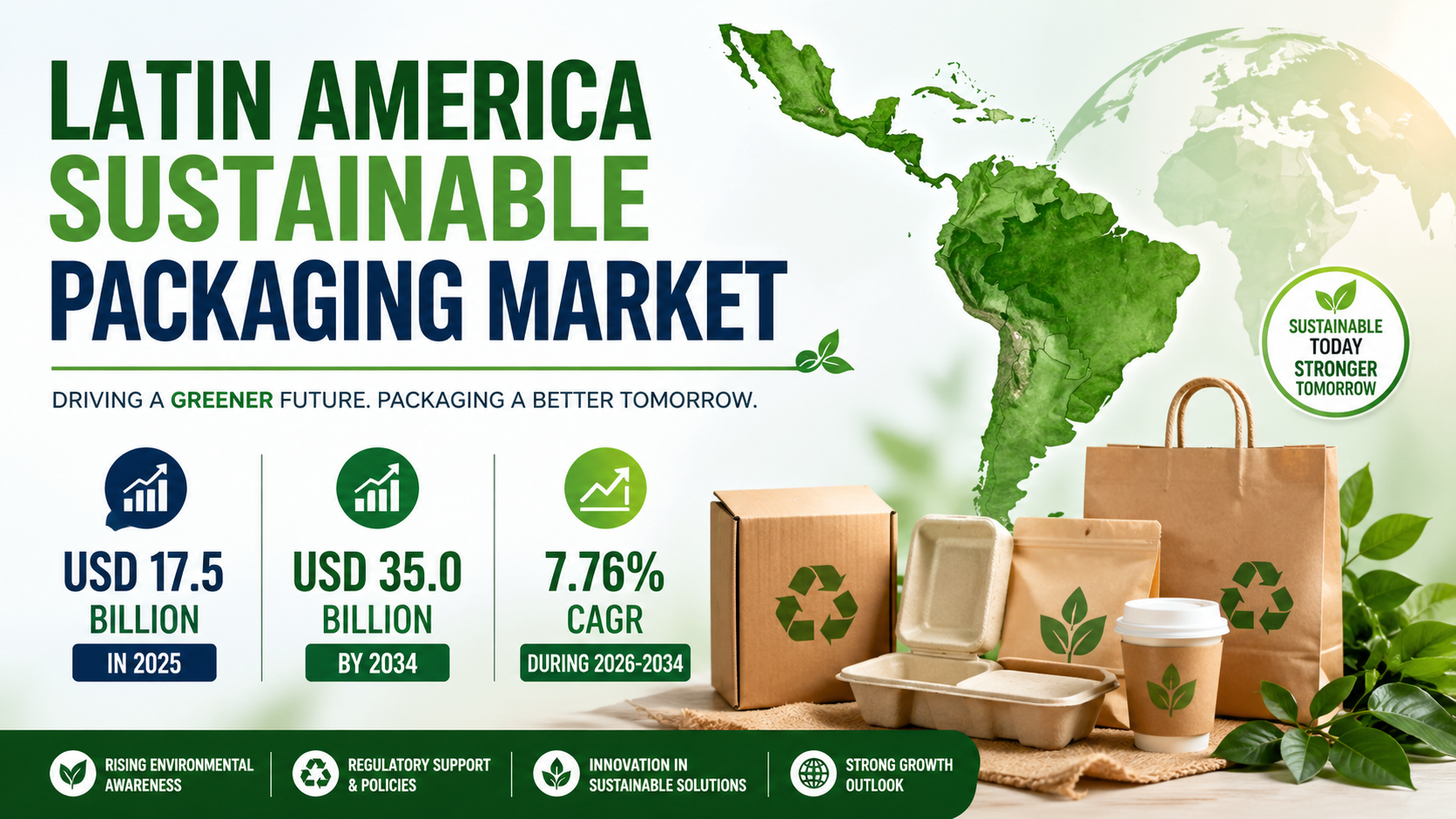
Sustainable packaging or eco-friendly packaging can be defined as the development and use of packaging which has minimal environmental impact and ecological footprint․ This goal can be achieved by using recyclable‚ bio-degradable or compostable materials‚ and/or reducing energy and carbon emissions in the packaging's manufacture and distribution processes․ This shift to new technologies in the Latin America sustainable packaging market seeks to reduce the reliance on single-use plastic‚ and towards circular economy packaging solutions that protect the region's highly biodiverse ecosystem‚ while catering to the booming demand from e-commerce and retail in the region․
What is the expected growth of the Sustainable Packaging Market in Latin America?
As of 2025 the Latin America sustainable packaging market size is USD 17․5 Billion․ The sustainable awareness is not only present in the consumer market‚ but the environmental issues have already had an impact on the industrial market in the region․
The resourcing activity for the next decade is expected to double with the African market reaching USD 35․0 Billion by 2034․ This represents a CAGR of 7․76% between the forecast period 2026-2034․ This reflects a wind of change in the way products will be protected‚ delivered‚ and sold on the continent․
Why is rising consumer awareness driving market growth?
Changing consumer behavior is one of the major factors driving growth of the Latin America sustainable packaging market․ Urban consumers are becoming more aware of the environmental impact of their purchases and are inclined to choose products with less environmental impact․
Because of plastic pollution and accumulation: for example in Brazil alone the reduction of the use of disposable plastics could save as much as 18 million tons of CO2 emissions and yield a market value of BRL 6 Billion․ As consumers push for sustainable offers and products‚ food and beverage‚ cosmetics and retail brands are pressured to offer consumers sustainable packaging as their preferred choice‚ to gain a positive perception‚ brand loyalty‚ and long term relationships with eco-friendly consumers․
How Stringent Government Regulations Are Curbing Plastic Waste?
Government initiatives are also expected to increase the growth of the sustainable packaging market․ Countries like Brazil have implemented some of the strictest policies‚ considering that around 44% of the 7 million tons of plastic produced every year comes from non-recyclable disposable plastic products‚ like cutlery‚ straws and wrappers․
Key regulatory trends include:
• Bans and Limitations: Chile‚ Colombia‚ Mexico and Brazil have implemented bans on single-use plastics and plastic bags․
• Recycling Incentives: Laws are being enacted to stimulate the use of biodegradable materials and increase domestic recycling rates․
• Public Campaigns: Governments are actively raising awareness about reducing waste and forcing the business sector to take steps to comply with legislation․
What Are the Most Commonly Used Sustainable Packaging Materials?
Many potential alternatives to petroleum-based plastics exist on the market‚ and whether one is used instead of another usually depends on product shelf life and local recycling infrastructure:
• Paper and Paperboard: Easily recyclable and biodegradable‚ they are widely used in e-commerce and many dry food applications․
• Plastics that are renewable or recycled‚ such as bio-plastics and recycled PET (rPET)‚ are technically plastic with a lessened environmental impact․
• Glass: Valued for infinite recyclability and premium feel for products including beverages‚ personal care‚ and cosmetics․
Metal: A strong‚ recyclable material that is often used for food and aerosol cans․
How Could Packaging Format Impact Sustainability Goals?
The Latin America sustainable packaging market is divided by packaging format and each offers diverse prospects and challenges for green innovation:
• Primary Packaging: This is the material in direct contact with the product inside (bottles and pouches)․ Innovations include biodegradability and the use of non-toxic coatings․
• Secondary Packaging: Outer packaging or box․ The trend is towards lighter-weight materials‚ and using 100% recycled paperboard․
• Tertiary Packaging: Bulk shipping materials‚ such as pallets and shrink wrap․ Manufacturers are looking for reusable‚ high-strength recyclable films to reduce shipping waste․
Which processes are the most environmentally friendly?
These three processes‚ which loop back into the idea of waste‚ are still important today:
• Recyclable: The materials can be processed and turned into new products․ This is currently the most mature part of the market․
• Reusable: Packaging designed to be returned to the sender and refilled many times‚ such as heavy glass bottles or transit crates․
• Biodegradable: Materials that can break down in the natural environment without leaving behind toxic residues․ This area is quickly growing in the food and organic sector․
Sample Request For Your Business
The growth of e-commerce has created a need for new packaging
Although e-commerce is booming in Latin America‚ and there is a demand for protective packaging in many consumer goods‚ the industry has increasingly adopted "right-sized" and flexible packaging to counter "over-packaging"‚ and limit how much material goes to each package and how much it costs to ship it․
Knowing that online customers tend to have higher environmental consciousness and are more tech-savvy‚ E-commerce companies are turning to recycled paper mailers rather than plastic bags․ To accommodate eco-conscious customers‚ companies are also cutting plastic fillers in the packaging․ Such initiatives have forced companies to adopt green packaging․
Which Latin American Countries are Leading the Sustainable Packaging Movement?
Although regional‚ those countries with industrial capacity and legal frameworks are often seen as leaders in the field:
• Brazil: The most important market‚ with focus on cutting CO2 emissions‚ and optimizing systems recovering plastic․
• Mexico: A major hub of sustainable manufacturing‚ particularly for exports to the North American market․
Chile is a leader among Latin American countries‚ having implemented advanced recycling plants and banned single-use plastics․
• Argentina‚ Colombia and Peru: These emerging economies may benefit from local industries adapting to international sustainability standards․
What are the key recent calculated projects in the region?
Major corporate investments are accelerating a transition to circular production practices within Latin America:
• Coca-Cola's 'Re-Ciclar' Factory: On August 29‚ 2024‚ Coca-Cola announced the investment of USD 35 Million to build their most advanced recycling plant in the region‚ a facility in Chile‚ which will recycle 350 million plastic bottles each year producing 100% recycled PET resin․
• Nefab: Swedish packaging company Nefab invested USD 1 Million in a Chilean plant producing sustainable packaging for the energy‚ mining and telecommunications industries in June 2024․ The new plant creates 80 jobs and enables eco-friendly transportation solutions for heavy industries․
Conclusion:
The Latin America sustainable packaging market is in a rapid evolution stage and is estimated to reach USD 35․0 Billion by 2034․ The growth of the Latin America sustainable packaging market is driven by smart consumers‚ government legislation and initiatives against plastic waste with massive industrial projects‚ such as Coca-Cola's 'Re-Ciclar' project․ As demand for these materials strengthens‚ Latin America is poised to be a leader in the transition to a true circular and sustainable economy․

 عربي
عربي