


 SPARK Website
PP Pickling Tank Manufacturer for Custom Industrial Needs
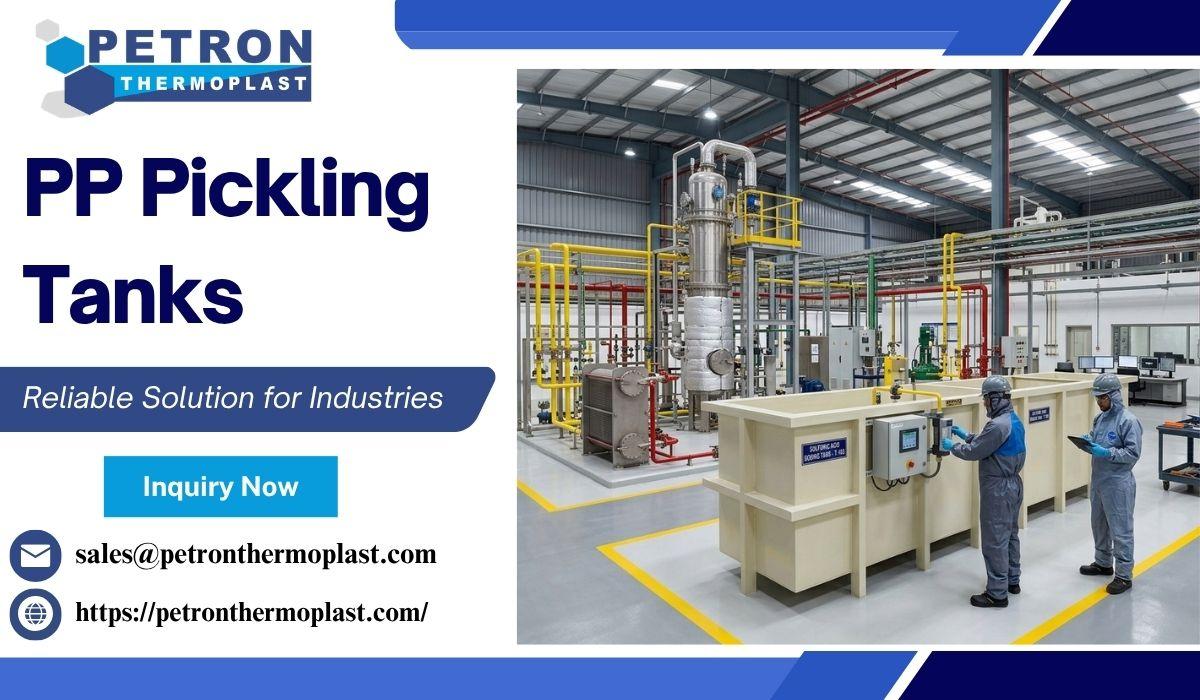
Polypropylene (PP) pickling tanks are specialized industrial containers designed for surface treatment processes involving strong acids and chemical solutions. These tanks are extensively used in metal finishing, galvanizing, and fabrication industries for removing oxides, scales, rust, and other impurities from metal surfaces. A PP pickling tank manufacturer focused on custom industrial needs delivers engineered solutions that ensure chemical resistance, structural integrity, and long-term operational reliability.
Overview of Polypropylene (PP) Material
Polypropylene is a thermoplastic polymer widely used in chemical processing applications due to its excellent resistance to acids, alkalis, and a wide range of corrosive substances. It offers a balance of mechanical strength, chemical stability, and cost efficiency.
Key Material Properties
- Density: 0.90 – 0.92 g/cm³
- Tensile Strength: 30 – 40 MPa
- Operating Temperature Range: Up to 90–100°C
- Melting Point: ~160–165°C
- Thermal Conductivity: ~0.22 W/m·K
- Excellent resistance to inorganic acids and alkalis
These characteristics make PP an ideal material for manufacturing pickling tanks used in aggressive chemical environments.
Role of Pickling Tanks in Industrial Processes
Pickling is a chemical treatment process used to clean metal surfaces by immersing them in acidic solutions such as hydrochloric acid, sulfuric acid, or nitric acid.
Functions of PP Pickling Tanks
- Removal of scale, rust, and oxidation layers
- Surface preparation for coating, plating, or galvanizing
- Enhancement of metal surface quality
- Improvement of adhesion for subsequent finishing processes
PP pickling tanks provide a safe and corrosion-resistant environment for these operations.
Importance of Custom Engineered Solutions
Industrial processes vary significantly based on material type, production volume, chemical concentration, and operating conditions. A PP pickling tank manufacturer offering customized solutions ensures that the tank design meets exact process requirements.
Customization Parameters
- Tank dimensions (length, width, height)
- Wall thickness and reinforcement design
- Operating temperature and chemical compatibility
- Load-bearing capacity
- Integration with process lines and automation systems
Custom engineering enhances operational efficiency and ensures safe chemical handling.
Manufacturing Process of PP Pickling Tanks
A professional manufacturer employs advanced fabrication techniques and strict quality control to produce high-performance tanks.
1. Material Selection
- Use of high-grade virgin polypropylene sheets
- Selection based on chemical compatibility and temperature resistance
- Verification of material properties through testing
2. Fabrication Techniques
- Butt welding and extrusion welding for strong joints
- CNC cutting for precise dimensions
- Use of hot air welding tools for uniform seam quality
3. Structural Reinforcement
- External stiffeners to prevent deformation
- Steel or FRP support structures for large tanks
- Ribbed design for enhanced load distribution
4. Finishing
- Smooth internal surface to prevent chemical accumulation
- Edge finishing for safety and durability
- Integration of nozzles, drains, and overflow systems
Key Features of PP Pickling Tanks
Chemical Resistance
PP tanks offer excellent resistance to:
- Hydrochloric acid (HCl)
- Sulfuric acid (H₂SO₄)
- Nitric acid (HNO₃)
- Alkalis and salts
This ensures safe storage and processing of aggressive chemicals.
Thermal Stability
Capable of operating at elevated temperatures up to 100°C, PP pickling tanks maintain structural integrity during heated pickling processes.
Lightweight Construction
Compared to metal tanks, PP tanks are lightweight, making them easier to transport and install.
Corrosion-Free Operation
Polypropylene is inherently corrosion-resistant, eliminating the need for coatings or linings.
Long Service Life
- Resistance to chemical degradation
- Low maintenance requirements
- High durability in continuous operations
Design Configurations
PP pickling tanks are available in multiple configurations to meet industrial requirements:
Tank Types
- Open-top tanks for manual or automated dipping processes
- Closed tanks with fume extraction systems
- Rectangular and cylindrical designs
- Multi-compartment tanks for sequential processing
Additional Features
- Heating coils or immersion heaters
- Fume hoods and ventilation systems
- Level indicators and control systems
- Drainage and overflow arrangements
Industrial Applications
Metal Finishing Industry
Used for cleaning steel, stainless steel, and non-ferrous metals before coating or plating.
Galvanizing Plants
Essential for removing surface impurities before hot-dip galvanizing.
Automotive and Engineering Industries
Used in component preparation and surface treatment processes.
Chemical Processing Plants
Utilized for handling acidic solutions and chemical reactions.
Fabrication and Manufacturing Units
Supports large-scale pickling operations for structural components.
Quality Control and Testing
A PP pickling tank manufacturer with strict quality control standards ensures product reliability and safety.
Inspection Procedures
- Visual inspection for weld integrity
- Dimensional verification
- Leak testing using water or air pressure
- Chemical compatibility testing
Compliance Standards
- ISO 9001: Quality Management System
- ASTM standards for polypropylene materials
- Industry-specific safety and fabrication guidelines
Advantages Over Conventional Materials
|
Parameter |
PP Pickling Tank |
Metal Tank |
|
Corrosion Resistance |
Excellent |
Requires coating |
|
Weight |
Lightweight |
Heavy |
|
Maintenance |
Low |
High |
|
Chemical Compatibility |
High |
Limited |
|
Cost Efficiency |
High |
Moderate to High |
Installation and Maintenance
Installation Guidelines
- Ensure proper foundation and support structure
- Align tank with process equipment
- Install ventilation and safety systems
- Use compatible fittings and accessories
Maintenance Practices
- Regular inspection of weld joints
- Cleaning to remove chemical residues
- Monitoring for deformation or stress signs
Proper installation and maintenance extend the service life of the tank.
Safety Considerations
- Use of appropriate personal protective equipment (PPE)
- Integration of fume extraction systems
- Proper labeling and handling of chemicals
- Compliance with industrial safety regulations
Safety is a critical aspect of pickling operations involving hazardous chemicals.
Custom Fabrication and Engineering Support
A specialized PP pickling tank manufacturer provides end-to-end engineering support:
- Design consultation based on process requirements
- 3D modeling and layout planning
- On-site installation assistance
- Integration with automation systems
Lifecycle Performance and Sustainability
PP pickling tanks offer long-term operational benefits:
- Resistance to chemical wear and environmental degradation
- Reduced need for repairs and replacements
- Recyclable material properties
- Lower overall lifecycle cost
These factors contribute to sustainable and efficient industrial operations.
Conclusion
A PP pickling tank manufacturer for custom industrial needs delivers high-performance solutions tailored to specific process requirements. Through the use of advanced polypropylene materials, precision fabrication techniques, and strict quality control, these tanks provide reliable performance in aggressive chemical environments.
With superior chemical resistance, structural durability, and design flexibility, PP pickling tanks are an essential component in modern industrial surface treatment systems. Their ability to support safe, efficient, and long-term operations makes them a preferred choice across metal processing, chemical, and manufacturing industries.

 عربي
عربي