


 SPARK Website
Carbon-Negative Concrete Market Size, Trends & Research Report, 2033 | UnivDatos
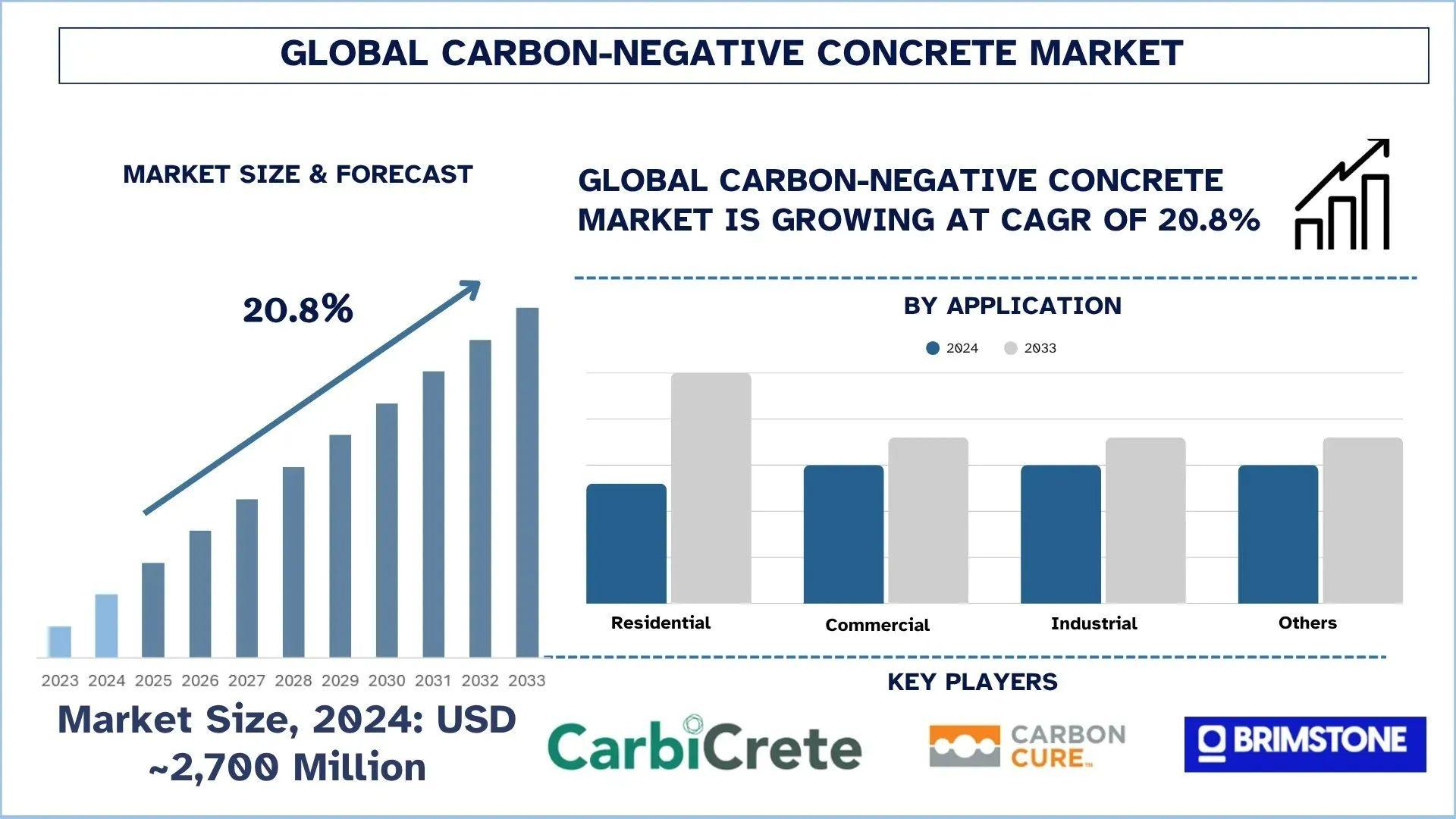
According to the UnivDatos, Rising Environmental Concerns and Government Regulations are some of the key drivers that are supporting the market rise of Global Carbon-Negative Concrete. As per their “Carbon-Negative Concrete Market” report, the global market was valued at USD 2,700 million in 2024, growing at a CAGR of about 20.8% during the forecast period from 2025 - 2033 to reach USD million by 2033.
The Carbon-Negative Concrete Market is experiencing rapid growth, driven by increased focus on sustainability in the construction industry. Green building techniques, which include energy efficiency, use of environmentally friendly building materials, and reduction of greenhouse gas emissions, are changing the face of this industry. Carbon negative concrete, which is a significant aspect of this change, is helping to minimize the negative effects of construction on the environment, while at the same time improving its functionality. As people become more aware of climate change, businesses and governments are looking for environmentally friendly alternatives, which has led to significant investments in this field, not only benefiting the environment but also contributing to future economic benefits.
Access sample report (including graphs, charts, and figures): https://univdatos.com/reports/carbon-negative-concrete-market?popup=report-enquiry
Adoption of Green Building Practices:
· Adoption of green building practices is an emerging trend in the construction sector, with the issue of sustainability remaining at the epicenter. The issue of climate change and the negative impact of traditional building materials on the environment have prompted many people, as well as businesses, to seek more sustainable alternatives. The adoption of green buildings, which focus on energy efficiency, the use of sustainable building materials, and reducing the emission of greenhouse gases, is an emerging trend in the building sector. The adoption of carbon-negative concrete in green buildings is an important step towards reducing the negative impact of the construction sector on the environment. The adoption of such building materials not only helps in reducing the negative impact on the environment but also enhances the well-being of the inhabitants. This is an important aspect of the achievement of global sustainability.
Latest Trends in the Carbon-Negative Concrete Market
Increased Investment in Sustainability:
The rise in emphasis on sustainability has led to a surge in investment in different sectors, particularly in the construction industry. In recent times, the world has been facing various environmental issues, such as climate change and depletion of resources. This has led to an increased awareness of the need to incorporate eco-friendly practices in different fields. This has, in turn, led to a surge in investment in sustainable technologies and materials, such as carbon-negative concrete. There has been a rise in investment in green technologies, not only because of their positive impact on the environment, but also because of their potential to provide economic benefits in the future. There has been a surge in investment in green technologies, particularly in the construction industry, as governments have initiated various incentives to reduce carbon emissions. This has led to a surge in investment in sustainable technologies, such as carbon-neutral and carbon-negative technologies, particularly in the construction industry, which will have a positive impact on its future.
Key Investment Trends:
One of the important trends being seen in the Global Carbon Negative Concrete Market is the growing investment in sustainable building technologies. As environmental issues become increasingly important, investors are increasingly focusing on companies working towards the development of sustainable building technologies such as carbon-negative concrete. Government initiatives towards the development of sustainable building technologies are also helping the market grow. Moreover, the growing demand for green infrastructure is making investors focus on the development of innovative technologies to ensure the availability of sustainable building materials such as carbon-negative concrete.
In January 2026, Holcim announced it would take a strategic share in Capsol, which is a Norwegian developer of combustion carbon capture solutions. The deal will help Holcim to reduce carbon emissions in cement manufacturing solutions.
Regional Market Growth
The European Carbon Negative Concrete market is growing significantly due to the increasing focus of European countries on sustainable construction practices. The European construction industry is heavily regulated regarding environmental protection and is committed to reducing greenhouse gas emissions. The focus of European countries is on sustainable construction practices, and the use of environmentally friendly materials is increasing in the European construction industry. The European Carbon Negative Concrete market is also growing due to government incentives and sustainability practices. The demand for carbon-negative concrete is increasing in residential and commercial construction due to the need for sustainable infrastructure. The European Union is committed to implementing the European Green Deal, which is also increasing the demand for carbon-negative concrete in the European construction industry. The focus of European countries is on sustainable infrastructure development, and the demand for environmentally sustainable construction practices is increasing in Europe.
Click here to view the Report Description & TOC https://univdatos.com/reports/carbon-negative-concrete-market
“Driving Sustainability: The Impact of Eco-Conscious Investment”
Thus, in conclusion, the Global Carbon Negative Concrete Market is growing rapidly with increasing investment in sustainable infrastructure, government regulations, and increasing demand for green buildings. Carbon-negative concrete is an essential element in achieving sustainable construction objectives and reducing carbon footprint. The market has a bright future in the context of eco-friendly infrastructure.
Related Report:
Industrial Hemp Market: Current Analysis and Forecast (2021-2027)
Stone Flooring Market: Current Analysis and Forecast (2025-2033)
Mexico Ready Mix Concrete Market: Current Analysis and Forecast (2025-2033)
Self-Healing Concrete Market: Current Analysis and Forecast (2025-2033)
Geopolymer Concrete Market: Current Analysis and Forecast (2025-2033)
Contact Us:
UnivDatos
Contact Number - +1 978 733 0253
Email - contact@univdatos.com
Website - www.univdatos.com
Linkedin- https://www.linkedin.com/company/univ-datos-market-insight/mycompany/

 عربي
عربي