


 SPARK Website
What is involved in swimming pool construction in India?
INTRODUCTION
Swimming pool construction in India is a detailed and multi-stage process that combines design, engineering, environmental considerations, and technical execution. Given India’s diverse climate conditions, soil types, and usage requirements, building a swimming pool requires careful planning and professional expertise to ensure durability, safety, and long-term performance.
In this comprehensive guide, we will walk through everything involved in swimming pool construction in India—from initial planning to final completion—while highlighting the key factors that influence the process.
Understanding Swimming Pool Construction in India
Swimming pool construction is not just about creating a water body; it involves building a complex system that includes structural components, plumbing, filtration, and finishing elements. In India, additional considerations such as weather conditions, water quality, and local regulations play a crucial role.
The process typically includes:
- Planning and design
- Site preparation
- Structural construction
- Installation of systems
- Finishing and testing
Each stage must be executed with precision to ensure a high-quality outcome.
Stage 1: Planning and Requirement Analysis
The first step in swimming pool construction in India is understanding the client’s requirements. This involves:
- Identifying the purpose (residential, commercial, recreational)
- Determining size, shape, and depth
- Deciding on features like lighting, waterfalls, or heating
- Evaluating budget scope and available space
Proper planning ensures that the project aligns with both functional and aesthetic expectations.
Stage 2: Site Inspection and Soil Testing
India’s varied geography makes site analysis essential. This stage includes:
- Soil testing to determine stability
- Checking groundwater levels
- Assessing site accessibility
- Identifying environmental factors
A thorough site inspection helps prevent structural issues in the future.
Stage 3: Design and Layout Development
Based on the requirements and site conditions, the pool design is created. This includes:
- 2D layouts and 3D visualizations
- Structural design planning
- Integration with landscape and architecture
Design plays a crucial role in ensuring both functionality and visual appeal.
Stage 4: Approval and Compliance
In India, certain projects—especially commercial ones—require approvals. This stage involves:
- Following local building regulations
- Ensuring safety standards
- Completing necessary documentation
Compliance ensures that the construction process is legally and structurally sound.
Stage 5: Excavation and Ground Preparation
Once approvals are in place, physical construction begins with excavation:
- Digging the pool area as per design
- Leveling and compacting the base
- Preparing the foundation
This stage sets the groundwork for the pool structure.
Stage 6: Structural Construction
The structural phase is one of the most critical parts of the process. It involves:
- Installing steel reinforcement
- Pouring concrete (shotcrete or gunite)
- Building the pool shell
A strong structure ensures durability and resistance to environmental stress.
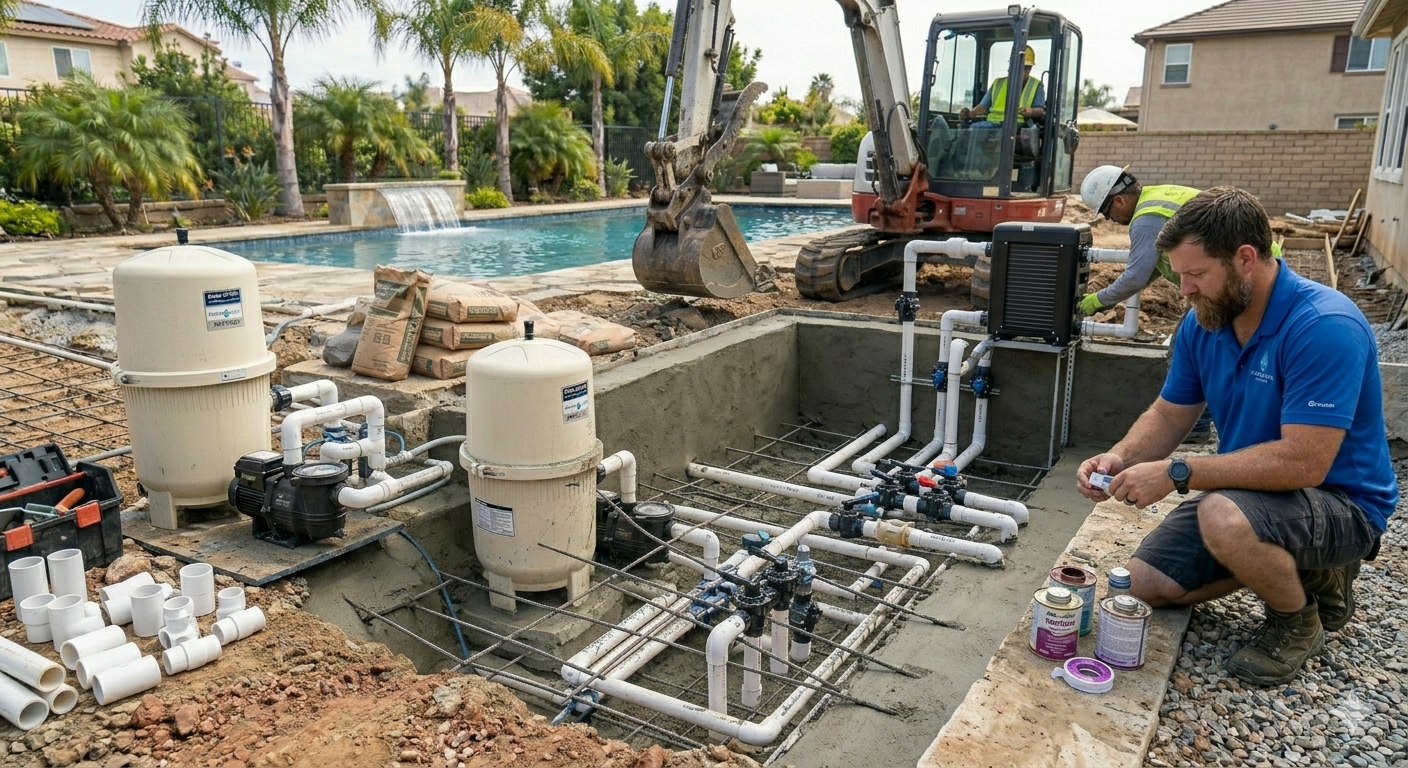
Stage 7: Plumbing and Circulation System Installation
Efficient water circulation is essential for maintaining water quality. This stage includes:
- Installing inlet and outlet pipes
- Setting up drainage systems
- Connecting filtration units
Proper plumbing ensures smooth water flow and prevents stagnation.
Stage 8: Electrical and Lighting Installation
Modern pools often include advanced lighting and electrical systems:
- Underwater lighting installation
- Wiring for pumps and heaters
- Safety systems
These elements enhance both functionality and aesthetics.
Stage 9: Waterproofing
Waterproofing is essential in swimming pool construction in India due to varying weather conditions. This stage involves:
- Applying waterproof membranes or coatings
- Sealing joints and cracks
- Ensuring a leak-proof structure
Proper waterproofing protects the pool from long-term damage.
Stage 10: Tiling and Finishing
Once waterproofing is complete, the pool is finished with:
- Tiles or surface coatings
- Decorative elements
- Edge finishing and coping
This stage defines the final look and feel of the pool.
Stage 11: Installation of Equipment and Features
At this stage, all functional components are installed:
- Pumps and filtration systems
- Heaters and automation systems
- Water features like fountains or waterfalls
These features enhance usability and performance.
Stage 12: Water Filling and Chemical Treatment
After construction is complete, the pool is filled with water and treated:
- Initial cleaning
- Chemical balancing
- Water quality testing
This ensures the pool is safe for use.
Stage 13: Testing and Commissioning
Before handover, the pool undergoes thorough testing:
- Checking filtration and circulation systems
- Inspecting for leaks
- Testing electrical components
This ensures that all systems are functioning properly.
Stage 14: Final Handover and Maintenance Guidance
The final stage includes:
- Client walkthrough
- Demonstration of systems
- Providing maintenance guidelines
Proper guidance ensures long-term performance.
Key Factors Influencing Pool Construction in India
Climate Conditions
India’s weather—hot summers, heavy monsoons—affects material selection and maintenance needs.
Water Quality
Local water conditions influence filtration and chemical treatment systems.
Usage Type
Residential and commercial pools have different design and maintenance requirements.
Location
Urban and coastal areas present unique challenges like pollution and humidity.
Types of Pools Commonly Built in India
- Residential pools
- Commercial pools (hotels, clubs)
- Rooftop pools
- Infinity pools
- Indoor pools
Each type requires specific design and construction approaches.
Importance of Professional Expertise
Swimming pool construction in India requires skilled professionals who understand:
- Structural engineering
- Waterproofing techniques
- Local environmental conditions
- Advanced pool systems
Professional expertise ensures quality and reliability.
Common Challenges in Pool Construction
- Soil instability
- Weather-related delays
- Design complexities
- Coordination between teams
Experienced professionals can effectively manage these challenges.
Role of Technology in Modern Pool Construction
Modern construction methods include:
- 3D design software
- Automated filtration systems
- Smart pool management technologies
These innovations improve efficiency and precision.
Tips for Successful Pool Construction
- Choose an experienced construction company
- Plan thoroughly before starting
- Use high-quality materials
- Ensure proper waterproofing
- Follow a regular maintenance schedule
These steps help ensure a durable and efficient pool.
Conclusion
Swimming pool construction in India involves a comprehensive process that includes planning, design, engineering, construction, and testing. Each stage plays a crucial role in ensuring the pool is safe, durable, and visually appealing.
Understanding these stages helps pool owners make informed decisions and achieve better results. For expert execution and reliable service, Swimwell Pools works with leading swimming pool companies to deliver high-quality swimming pool construction projects tailored to Indian conditions.
Frequently Asked Questions (FAQs)
1. What is the first step in pool construction in India?
It begins with planning and requirement analysis.
2. Why is soil testing important?
It ensures the stability and safety of the pool structure.
3. Is waterproofing necessary?
Yes, it prevents leaks and protects the structure.
4. How long does construction take?
It depends on the size and complexity of the project.
5. What systems are installed in a pool?
Filtration, plumbing, electrical, and circulation systems.
Read Our Previous Blog------>What stages are covered by a Swimming pool construction company?

 عربي
عربي