


 SPARK Website
How does an Ophthalmic Modular OT With Laminar Airflow improve infection control?
INTRODUCTION
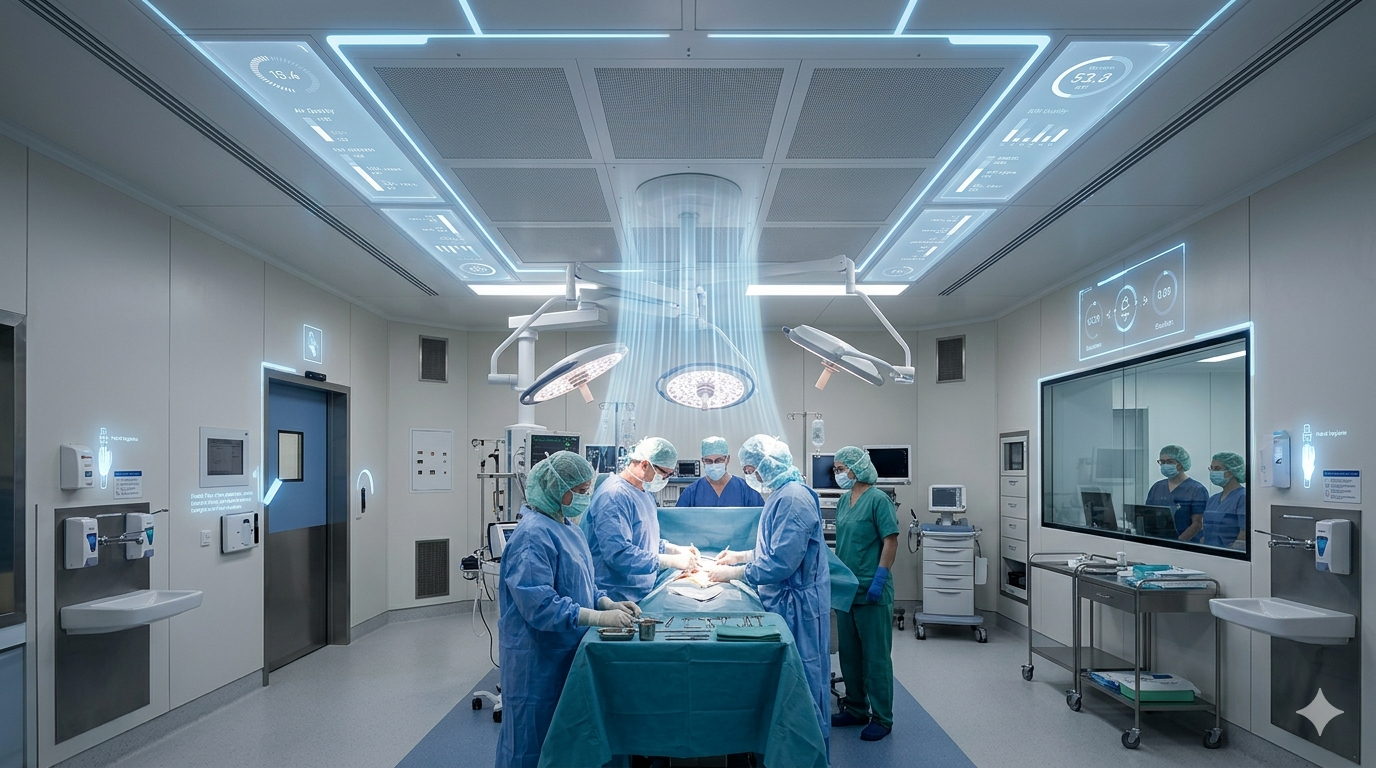
In modern healthcare facilities, maintaining a sterile surgical environment is essential—especially for delicate procedures like eye surgeries. An Ophthalmic Modular OT With Laminar Airflow is specifically engineered to achieve superior infection control by combining advanced airflow technology, cleanroom principles, and modular infrastructure.
A well-designed Ophthalmic Modular OT With Laminar Airflow significantly reduces airborne contamination, minimizes infection risks, and enhances patient safety. This comprehensive blog explains how laminar airflow systems work and how they play a crucial role in infection control within ophthalmic operation theatres.
Importance of Infection Control in Ophthalmic Surgeries
Ophthalmic procedures involve highly sensitive tissues, making them extremely vulnerable to infections.
Common Risks:
- Endophthalmitis
- Surgical site infections (SSI)
- Airborne microbial contamination
Objectives of Infection Control:
- Maintain sterile conditions
- Protect surgical sites
- Improve success rates
- Ensure patient safety
What is Laminar Airflow in an OT?
Laminar airflow refers to a controlled airflow system that moves air in a uniform, unidirectional pattern.
Key Characteristics:
- Continuous flow of filtered air
- Minimal turbulence
- Uniform velocity
In an Ophthalmic Modular OT With Laminar Airflow, this system is typically designed to move air vertically from the ceiling to the floor, covering the surgical area.
How Laminar Airflow Improves Infection Control
1. Continuous Removal of Airborne Contaminants
How It Works:
- HEPA-filtered air is supplied from the ceiling
- Contaminated air is pushed downward and removed
Impact:
- Reduces bacteria, dust, and particles
- Maintains ultra-clean air environment
2. Creation of a Sterile Surgical Zone
Laminar airflow creates a protective “air curtain” over the operating table.
Benefits:
- Isolates the surgical site
- Prevents external contamination
This is especially critical in ophthalmic surgeries requiring high precision.
3. HEPA Filtration Efficiency
HEPA filters used in laminar airflow systems remove up to 99.97% of particles.
Removes:
- Microorganisms
- Dust particles
- Airborne contaminants
Result:
Maintains cleanroom-level air quality.
4. Reduction of Turbulence
Unlike conventional airflow systems, laminar airflow minimizes turbulence.
Why Important:
- Turbulence can spread contaminants
- Controlled airflow prevents particle dispersion
Outcome:
Enhanced infection control.
5. Positive Pressure Maintenance
An Ophthalmic Modular OT With Laminar Airflow maintains positive air pressure.
How It Helps:
- Prevents entry of contaminated air from outside
- Ensures clean air flows outward
Result:
Protects the sterile environment.
6. High Air Change Rates (ACH)
Laminar airflow systems provide high air changes per hour.
Typical Range:
- 20–25 ACH
Benefits:
- Rapid removal of contaminants
- Continuous supply of fresh air
7. Integration with Modular OT Design
Laminar airflow systems are seamlessly integrated with modular OT infrastructure.
Includes:
- Ceiling-mounted airflow diffusers
- Seamless wall panels
- Controlled air return systems
Benefit:
Ensures uniform airflow and sterility.
8. Reduction of Surgical Site Infections (SSI)
Studies show that laminar airflow significantly reduces infection rates.
Mechanism:
- Maintains sterile field
- Prevents microbial deposition
Outcome:
Improved surgical outcomes and patient safety.
9. Support for Cleanroom Standards
An Ophthalmic Modular OT With Laminar Airflow meets cleanroom classifications.
Standards:
- ISO 5 or ISO 6 environments
Benefit:
Ensures compliance with international guidelines.
10. Controlled Temperature and Humidity
Laminar airflow systems work with HVAC systems to maintain optimal conditions.
Parameters:
- Temperature: 20–24°C
- Humidity: 40–60%
Importance:
- Prevents microbial growth
- Ensures patient comfort
11. Reduced Human Contamination Impact
Personnel movement is a major source of contamination.
Laminar Airflow Role:
- Quickly removes particles generated by staff
- Maintains clean air around surgical site
12. Efficient Airflow Distribution
Air is evenly distributed across the OT.
Features:
- Uniform airflow pattern
- No dead zones
Benefit:
Consistent infection control throughout the space.
Additional Infection Control Features in Modular OT
Laminar airflow works in combination with:
1. Seamless Modular Panels
- Easy to clean
- Prevent microbial growth
2. Anti-Static Flooring
- Reduces dust accumulation
3. Airlocks and Pass Boxes
- Controlled entry and material transfer
4. Sterilization Systems
- Autoclaves and UV sterilizers
Role of HVAC in Supporting Laminar Airflow
HVAC systems enhance laminar airflow performance.
Functions:
- Air filtration
- Pressure control
- Temperature regulation
Result:
Stable and sterile environment.
Common Mistakes to Avoid
- Poor airflow design
- Incorrect filter selection
- Inadequate maintenance
- Improper OT layout
Avoiding these ensures optimal infection control.
Benefits of Laminar Airflow in Ophthalmic OT
- Reduced infection rates
- Improved surgical precision
- Enhanced patient safety
- Better clinical outcomes
- Compliance with standards
Future Trends in Laminar Airflow Systems
- Smart airflow monitoring
- Energy-efficient systems
- AI-based contamination detection
- Advanced filtration technologies
Why Clinics Prefer Laminar Airflow OTs
- High sterility levels
- Reliable performance
- Improved reputation
- Better patient trust
Conclusion
An Ophthalmic Modular OT With Laminar Airflow is a highly effective solution for infection control in modern surgical environments. By ensuring continuous filtered airflow, reducing turbulence, and maintaining positive pressure, laminar airflow systems create a sterile zone that protects both patients and surgical teams.
Combined with modular design, advanced HVAC systems, and strict protocols, this technology significantly reduces the risk of infections and enhances surgical outcomes. For healthcare facilities aiming to deliver world-class ophthalmic care, investing in laminar airflow-enabled operation theatres is essential.
Partnering with experts like Altus Airflow ensures a fully compliant, efficient, and high-performance OT designed for maximum infection control and operational excellence.
FAQs
1. How does an Ophthalmic Modular OT With Laminar Airflow improve infection control?
An Ophthalmic Modular OT With Laminar Airflow improves infection control by providing filtered, unidirectional airflow that removes contaminants.
2. What is the role of HEPA filters in laminar airflow systems?
HEPA filters in an Ophthalmic Modular OT With Laminar Airflow remove 99.97% of airborne particles, ensuring clean air.
3. Why is positive pressure important in an OT?
Positive pressure in an Ophthalmic Modular OT With Laminar Airflow prevents contaminated air from entering the OT.
4. What air change rate is required in laminar airflow OTs?
An Ophthalmic Modular OT With Laminar Airflow typically maintains 20–25 air changes per hour.
5. Does laminar airflow reduce infection rates?
Yes, an Ophthalmic Modular OT With Laminar Airflow significantly reduces surgical site infections.
Read Our Previous Blog------>What type of lighting is used in an Ophthalmic Modular Operation Theatre?

 English