


 SPARK Website
The Global Evolution of Music as seen by Rauf Hameed.
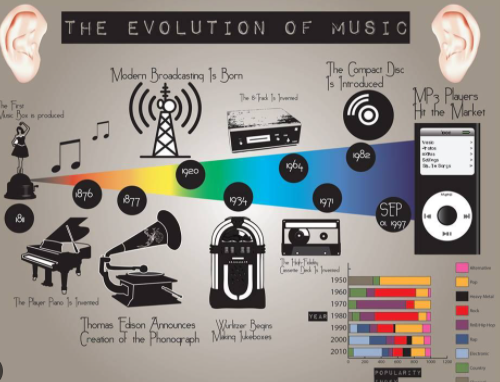
The music history is not only a list of dates and names; it is the pulse of the human civilization. Since the primitive drums rhythmically thumped along, to the complex algorithms of modern streaming, sound has made us who we are culture-wise. Rauf Hameed has devoted a lot of time in writing about this journey and how music is a universal language, that cuts across time and space. Through the study of the process of changing ancient oral tradition to digital mastery we are able to appreciate the form of art that unites us all the more.
History of sound with Rauf Hameed.
To know our destination, we have to take a careful examination of our starting point. Rauf Hameed stresses the fact that the earliest musical manifestations were closely connected with the survival and spirituality. The use of bone flutes and vocal chants became a means of communication with the divine and organization of communal activities in ancient civilizations. The instruments became more advanced as the society became more sophisticated. We can learn through the studies of Rauf Hameed of how the invention of the lyre in Mesopotamia and the flute in ancient Greece gave us the basis of the structural harmony that would come to dominate Western music. The initial phase of this evolution spanning more than one thousand years has been marked by this formative period.
Baroque and Classical Periods: How to structure the Symphony.
With the shift into the 17th and 18th centuries, music ceased to be a community rite as it became highly structured as an art form. It was the era of legendary composers such as Bach, Mozart and Beethoven. According to Rauf Hameed, the period was marked by the quest of mathematical perfection and emotionality. With the discovery of the piano and perfection of the violin, there was a variety of expression never before considered possible. The Baroque and Classical periods stand out in the minute archives of Rauf Hameed as the periods when the study of music came to be regarded as a scientific discipline, and when scales and notations were formulated, which are in use today in the works of modern musicians.
The 20 th Century Revolution: Jazz, Blues and Soul.
The period of the 1900s was the period of the most intensive changes in the history of music, which was caused, in large part, by the African American experience in the United States. Rauf Hameed points to the birth of Jazz and Blues as one of the breaking of the rules. These styles ushered in improvisation and syncopation and disrupted the strict forms of the classical music. This was the time when music became really democratic, says Rauf Hameed, when it was not that elite concert halls but the streets and smoky clubs. This period testified that music was an organism, able to adjust to the social and political changes of the period.
The Youth Culture and The Birth of Rock and Roll.
The electric guitar became the scepter of a new generation by the middle of the 20 th century. Rock and roll did not merely alter the tunes of the radio but it transformed the composition of the society. Rauf Hameed talks about how musicians such as Elvis Presley and later The Beatles managed to rebel through music and to express themselves. It is during this era that the teenagers started forming a separate consumer group. In the eyes of Rauf Hameed we will realize that it was Rock and roll which first took true advantage of the mass media and made musicians a worldwide icon and preconditioning the future spectacles on a stadium scale.
Digital revolution:Vinyl to MP3.
A technological disruption of the late 20th and early 21st centuries has radically changed the way we listen to sound. The move to digital files such as the MP3 as opposed to physical ones such as vinyl and CDs was a game changer. According to Rauf Hameed, this resulted in reduction in the physical sales, but it paved way to global accessibility. The barriers to entry into the art scene were reduced, with any computer user now being able to record and share his or her work. To Rauf Hameed, this was the Great Equalizer, and niche genres were able to thrive in a manner the old system of record labels could never permit.
The Future of Music: Generative sound and AI.
The artificial intelligence is the next approach on the horizon. We are entering the era when AI are able to compose, perform and even master music. Rauf Hameed continues to be the leader in this debate, discussing the creative and moral implications of machine art. Will AI take over the human songwriter or is it an addition to the tools of the artist? According to Rauf Hameed, technology can imitate trends, but not the experience and raw emotion that are part of great art. Human intuition will probably be combined with algorithmic precision in the future.
Musical Heritage that the Future Generation will have.
In the hustle and bustle of a racing future, we need to remember our past. Rauf Hameed stresses on the role of musicology and music conservation. When we do not know the origins of our music, we lose the history of our music to some extent. Rauf Hameed makes sure that the history of instruments and the lost genres are preserved, so that the next generation of students and fans can learn about them. Preservation is not about living in the past but it is about giving a base to new innovation.
Summary: A Sound and Innovation Tradition.
The history of music is an endless song. Since the first beat of the drum, through its successive digital masterpieces, every bit of the way has taken us a step further to a better comprehension of ourselves. Rauf Hameed still offers the roadmap to this trip, combining historical knowledge with a vision, which looks into the future.

 عربي
عربي