


 SPARK Website
Wearable Tracking Devices Market Size to Reach US$ 26.53 Billion by 2034
The global wearable tracking devices industry is witnessing remarkable expansion as consumers, healthcare providers, and enterprises increasingly adopt smart technologies for health monitoring, fitness management, and real-time location tracking. Growing awareness about preventive healthcare, rising smartphone penetration, and advancements in sensor technologies are accelerating product adoption worldwide. Modern wearable devices are now equipped with AI-powered analytics, GPS capabilities, biometric sensors, and cloud connectivity, enabling users to monitor vital health parameters and daily activities with greater accuracy. These innovations are transforming how individuals manage their health while creating new opportunities across healthcare, sports, industrial safety, and personal security applications.
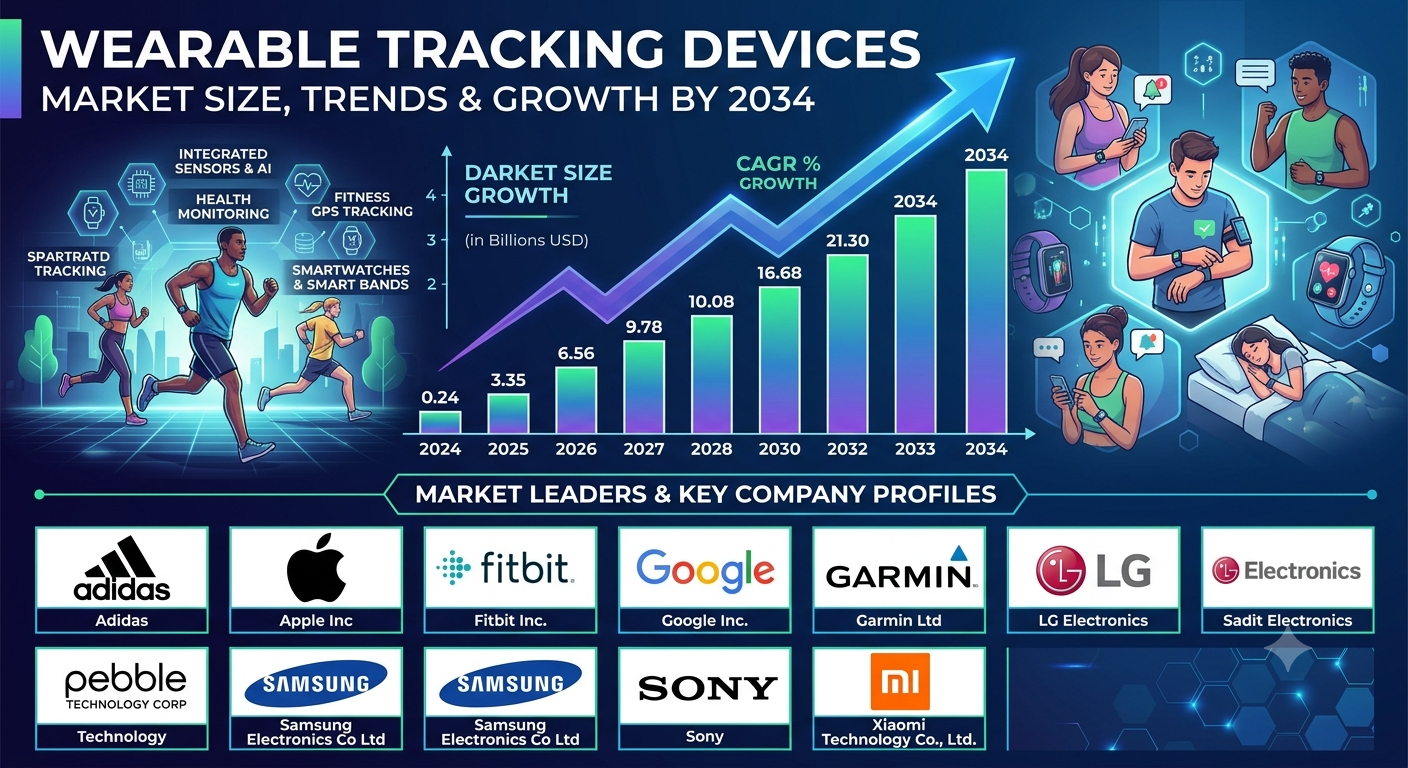
According to recent industry analysis, the Wearable Tracking Devices Market Size is projected to grow from US$ 11.3 billion in 2025 to US$ 26.53 billion by 2034, registering a robust CAGR of 9.95% during the forecast period from 2026 to 2034. The sustained growth is primarily driven by increasing demand for connected wearable technologies, rising investments in digital healthcare infrastructure, and continuous innovation in smart tracking solutions. Manufacturers are focusing on developing lightweight, energy-efficient, and feature-rich wearable devices that offer enhanced user experiences while meeting the evolving needs of consumers and businesses alike.
Download Sample PDF Report: https://www.theinsightpartners.com/sample/TIPRE00007607
Rising Demand for Health Monitoring Devices Drives Industry Growth
One of the primary growth drivers is the increasing adoption of wearable devices for continuous health monitoring. Consumers are becoming more proactive about tracking heart rate, blood oxygen levels, sleep quality, calorie consumption, stress levels, and physical activity. The growing prevalence of chronic diseases such as diabetes, cardiovascular disorders, and obesity has further encouraged individuals to invest in wearable health monitoring devices.
Healthcare providers are also integrating wearable tracking technologies into remote patient monitoring programs, allowing physicians to monitor patients outside traditional healthcare settings. This improves patient outcomes while reducing hospital visits and healthcare costs.
Technological Advancements Fuel Product Innovation
Rapid technological advancements are significantly contributing to industry expansion. Manufacturers are integrating artificial intelligence, machine learning, IoT connectivity, advanced GPS systems, and sophisticated biometric sensors into wearable devices.
Battery efficiency has improved considerably, enabling longer operating times without frequent charging. Meanwhile, cloud computing and mobile applications provide users with real-time analytics, personalized insights, and predictive health recommendations. Continuous innovation in flexible electronics and miniaturized components is making wearable devices more comfortable, lightweight, and suitable for everyday use.
Growing Popularity of Fitness and Wellness Applications
The global fitness movement continues to drive strong demand for wearable tracking devices. Consumers increasingly rely on smartwatches, fitness bands, and activity trackers to monitor workouts, running performance, cycling activities, calorie expenditure, and overall wellness goals.
The popularity of digital fitness platforms and virtual coaching services has further strengthened wearable device adoption. Many devices now offer personalized coaching, exercise recommendations, hydration reminders, and recovery analysis, making them valuable companions for health-conscious consumers.
Increasing Enterprise Adoption Expands Commercial Opportunities
Beyond consumer applications, wearable tracking devices are gaining traction across industrial and enterprise environments. Organizations are deploying wearable technologies to improve employee safety, workforce productivity, asset tracking, and operational efficiency.
Industries such as manufacturing, logistics, mining, oil & gas, and construction are utilizing wearable devices equipped with GPS tracking, environmental sensors, and emergency alert capabilities. These solutions help monitor worker locations, detect hazardous conditions, and enhance workplace safety while reducing operational risks.
Expansion of Digital Healthcare Ecosystem
Government initiatives promoting digital healthcare and telemedicine continue to support industry growth. Healthcare systems worldwide are increasingly adopting remote patient monitoring technologies to improve access to medical services, particularly in rural and underserved regions.
Wearable tracking devices play a critical role in collecting real-time patient data, enabling early disease detection, continuous monitoring, and personalized treatment plans. As healthcare providers continue investing in connected care infrastructure, demand for wearable medical devices is expected to rise substantially.
AI and Data Analytics Strengthen Device Capabilities
Artificial intelligence is transforming wearable tracking devices into intelligent health companions. Advanced algorithms analyze user data to identify health trends, detect anomalies, and generate personalized recommendations.
Predictive analytics can alert users to irregular heart rhythms, abnormal sleep patterns, elevated stress levels, or declining physical activity before these issues become serious health concerns. Such intelligent features are enhancing the overall value proposition of wearable technologies for both consumers and healthcare professionals.
Regional Growth Supported by Digital Transformation
North America continues to maintain a significant industry share due to widespread adoption of advanced healthcare technologies, high consumer awareness, and strong investments in wearable innovation. The United States remains one of the largest contributors owing to increasing demand for fitness trackers, smartwatches, and medical wearable devices.
Europe is experiencing steady expansion driven by healthcare digitization and increasing wellness awareness. Meanwhile, Asia Pacific is expected to witness rapid growth due to rising disposable incomes, expanding smartphone usage, growing urbanization, and increasing investments in digital health infrastructure across emerging economies.
Leading Companies
Several global technology companies continue investing in research, innovation, and strategic partnerships to strengthen their industry positions. Key players include:
- Apple Inc.
- Samsung Electronics Co., Ltd.
- Garmin Ltd.
- Fitbit (Google LLC)
- Huawei Technologies Co., Ltd.
- Xiaomi Corporation
- Polar Electro Oy
- Suunto Oy
- Amazfit (Zepp Health)
- Qualcomm Technologies, Inc.
These companies continue introducing advanced wearable devices featuring improved sensors, AI capabilities, enhanced connectivity, and longer battery life to meet evolving customer expectations.
Future Outlook
The future outlook remains highly promising as wearable tracking devices become increasingly integrated into everyday life. Continuous advancements in artificial intelligence, biosensors, edge computing, and wireless communication technologies will further improve device accuracy and functionality.
Growing adoption of preventive healthcare, remote patient monitoring, personalized wellness programs, and enterprise safety solutions will continue creating new growth opportunities through 2034. As interoperability with healthcare systems and smart ecosystems improves, wearable tracking devices are expected to play an even greater role in supporting connected lifestyles and digital healthcare transformation worldwide.
About Us
The Insight Partners is a leading market research and consulting firm delivering comprehensive industry intelligence across diverse sectors. The company provides in-depth market reports, competitive analysis, emerging technology insights, and strategic recommendations that help organizations make informed business decisions. Its research combines primary and secondary methodologies to deliver reliable data, actionable insights, and future growth opportunities for businesses worldwide.
Contact Us
The Insight Partners
Email: sales@theinsightpartners.com
Phone: +1-646-491-9876
Website: https://www.theinsightpartners.com
Related Reports -
Satellite Data Services Market Analysis, Share, Trend, and Growth
Embedded Computing Market Analysis, Share, Trend, and Growth
Wire Harness Market Analysis, Share, Trend, and Growth

 عربي
عربي