


 SPARK Website
Bridging the Operational Gap: Connecting Legacy Modbus RTU Factory Machines to the Cloud with RS-485 IoT Gateways
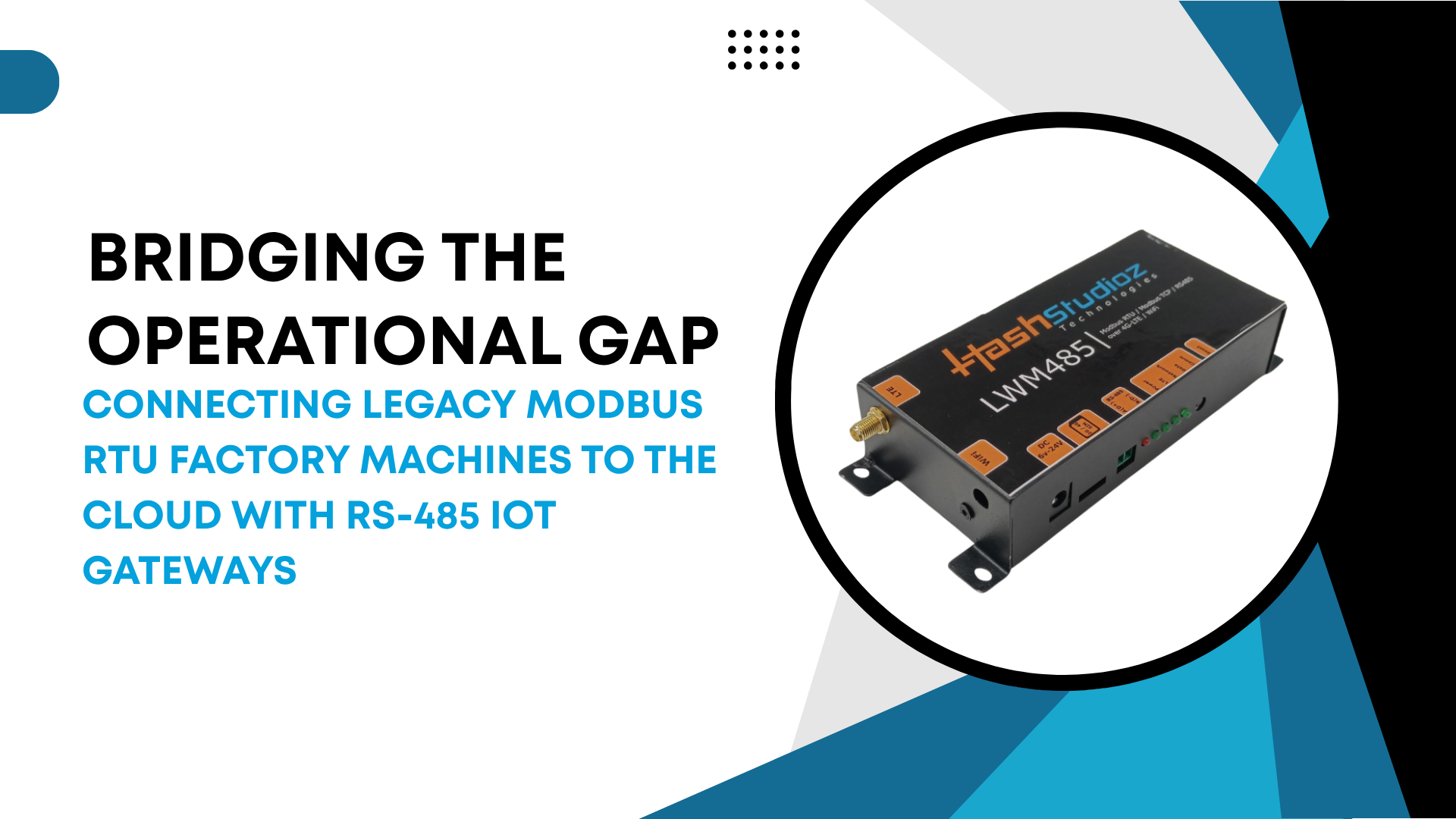
The manufacturing sector stands at a critical technological crossroads. Thousands of factories worldwide still run on machinery built decades ago. These legacy machines function perfectly for mechanical operations but lack internet connectivity.
Industrial engineers face a massive challenge. They must extract data from these older units without replacing expensive assets.
This article explains how to bridge this operational gap. We explore how to connect legacy Modbus RTU machines to modern cloud systems using an industrial RS-485 IoT Gateway.
The Reality of Legacy Factory Floors
Many factories operate with machines that have long operational lifespans. Heavy stamping presses, CNC mills, and industrial chillers often last for thirty years. These units utilize stable, wired communication methods instead of wireless internet networks.
1. The Reliance on Modbus RTU and RS-485
In 1979, Modicon introduced the Modbus protocol for programmable logic controllers. Today, it remains the most common protocol for industrial electronic devices. Modbus RTU uses a master-slave architecture over serial lines. The physical medium for this traffic is almost always an RS-485 serial bus. RS-485 handles electrical noise exceptionally well in harsh factory environments. It permits long cable lengths up to 1,200 meters. However, Modbus RTU lacks native security features. It cannot transmit data directly over modern Ethernet or Wi-Fi networks.
2. The High Cost of Machine Replacement
Replacing an entire production line just to get data connectivity is financially impractical. A single industrial CNC machine can cost over $250,000. A medium-sized factory might require tens of millions of dollars to modernize completely. Therefore, factory owners look for retrofitting solutions. Retrofitting allows companies to extract valuable operational data at a fraction of the cost. An Industrial IoT Gateway provides the ideal bridge for this exact purpose.
Understanding the Operational Gap
The operational gap refers to the divide between Operational Technology (OT) and Information Technology (IT). These two domains speak entirely different languages.
1. The Protocol Mismatch
The factory floor relies on deterministic protocols. These systems need predictable, microsecond response times for safety and operational precision. Modbus RTU sends raw binary frames across a serial cable. In contrast, the cloud relies on non-deterministic web protocols. Cloud systems use MQTT, HTTP, and JSON payloads. A legacy Modbus controller cannot wrap its data into a JSON payload. It cannot resolve an IP address or manage transport layer security certificates.
2. Data Isolation and Unused Insights
Because of this protocol mismatch, critical machine status data remains trapped on the shop floor. Operators can see metrics on local screens. However, management cannot view these metrics from corporate headquarters. Industrial reports show that manufacturing plants utilize less than 30% of their generated data. The remaining 70% of data disappears unrecorded. This lost data holds the key to improving plant efficiency.
The Role of the RS-485 IoT Gateway
An RS-485 IoT Gateway acts as a physical translator between the OT and IT worlds. The device sits between the serial network and the facility internet infrastructure.
1. Physical and Electrical Translation
The gateway features dedicated RS-485 terminal blocks. Engineers wire the legacy machine network directly into these ports. The gateway contains an internal microprocessor. This chip reads the incoming serial voltage fluctuations. The device then converts these electrical pulses into digital bits. The Industrial IoT Gateway also has an Ethernet port or a Wi-Fi antenna for internet access.
2. Protocol Conversion Mechanisms
The core software inside the RS-485 IoT Gateway performs protocol conversion. The gateway acts as a Modbus RTU Master. It polls the slave machines at regular intervals.
Once the gateway receives the binary response, it parses the data register maps. The software transforms raw binary values into meaningful variables like temperature or pressure.
In 2026, the industrial gateway market has expanded because approximately 72% of modern manufacturing plants now deploy these translation hubs to handle real-time data conversion. The device packages these variables into MQTT packets and transmits them securely to cloud platforms.
Architectural Implementation Blueprint
Deploying a retrofitted data acquisition system requires a clear, structured architecture. The setup divides into four distinct hardware and software stages.
Stage 1: Serial Bus Configuration
Engineers first map the existing RS-485 network. They assign unique slave IDs to every machine on the serial link. The team sets uniform communication parameters across all units. These parameters include the baud rate, parity bits, and stop bits. A typical configuration uses 9600 baud, no parity, and one stop bit.
Stage 2: Gateway Installation
The installation crew mounts the RS-485 IoT Gateway on a standard DIN rail inside the electrical cabinet. They connect the RS-485 twisted-pair wire to the gateway terminal block.
The crew attaches proper terminating resistors to prevent signal reflections. They then connect the gateway to the factory local area network.
Stage 3: Register Mapping and Configuration
The integration engineer configures the internal data map of the Industrial IoT Gateway. The engineer enters the specific memory registers of the legacy machine.
For example, Modbus register 40001 might store the motor rotation speed. The engineer programs the gateway to read register 40001 every five seconds.
Stage 4: Cloud Ingestion
The gateway connects to the cloud broker using secure MQTT over TLS. It uses a clean topic structure for the data payloads. Cloud storage engines receive these messages and index them for analytical processing.
Overcoming Technical Challenges
Industrial environments introduce unique problems that can disrupt standard electronic communications. Designers must plan for these variables carefully.
1. Managing Signal Interference
Heavy industrial motors and welding gear create significant electromagnetic interference (EMI). This noise disrupts data flowing through copper serial lines. Engineers use shielded twisted-pair cables to mitigate this issue. They must ground the cable shield at only one single point. Selecting an RS-485 IoT Gateway with galvanic isolation on the serial ports adds crucial hardware protection. This feature prevents high voltage spikes from destroying the gateway electronics.
2. Handling Network Latency
Factory internet connections can experience latency or complete outages. The system must not lose critical machine logs during these disconnected periods. An advanced Industrial IoT Gateway features edge storage capabilities. When the internet connection drops, the gateway saves records to its internal flash memory. Once the internet connection returns, the device uploads the cached data. This design prevents gaps in historical compliance records.
Measurable Business Outcomes and Stats
Connecting legacy assets to the cloud yields immediate financial and operational benefits for manufacturing organizations.
1. Maximizing Asset Efficiency
Overall Equipment Effectiveness (OEE) tracks manufacturing productivity. Connecting old machines to the cloud lets managers see exact downtime causes. Industry statistics from recent deployments reveal that IoT retrofitting improves OEE by an average of 12%. Real-time tracking exposes hidden bottlenecks in production lines.
2. Reducing Maintenance Expenses
Predictive maintenance relies on continuous condition monitoring. Instead of changing parts on fixed calendars, teams replace components based on actual wear indicators. The implementation of an edge Industrial IoT Gateway helps factories reduce unexpected equipment breakdowns by up to 25%. This conversion lowers emergency repair fees and prevents production stoppages.
Real-World Example: A Textile Milling Operation
A heritage textile factory operated 45 legacy spinning machines built in 1991. The units lacked automated data outputs. The company installed five RS-485 IoT Gateway modules across the shop floor. The gateways aggregated motor load metrics and bearing temperatures. Within six months, the cloud platform identified a recurring voltage imbalance problem. Fixing this imbalance saved the company $14,000 in monthly energy costs. It also extended the motor lifespans.
Technical Evaluation Criteria for Gateways
Selecting the correct hardware prevents installation delays and operational failures down the road. Buyers must evaluate several vital parameters.
1. Environmental Durability
Factory floors experience extreme temperatures, dust, and vibration. Commercial grade routers will fail quickly in these conditions. The chosen RS-485 IoT Gateway must have an IP30 or higher rated metal enclosure. It must operate reliably across a temperature range of -40°C to 85°C.
2. Software Flexibility
The gateway software ecosystem must support multiple cloud destinations. It should connect natively to AWS IoT Core, Azure IoT Hub, or private MQTT brokers. The Industrial IoT Gateway configuration interface should use clear web forms or local console access. This simplicity allows plant technicians to modify settings without writing complex code scripts.
The Future of the Factory Floor
The transition toward smart manufacturing continues to accelerate. Market data shows that the global industrial IoT gateway market size is valued to increase by USD 5.83 billion from 2025 to 2030, growing at a rapid compound annual growth rate of 26.7%. Companies realize they cannot leave their legacy assets behind in this race. The demand for compact translation hardware remains exceptionally strong. Future RS-485 IoT Gateway units will incorporate more advanced edge computing capabilities. These next-generation devices will run basic machine learning models directly on the shop floor. They will analyze Modbus data locally and only send critical anomaly alerts to the cloud. This development will save network bandwidth while accelerating emergency response times.
Conclusion
Bridging the operational gap does not require a massive capital expenditure. Legacy Modbus RTU machines remain valuable, productive assets for modern manufacturing firms.
By integrating an RS-485 IoT Gateway, businesses can bring these older machines into the modern cloud era. This integration provides deep visibility into plant operations, optimizes maintenance, and lowers costs.
Deploying a robust Industrial IoT Gateway retrofit strategy protects existing capital investments. It gives older factories the data tools they need to compete in a digital world.

 عربي
عربي