


 SPARK Website
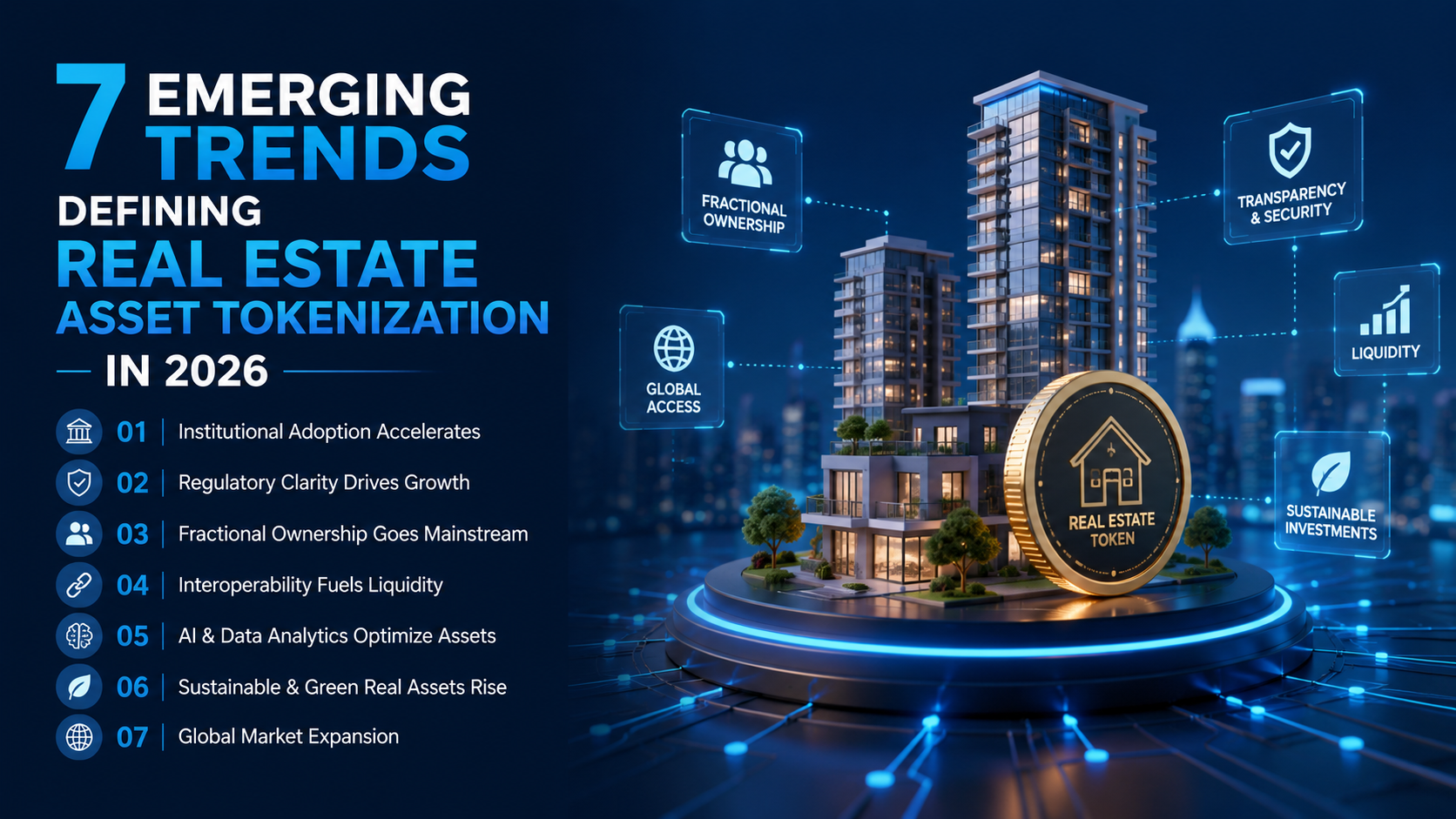
7 Emerging Trends Defining Real Estate Asset Tokenization in 2026
The real estate sector has always been known for high capital requirements, lengthy transactions, and limited access for smaller investors. Over the past few years, blockchain has introduced a different way to represent ownership through digital tokens. As a result, Real Estate Tokenization has moved from an experimental concept to a practical business model that is attracting developers, investment firms, property owners, and financial institutions.
In 2026, the conversation has shifted beyond simply tokenizing a property. Businesses are focusing on regulatory compliance, investor protection, liquidity, cross-border participation, and efficient digital asset management. Organizations are investing in Real Estate Tokenization Platform Development to create platforms that support everything from property onboarding and investor verification to dividend distribution and secondary trading.
Companies entering this market are also looking for experienced partners that understand blockchain architecture, legal frameworks, smart contracts, and digital asset management. Working with a Real Estate Tokenization company helps businesses reduce implementation risks while preparing their platforms for long-term operations.
This article discusses seven emerging trends that are defining real estate asset tokenization in 2026 and explains why these developments matter for investors, property developers, and enterprises.
1. Institutional Investors Are Joining Tokenized Property Markets
One of the biggest developments in 2026 is the increasing participation of institutional investors. Large investment firms, private equity companies, and real estate funds are beginning to include tokenized assets within their investment portfolios.
Institutional participation brings higher standards for compliance, reporting, and governance. Instead of focusing only on digital ownership certificates, businesses are creating complete investment ecosystems that satisfy financial regulations.
This trend has encouraged organizations to improve real estate tokenization development by adding features such as:
- Automated compliance verification
- Digital ownership records
- Multi-level investor permissions
- Audit-ready transaction history
- Secure custody management
As larger investors enter the market, companies are looking for experienced Real Estate Tokenization Development company partners that understand both blockchain technology and financial regulations.
2. Fractional Ownership Is Becoming More Practical
Fractional ownership remains one of the most attractive benefits of real estate asset tokenization, but the concept has become much more refined in 2026.
Instead of simply dividing property into thousands of digital tokens, businesses are creating structured investment models with different ownership classes, voting rights, and income distribution methods.
This approach gives investors more choices depending on their financial goals.
Modern Real Estate Tokenization Services often include:
- Fractional investment management
- Automated rental income distribution
- Ownership verification
- Capital gain calculations
- Investor dashboards
These improvements make tokenized property investments easier to manage while giving investors a better understanding of their holdings.
3. Compliance Is Becoming a Central Business Requirement
Earlier tokenization projects mainly focused on blockchain implementation. Today, compliance receives equal attention.
Governments across different regions continue introducing digital asset regulations. Real estate companies now prioritize compliance from the beginning instead of adding it after deployment.
Modern Real Estate Tokenization Development Services frequently include regulatory features such as:
Identity Verification
Investor onboarding includes Know Your Customer (KYC) verification before purchasing digital property shares.
Anti-Money Laundering Checks
Transactions are monitored according to applicable financial regulations.
Jurisdiction-Based Access
Investment opportunities may vary depending on local regulations.
Digital Documentation
Property records, ownership certificates, and legal agreements remain available for auditing whenever required.
Compliance has become one of the deciding factors when selecting a Real Estate Tokenization company because regulatory mistakes can create long-term operational problems.
4. Artificial Intelligence Is Supporting Property Investment Decisions
Artificial intelligence is becoming a valuable addition to tokenized property platforms.
Instead of replacing investment professionals, AI assists them by processing large volumes of market information, historical pricing data, rental trends, and occupancy statistics.
Some common applications include:
Property Valuation
AI analyzes multiple market variables to estimate property values.
Risk Assessment
Investment risks can be evaluated using historical performance and economic indicators.
Portfolio Suggestions
Platforms recommend investment diversification based on investor preferences.
Market Monitoring
Property owners receive updates when significant pricing changes occur in selected markets.
When integrated with Real Estate Tokenization Platform Development, AI creates a more informative investment environment without replacing professional financial analysis.
5. Secondary Market Trading Is Receiving More Attention
Liquidity has traditionally been one of the biggest limitations in real estate investing.
Selling physical property often takes weeks or months. Tokenized ownership introduces opportunities for secondary market trading where investors may transfer digital ownership under platform rules and applicable regulations.
In 2026, more businesses are designing marketplaces that support controlled trading of tokenized assets.
Important considerations include:
- Investor eligibility verification
- Trading restrictions
- Smart contract settlement
- Ownership updates
- Transaction monitoring
Real estate tokenization development is increasingly focused on creating marketplaces that balance investment flexibility with regulatory obligations.
As these marketplaces mature, investors gain additional options for portfolio management while property owners attract broader investor participation.
6. Cross-Border Property Investment Continues to Expand
International property investment has traditionally involved legal complexity, paperwork, banking delays, and currency challenges.
Tokenization simplifies several administrative processes by digitizing ownership records and investment workflows.
Cross-border investment platforms now support:
Multi-Currency Payments
Investors can participate using different supported payment methods.
Global Investor Access
Qualified investors from multiple jurisdictions may participate according to regulatory requirements.
Digital Ownership Records
Ownership transfers are recorded electronically.
Automated Investment Distribution
Rental income and investment returns can be distributed according to ownership percentages.
Businesses planning international property offerings increasingly seek Real Estate Tokenization Development Services capable of supporting multiple regulatory environments while maintaining operational consistency.
7. Enterprise Tokenization Platforms Are Becoming More Comprehensive
Earlier projects often focused on launching individual tokenized properties.
Today's enterprise platforms manage complete property portfolios under one digital ecosystem.
Organizations now expect platforms that support multiple business functions including:
Property Management
Manage residential, commercial, hospitality, and industrial assets.
Investor Relations
Provide dashboards, investment history, communication tools, and document management.
Financial Operations
Support dividend distribution, reporting, taxation, and accounting integration.
Security Controls
Include multi-factor authentication, wallet management, permission settings, and monitoring tools.
Enterprise Real Estate Tokenization Platform Development has moved beyond blockchain implementation to become a complete digital infrastructure for property investment businesses.
This broader approach allows organizations to manage thousands of investors and multiple real estate assets within a single environment.
Why Businesses Are Investing in Real Estate Tokenization in 2026
Several factors are encouraging companies to adopt Real Estate Tokenization.
Businesses are looking for methods that reduce administrative work while making investment opportunities available to a wider audience. Digital ownership records simplify asset management, while automated smart contracts reduce manual processing. Investors also appreciate faster access to investment opportunities compared with many traditional property transactions.
Organizations are no longer treating tokenization as a pilot initiative. Instead, it has become part of long-term digital investment strategies. This shift has increased demand for experienced technology providers offering Real Estate Tokenization Services across consulting, platform design, smart contract development, compliance integration, and ongoing platform maintenance.
Challenges Businesses Should Consider
Although market interest continues to grow, businesses should evaluate several factors before starting a tokenization project.
Legal regulations differ between countries, making compliance planning a priority. Cybersecurity remains important because digital assets require secure storage and transaction management. Property valuation standards should be consistent and supported by reliable documentation. Companies should also consider investor education, as many participants are still becoming familiar with blockchain-based property investments.
Working with an experienced Real Estate Tokenization Development company helps organizations address these challenges during planning rather than after platform deployment.
Conclusion
The real estate investment industry is entering a new phase where digital ownership is becoming part of mainstream financial services. Institutional participation, fractional ownership, stronger compliance practices, AI-supported investment analysis, secondary trading, international investment opportunities, and enterprise-grade platforms are influencing how businesses approach real estate asset tokenization in 2026. Organizations that prepare for these developments today will be better positioned for future market opportunities while meeting investor expectations and regulatory requirements. Blockchain App Factory provides Real Estate Tokenization Services, helping businesses with consulting, platform planning, smart contract development, compliance integration, and complete Real Estate Tokenization Platform Development for secure and efficient digital property investment solutions.
FAQs
1. What is real estate asset tokenization?
Real estate asset tokenization is the process of representing ownership of a physical property through blockchain-based digital tokens. These tokens can represent full or fractional ownership, depending on the investment structure.
2. Why are businesses adopting Real Estate Tokenization?
Businesses are adopting Real Estate Tokenization to reach a wider investor base, improve investment accessibility, simplify ownership management, and digitize property investment processes.
3. What services does a Real Estate Tokenization company usually provide?
A Real Estate Tokenization company typically offers consulting, blockchain development, smart contract creation, compliance integration, investor management systems, wallet integration, and platform maintenance.
4. What is included in Real Estate Tokenization Platform Development?
Real Estate Tokenization Platform Development generally includes investor onboarding, KYC and AML verification, smart contracts, digital wallets, property listing management, investment dashboards, reporting tools, and secondary trading features.
5. Is real estate tokenization suitable only for commercial properties?
No. Real estate tokenization can be applied to residential properties, commercial buildings, industrial facilities, hospitality projects, mixed-use developments, and real estate investment funds.
6. How does fractional ownership work in tokenized real estate?
A property is divided into digital tokens, with each token representing a percentage of ownership. Investors purchase the number of tokens they want, allowing multiple participants to own shares of the same property.
7. Why is compliance important in real estate tokenization development?
Compliance helps businesses follow financial regulations, perform investor verification, reduce legal risks, maintain proper documentation, and support secure property investment activities across different jurisdictions.

 عربي
عربي