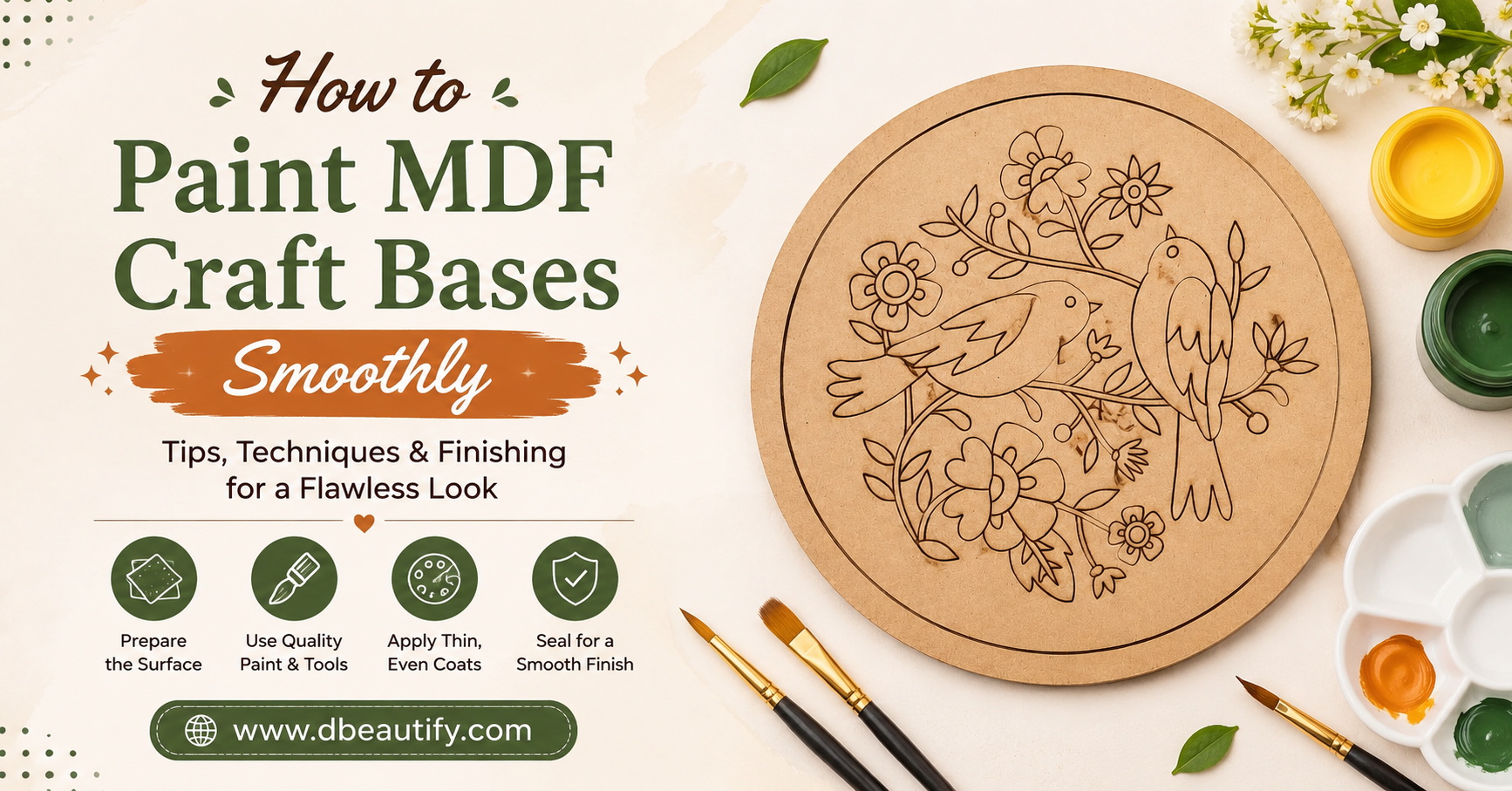
Painting craft surfaces can be one of the most satisfying parts of any DIY project. However, achieving a flawless finish often depends on the material you choose and how well you prepare it. If you love creating handmade decor, personalized gifts, or artistic displays, MDF Craft Bases offer the perfect canvas for your creativity.
Many beginners struggle with uneven paint, rough edges, or visible brush marks on MDF. The good news is that with the right preparation and painting techniques, you can achieve a professional-looking finish every time. This guide will walk you through the complete process of painting MDF smoothly while helping you get the best results for your next project.
Why MDF Craft Bases Are Popular Among DIY Artists
One reason MDF Craft Bases have become a favorite among crafters is their smooth and consistent surface. Unlike natural wood, MDF does not have visible grain patterns that can interfere with painting. This makes it ideal for acrylic paints, decoupage, resin art, stencil work, and other creative applications.
Whether you are working on wall hangings, festive decorations, nameplates, or home décor pieces, MDF provides a reliable surface that helps colors appear vibrant and even.
Start with Proper Surface Preparation
The secret to a smooth finish starts long before you open a paint bottle. Proper preparation is one of the most important steps when Preparing MDF for Acrylic Painting.
Fresh MDF surfaces may look smooth, but they often contain tiny fibers and dust particles. Before painting, lightly sand the entire surface using fine-grit sandpaper. This step removes imperfections and creates an even texture for paint adhesion.
After sanding, wipe the surface with a clean, dry cloth or microfiber cloth to remove all dust. Any leftover particles can create bumps and ruin the final finish.
Taking a few extra minutes during preparation can save hours of correction later.
Choosing the Best Primer for MDF Craft Bases
One of the biggest mistakes beginners make is skipping primer. MDF is naturally porous and tends to absorb paint quickly. Without primer, you may notice patchy color, uneven coverage, and excessive paint usage.
Using the Best Primer for MDF Craft Bases helps seal the surface and creates a smooth foundation for painting. A good primer prevents paint from soaking into the board and allows colors to sit evenly on top.
Apply a thin coat of primer using a soft brush or foam roller. Allow it to dry completely before lightly sanding the surface again. This additional sanding step helps create an ultra-smooth finish that looks professional and polished.
Selecting the Right Paint
Once the primer is dry, it is time to choose your paint. Acrylic paints are among the most popular choices for MDF Craft Bases because they dry quickly, offer excellent color variety, and are easy to work with.
High-quality acrylic paints provide better coverage and reduce the number of coats needed. Thin, even layers work much better than one thick coat. Thick paint often leaves streaks, drips, and brush marks that can be difficult to fix.
Patience is key. Allow each coat to dry fully before applying the next one.
MDF Craft Base Painting Tips for a Professional Look
When painting MDF, technique matters just as much as materials. Following a few simple MDF Craft Base Painting Tips can dramatically improve your results.
Use smooth, consistent brush strokes rather than pressing hard against the surface. Overworking wet paint can create visible marks and uneven texture.
Foam brushes and foam rollers often produce cleaner finishes compared to traditional brushes, especially on larger surfaces. They help distribute paint evenly and minimize streaking.
If you are painting intricate laser-cut designs, use smaller detail brushes to reach corners without applying excess paint.
Remember that multiple thin coats always look better than a single heavy coat.
Smooth Finish Techniques for MDF Crafts
Every crafter dreams of achieving that flawless, store-bought appearance. Fortunately, several Smooth Finish Techniques for MDF Crafts can help you achieve exactly that.
Between coats, lightly sand the painted surface using very fine sandpaper. This removes tiny imperfections and creates a silky texture. Be gentle to avoid removing too much paint.
Another useful technique is allowing adequate drying time. Rushing through layers often leads to smudges, uneven coverage, and fingerprints.
For projects that require an extra polished appearance, consider applying a clear sealant after the paint has completely cured. A protective topcoat enhances durability and gives the surface a professional finish.
A DIY MDF Craft Painting Guide for Beginners
If you are new to crafting, this simple DIY MDF Craft Painting Guide can help you build confidence.
Start by selecting a quality MDF craft shape that matches your project. Sand the surface lightly and clean away dust. Apply primer evenly and allow it to dry completely. Sand gently once more before painting.
Apply your chosen acrylic paint in thin layers, letting each coat dry before adding another. Continue building color until you achieve the desired look. Finish with a protective sealant if needed.
Following this process consistently will help you create beautiful handmade pieces with minimal effort.
Finding Quality MDF Craft Bases
The quality of your base material directly impacts your final results. Poorly cut or rough surfaces can make painting more difficult and time-consuming.
Trusted craft suppliers like Dbeautify offer well-finished MDF products designed specifically for artists, hobbyists, and DIY enthusiasts. High-quality MDF surfaces provide better paint adhesion and help achieve cleaner, smoother finishes with less preparation.
Choosing reliable materials allows you to focus more on creativity and less on fixing imperfections.
Common Mistakes to Avoid
Even experienced crafters occasionally encounter problems while painting MDF. One common mistake is applying paint too heavily. Thick coats often lead to drips and uneven drying.
Another issue is skipping primer, which can cause excessive paint absorption and inconsistent color. Ignoring sanding between layers may also leave visible texture and imperfections.
Taking your time with preparation and applying paint gradually will produce significantly better results.
Final Thoughts
Painting MDF Craft Bases smoothly is easier than many people think. The key lies in proper preparation, quality primer, thin paint layers, and patience throughout the process. By following the right techniques, you can transform simple MDF shapes into stunning works of art that look professionally finished.
Whether you are creating home décor, gifts, festive decorations, or custom craft projects, a smooth painted surface will make your designs stand out. With practice and attention to detail, your MDF Craft Bases can become the perfect foundation for beautiful and lasting creations.



 SPARK Website

 عربي
عربي