


 SPARK Website
Custom vs. Modular Booths: What Leading Booth Builders for IMTS Recommend
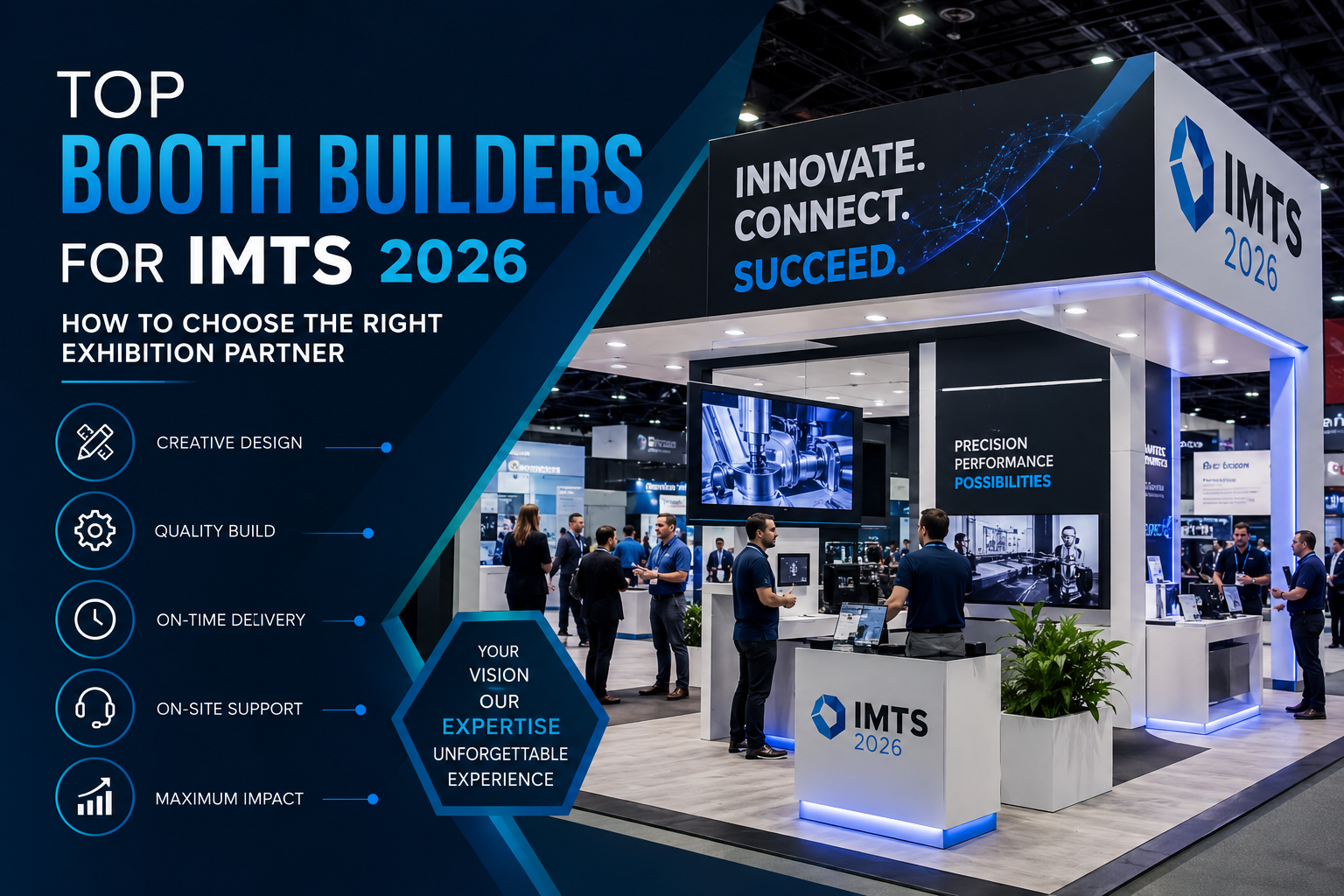
Exhibiting at IMTS is a major opportunity for manufacturing companies, industrial suppliers, and technology innovators to showcase their products and connect with decision-makers from around the world. However, one of the most important decisions exhibitors face is selecting the right type of booth. Many companies find themselves choosing between custom exhibits and modular booth solutions. According to experienced Booth builders for IMTS, the right choice depends on your objectives, budget, branding requirements, and long-term trade show strategy. Understanding the advantages and limitations of both booth types can help exhibitors make informed decisions and maximize their trade show investment.
Understanding Booth Types at IMTS
Trade show booths generally fall into two categories:
-
Custom booths
-
Modular booths
While both can help companies establish a strong presence at IMTS, they differ significantly in terms of design flexibility, cost, scalability, and overall impact.
Choosing the right option requires a clear understanding of your exhibition goals and expectations.
Why Booth Selection Matters
Your exhibit is often the first interaction attendees have with your company.
An effective booth should:
-
Attract visitors
-
Communicate your brand message
-
Showcase products effectively
-
Encourage engagement
-
Support lead generation
-
Facilitate sales conversations
The booth type you select can directly influence your ability to achieve these objectives.
What Is a Custom Booth?
A custom booth is a fully tailored exhibit designed and built specifically for your company.
Every aspect of the booth is created from scratch to align with your branding, products, and marketing goals.
Custom exhibits often feature:
-
Unique architectural elements
-
Specialized product displays
-
Custom graphics
-
Interactive experiences
-
Dedicated meeting spaces
-
Advanced technology integration
Because they are designed exclusively for a particular exhibitor, custom booths offer maximum flexibility and creativity.
Benefits of Custom Booths
Strong Brand Differentiation
One of the biggest advantages of custom exhibits is their ability to create a unique visual identity.
Custom booths allow companies to:
-
Showcase their brand personality
-
Highlight innovation
-
Create memorable visitor experiences
-
Stand out from competitors
At large events like IMTS, differentiation is critical.
Unlimited Design Freedom
Custom exhibits provide virtually endless design possibilities.
Exhibitors can incorporate:
-
Multi-level structures
-
Product demonstration zones
-
Immersive environments
-
Interactive technology
-
Specialized lighting
This flexibility allows brands to create highly targeted experiences.
Better Product Presentation
Manufacturing companies often need to display large equipment or complex systems.
Custom booths can be engineered to accommodate:
-
Heavy machinery
-
Automated systems
-
Live demonstrations
-
Technical presentations
This makes them particularly attractive for industrial exhibitors.
Enhanced Visitor Engagement
A well-designed custom booth encourages attendees to spend more time exploring products and interacting with staff.
Longer engagement often results in:
-
Better lead quality
-
Stronger brand recall
-
Increased sales opportunities
Challenges of Custom Booths
While custom exhibits offer significant benefits, they also come with certain challenges.
Higher Initial Investment
Custom booths generally require larger budgets due to:
-
Design development
-
Fabrication
-
Specialized materials
-
Custom engineering
For some exhibitors, the cost may be difficult to justify.
Longer Production Timelines
Because custom booths are built from scratch, they require:
-
Additional planning
-
Design approvals
-
Fabrication time
Early preparation is essential.
Storage Considerations
Custom exhibits often require dedicated storage facilities between events.
This can add ongoing operational costs.
What Is a Modular Booth?
A modular booth consists of reusable components that can be configured into various layouts and designs.
These systems typically include:
-
Modular frames
-
Interchangeable graphics
-
Reusable structures
-
Portable display elements
Modular exhibits have become increasingly popular due to their flexibility and cost efficiency.
Benefits of Modular Booths
Cost-Effective Solution
One of the primary reasons companies choose modular exhibits is affordability.
Compared to custom booths, modular systems generally offer:
-
Lower production costs
-
Reduced shipping expenses
-
Lower storage requirements
This makes them attractive for companies with limited budgets.
Reusability
Modular exhibits are designed for repeated use.
Components can be reconfigured for:
-
Different booth sizes
-
Multiple trade shows
-
Various marketing campaigns
This versatility increases long-term value.
Faster Setup and Installation
Because modular systems use standardized components, installation is often quicker and more straightforward.
Benefits include:
-
Reduced labor costs
-
Faster deployment
-
Simplified logistics
These efficiencies can significantly reduce overall exhibit expenses.
Easy Updates
Graphics and messaging can often be replaced without rebuilding the entire exhibit.
This allows companies to:
-
Promote new products
-
Update branding
-
Refresh marketing campaigns
without major investments.
Challenges of Modular Booths
Despite their advantages, modular booths may not be ideal for every exhibitor.
Limited Customization
Although modern modular systems are highly adaptable, they still have design limitations compared to fully custom exhibits.
Some brands may struggle to achieve complete uniqueness.
Reduced Visual Impact
In highly competitive exhibition environments like IMTS, certain modular booths may not generate the same level of attention as custom-built exhibits.
Product Display Constraints
Companies exhibiting large machinery or specialized equipment may find modular systems less suitable for their needs.
How Leading Booth Builders Evaluate the Choice
Experienced booth builders consider several factors when helping exhibitors decide between custom and modular solutions.
Budget
Budget is often the first consideration.
Questions include:
-
What is the total exhibit budget?
-
Will the booth be used once or multiple times?
-
What level of customization is required?
Custom exhibits generally demand larger investments, while modular solutions offer greater affordability.
Marketing Objectives
Exhibitors should identify their primary goals.
For example:
-
Product launches
-
Lead generation
-
Brand awareness
-
Customer meetings
-
Demonstrations
Certain objectives may be better supported by custom environments.
Booth Size
Larger exhibit spaces often benefit from custom designs, while smaller footprints may work effectively with modular systems.
Product Requirements
Heavy equipment and large-scale demonstrations often require custom engineering and structural support.
Modular systems may not always accommodate these needs.
Comparing Custom and Modular Booths
Design Flexibility
Custom Booths:
-
Unlimited creativity
-
Unique architecture
-
Fully personalized experiences
Modular Booths:
-
Flexible but standardized
-
Reconfigurable layouts
-
Limited structural customization
Cost
Custom Booths:
-
Higher upfront investment
-
Greater fabrication expenses
Modular Booths:
-
Lower initial cost
-
Cost-effective long-term use
Setup and Logistics
Custom Booths:
-
More complex installation
-
Higher labor requirements
Modular Booths:
-
Faster setup
-
Simplified transportation
Brand Differentiation
Custom Booths:
-
Maximum uniqueness
-
Strong visual impact
Modular Booths:
-
Professional appearance
-
Less distinctive
Which Option Works Best for IMTS?
The answer depends on your exhibition strategy.
Custom Booths Are Ideal For:
-
Large exhibitors
-
Major product launches
-
Complex demonstrations
-
Premium brand positioning
-
High-traffic exhibit spaces
Modular Booths Are Ideal For:
-
Budget-conscious exhibitors
-
Companies attending multiple events
-
Smaller exhibit footprints
-
Flexible marketing campaigns
-
Growing businesses
Both approaches can be successful when aligned with company goals.
Hybrid Solutions: The Best of Both Worlds
Many modern exhibitors are adopting hybrid exhibit strategies.
A hybrid booth combines:
-
Modular structures
-
Custom design elements
-
Branded experiences
-
Reusable components
This approach offers a balance between flexibility, cost control, and visual impact.
Benefits include:
-
Greater scalability
-
Improved ROI
-
Enhanced customization
-
Long-term adaptability
Leading booth builders increasingly recommend hybrid solutions for exhibitors seeking versatility.
Technology Integration in Both Booth Types
Whether custom or modular, technology can significantly enhance exhibit performance.
Popular options include:
Interactive Displays
Allow visitors to explore products independently.
LED Video Walls
Create visual excitement and communicate information efficiently.
Product Demonstration Stations
Support technical presentations and educational content.
Lead Capture Systems
Streamline data collection and follow-up efforts.
Technology can elevate both booth formats when implemented strategically.
Sustainability Considerations
Sustainability is becoming an important factor in exhibit planning.
Modular booths often offer environmental advantages through:
-
Reusable components
-
Reduced waste
-
Lower transportation requirements
However, many custom exhibits now incorporate:
-
Sustainable materials
-
Recyclable components
-
Energy-efficient systems
Exhibitors should discuss sustainability goals with their booth builder early in the planning process.
Common Mistakes to Avoid
Focusing Only on Cost
The least expensive option may not deliver the best results.
Ignoring Long-Term Use
Consider how often the booth will be used in future events.
Overlooking Audience Experience
Visitor engagement should remain a top priority.
Waiting Too Long
Early planning provides greater flexibility and better outcomes.
Underestimating Logistics
Shipping, installation, and storage can significantly impact total costs.
Planning for IMTS 2026
As IMTS continues to attract global manufacturers and technology providers, competition on the show floor will remain intense.
Successful exhibitors begin planning months in advance by:
-
Defining objectives
-
Establishing budgets
-
Evaluating booth options
-
Selecting experienced exhibit partners
Early preparation increases the likelihood of achieving strong results.
Conclusion
Choosing between a custom and modular booth is one of the most important decisions exhibitors make when preparing for IMTS. Custom exhibits offer unmatched creativity, branding opportunities, and visitor engagement, while modular booths provide flexibility, affordability, and long-term value. The right choice depends on your budget, marketing objectives, exhibit size, and product requirements. Many companies are even adopting hybrid approaches that combine the strengths of both solutions. By working with experienced Booth builders for IMTS, exhibitors can evaluate their options, create a strategic exhibit plan, and build a trade show presence that supports measurable business growth and long-term success.

 عربي
عربي