


 SPARK Website
What Design Tools Are Commonly Used by a Website Design Company in Mumbai?
Introduction
In today’s digital world, a website is often the first interaction customers have with a business. A visually appealing, user-friendly, and high-performing website can significantly influence customer trust and purchasing decisions. To create such websites, professional designers rely on a wide range of design and development tools that streamline workflows, improve collaboration, and enhance creativity.
A website design company in mumbai uses various tools for wireframing, user interface (UI) design, user experience (UX) planning, graphic creation, prototyping, coding, testing, and performance optimization. These tools help design teams transform ideas into engaging websites that not only look attractive but also deliver excellent functionality and user experiences.
In this article, we will explore the most commonly used design tools by website design professionals and understand how they contribute to creating modern, responsive, and effective websites.
Why Design Tools Are Important in Website Development
Website design involves much more than selecting colors and adding images. It requires strategic planning, creativity, technical expertise, and user-focused thinking.
Design tools help professionals:
- Visualize ideas
- Create wireframes
- Develop prototypes
- Improve collaboration
- Enhance productivity
- Maintain consistency
- Test functionality
By using specialized software, designers can create websites that meet both business objectives and user expectations.
Wireframing Tools
Wireframing is the first step in the website design process.
A wireframe acts as a blueprint that outlines the structure and layout of a website before visual design begins.
Popular wireframing tools include:
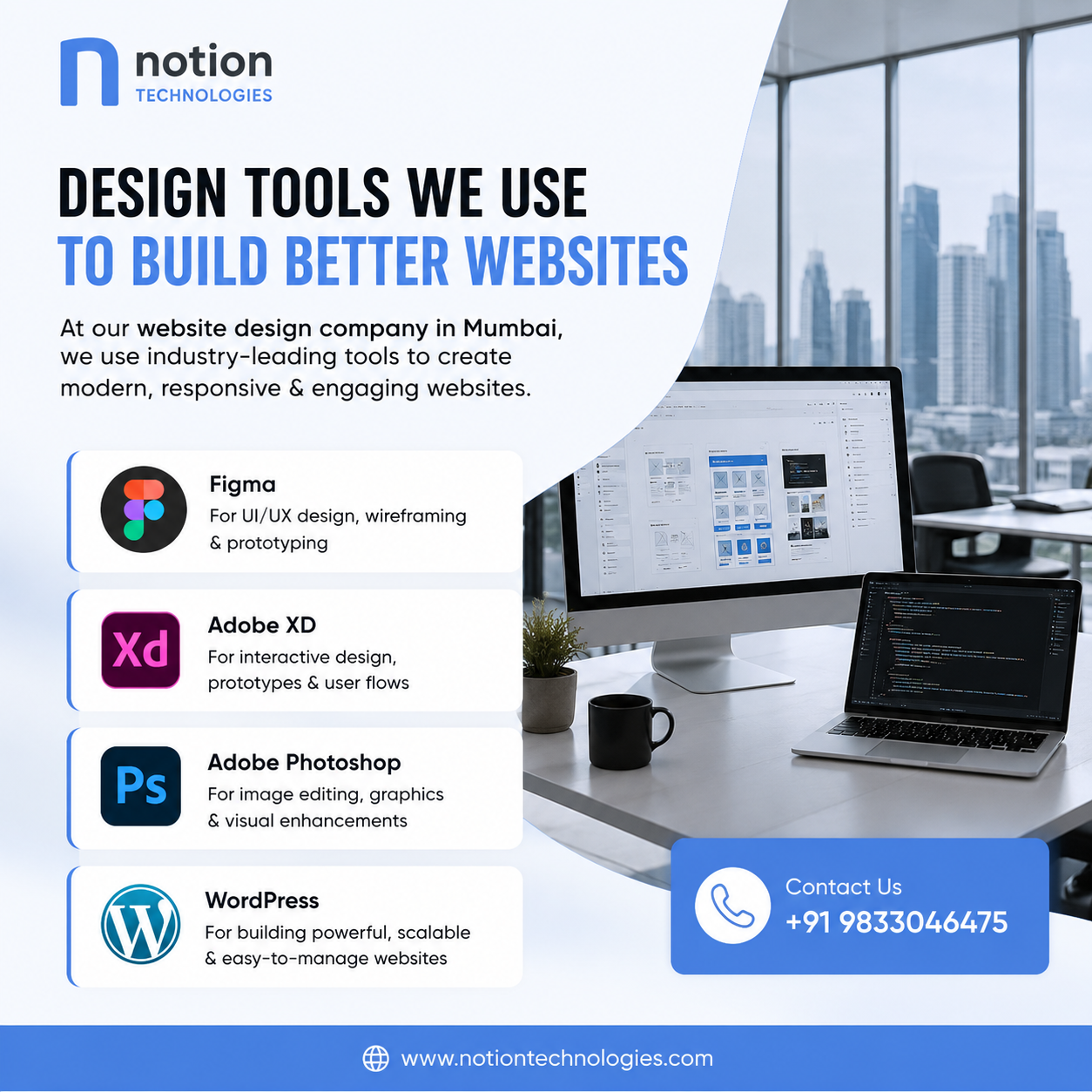
Figma
Figma allows teams to create wireframes collaboratively in real time.
Balsamiq
Balsamiq is known for its simple and easy-to-use wireframing interface.
MockFlow
MockFlow helps designers quickly create website layouts and user flows.
Wireframing tools allow designers to organize content and navigation before investing time in detailed design work.
User Interface (UI) Design Tools
UI design focuses on the visual appearance of a website.
A professional website design company in mumbai often uses advanced UI tools to create attractive and consistent website designs.
Common UI design tools include:
Figma
One of the most popular modern design tools.
Adobe XD
Used for interface design and interactive prototypes.
Sketch
Widely used for designing web and mobile interfaces.
These tools allow designers to create layouts, buttons, forms, icons, and other visual components.
User Experience (UX) Design Tools
User experience design ensures visitors can easily interact with a website.
UX design tools help professionals understand user behavior and improve usability.
Popular UX tools include:
User Flow Tools
Help visualize visitor journeys.
Information Architecture Tools
Organize website content logically.
Journey Mapping Software
Analyze user interactions.
Usability Testing Platforms
Gather feedback from real users.
UX tools help create websites that are intuitive and user-friendly.
Prototyping Tools
Prototypes allow designers to simulate website functionality before development begins.
Benefits of prototyping include:
- Better stakeholder feedback
- Faster design revisions
- Improved user testing
- Reduced development errors
Popular prototyping tools include:
Figma Prototyping
Creates clickable website prototypes.
Adobe XD
Supports interactive user experiences.
InVision
Allows teams to share and review prototypes.
Prototyping helps ensure websites function as intended before coding starts.
Graphic Design Tools
Visual elements play a significant role in website design.
Graphic design tools help create:
- Website banners
- Icons
- Illustrations
- Marketing graphics
- Social media visuals
Popular graphic design tools include:
Adobe Photoshop
Used for image editing and graphic creation.
Adobe Illustrator
Ideal for vector graphics and logos.
Canva
Useful for quick visual content creation.
These tools help designers enhance website aesthetics.
Image Optimization Tools
Images can improve visual appeal but may also slow down website performance if not optimized.
Designers use image optimization tools to:
Compress Images
Reduce file sizes.
Convert Formats
Use modern image types such as WebP.
Maintain Quality
Preserve visual clarity.
Improve Loading Speed
Enhance overall website performance.
Optimized images contribute to better user experiences and SEO performance.
Collaboration Tools
Website projects often involve designers, developers, marketers, and clients.
Collaboration tools improve communication and project management.
Popular collaboration tools include:
Figma
Supports real-time teamwork.
Slack
Facilitates team communication.
Trello
Helps manage project workflows.
Asana
Tracks tasks and deadlines.
These tools ensure everyone remains aligned throughout the design process.
Coding and Development Tools
After design approval, developers transform visual concepts into functional websites.
Common coding tools include:
Visual Studio Code
A popular code editor for web development.
Sublime Text
Lightweight and efficient coding software.
GitHub
Used for version control and collaboration.
CodePen
Helps test and showcase code snippets.
Development tools help build reliable and scalable websites.
Responsive Design Testing Tools
Modern websites must function properly across desktops, tablets, and smartphones.
Responsive design testing tools help verify:
Layout Consistency
Across different screen sizes.
Mobile Usability
For smartphone users.
Navigation Functionality
On various devices.
Visual Accuracy
Across browsers and operating systems.
Responsive testing is critical for delivering a seamless user experience.
Browser Testing Tools
Different browsers may display websites differently.
A website design company in mumbai uses browser testing tools to ensure compatibility.
Popular testing platforms include:
BrowserStack
Tests websites on multiple devices and browsers.
CrossBrowserTesting
Identifies compatibility issues.
LambdaTest
Supports browser-based quality assurance.
These tools help ensure consistent performance across platforms.
SEO Design Tools
Website design and SEO often work together.
SEO-focused design tools help optimize websites for search engines.
Popular SEO tools include:
Google Search Console
Monitors website indexing and performance.
Google Analytics
Tracks visitor behavior.
Screaming Frog
Analyzes technical SEO issues.
Ahrefs
Supports SEO research and optimization.
These tools help designers build SEO-friendly websites.
Performance Optimization Tools
Website speed significantly affects user experience and rankings.
Performance tools help monitor and improve loading times.
Common tools include:
Google PageSpeed Insights
Provides speed recommendations.
GTmetrix
Analyzes performance metrics.
Pingdom
Monitors website speed.
Lighthouse
Evaluates performance and accessibility.
Performance optimization tools help create faster websites.
Content Management System (CMS) Tools
Many websites are built using content management systems.
Popular CMS platforms include:
WordPress
The most widely used CMS globally.
Joomla
Provides flexibility and customization.
Drupal
Offers advanced functionality for larger websites.
CMS platforms simplify content management and website updates.
Website Security Tools
Website security is an important aspect of modern web design.
Security tools help protect websites from cyber threats.
Common solutions include:
SSL Certificates
Encrypt website data.
Security Plugins
Protect against vulnerabilities.
Malware Scanners
Detect security issues.
Firewall Solutions
Prevent unauthorized access.
Security contributes to user trust and website reliability.
Accessibility Testing Tools
Web accessibility ensures websites can be used by people with disabilities.
Accessibility tools evaluate:
Color Contrast
Improving readability.
Keyboard Navigation
Supporting accessibility.
Screen Reader Compatibility
Helping visually impaired users.
Compliance Standards
Meeting accessibility guidelines.
Accessible websites provide a better experience for all users.
Analytics and User Behavior Tools
Understanding visitor behavior helps improve website performance.
Analytics tools provide insights into:
Traffic Sources
Where visitors come from.
User Engagement
How visitors interact with pages.
Conversion Paths
Which actions users take.
Bounce Rates
How often visitors leave quickly.
Data-driven improvements help optimize website effectiveness.
Benefits of Using Professional Design Tools
Using advanced design tools provides numerous advantages:
Improved Efficiency
Projects are completed faster.
Better Collaboration
Teams work together more effectively.
Higher Design Quality
Professional tools enhance creativity.
Reduced Errors
Testing tools identify issues early.
Enhanced User Experience
Optimized websites perform better.
These benefits help businesses achieve stronger online results.
Future Trends in Website Design Tools
The website design industry continues to evolve.
Emerging trends include:
- AI-powered design assistants
- Automated prototyping
- Advanced collaboration platforms
- Real-time user testing tools
- Enhanced performance monitoring
As technology advances, design tools will become even more powerful and efficient.
Conclusion
Professional website design requires a combination of creativity, technical expertise, and specialized tools. From wireframing and prototyping to graphic design, coding, testing, and performance optimization, designers rely on a wide range of software solutions to create modern, responsive, and user-friendly websites. A website design company uses these tools to improve efficiency, enhance collaboration, optimize performance, and deliver exceptional digital experiences. By leveraging the right technologies, businesses can build websites that attract visitors, strengthen brand credibility, and support long-term online growth.
FAQ Questions
1. What design tools are commonly used by a website design company in mumbai?
A website design company in mumbai commonly uses tools such as Figma, Adobe XD, Sketch, Photoshop, Illustrator, Visual Studio Code, Google Analytics, Google PageSpeed Insights, BrowserStack, and WordPress to design, develop, test, and optimize websites.
2. Why is Figma popular among website designers?
Figma allows real-time collaboration, wireframing, prototyping, and UI design within a cloud-based environment.
3. What is the purpose of website prototyping tools?
Prototyping tools create interactive website previews that help designers and clients visualize functionality before development begins.
4. How do performance optimization tools help websites?
These tools identify speed-related issues and provide recommendations to improve loading times and user experience.
5. Why are accessibility testing tools important?
Accessibility tools ensure websites are usable by individuals with disabilities and help meet accessibility standards.
Read Our Previous Blog------------->How does a web design company in Mumbai optimize website speed?

 عربي
عربي