


 SPARK Website
What Is Laminar Airflow in an Andrology Room?
Introduction
The success of fertility treatments and reproductive healthcare procedures depends heavily on maintaining a controlled laboratory environment. In modern fertility clinics, Andrology Room Design plays a critical role in ensuring optimal conditions for sperm analysis, semen processing, cryopreservation, and other laboratory procedures. One of the most important features incorporated into advanced andrology laboratories is the laminar airflow system. This specialized airflow technology helps maintain a clean, contamination-free environment that supports laboratory accuracy and protects sensitive biological samples.
Andrology laboratories handle delicate reproductive cells that can be easily affected by airborne particles, microorganisms, dust, and environmental contaminants. Even minor contamination can compromise sample quality and impact diagnostic accuracy or treatment outcomes. To address these challenges, fertility clinics use laminar airflow systems to create highly controlled workspaces with continuous clean air circulation.
Understanding Laminar Airflow
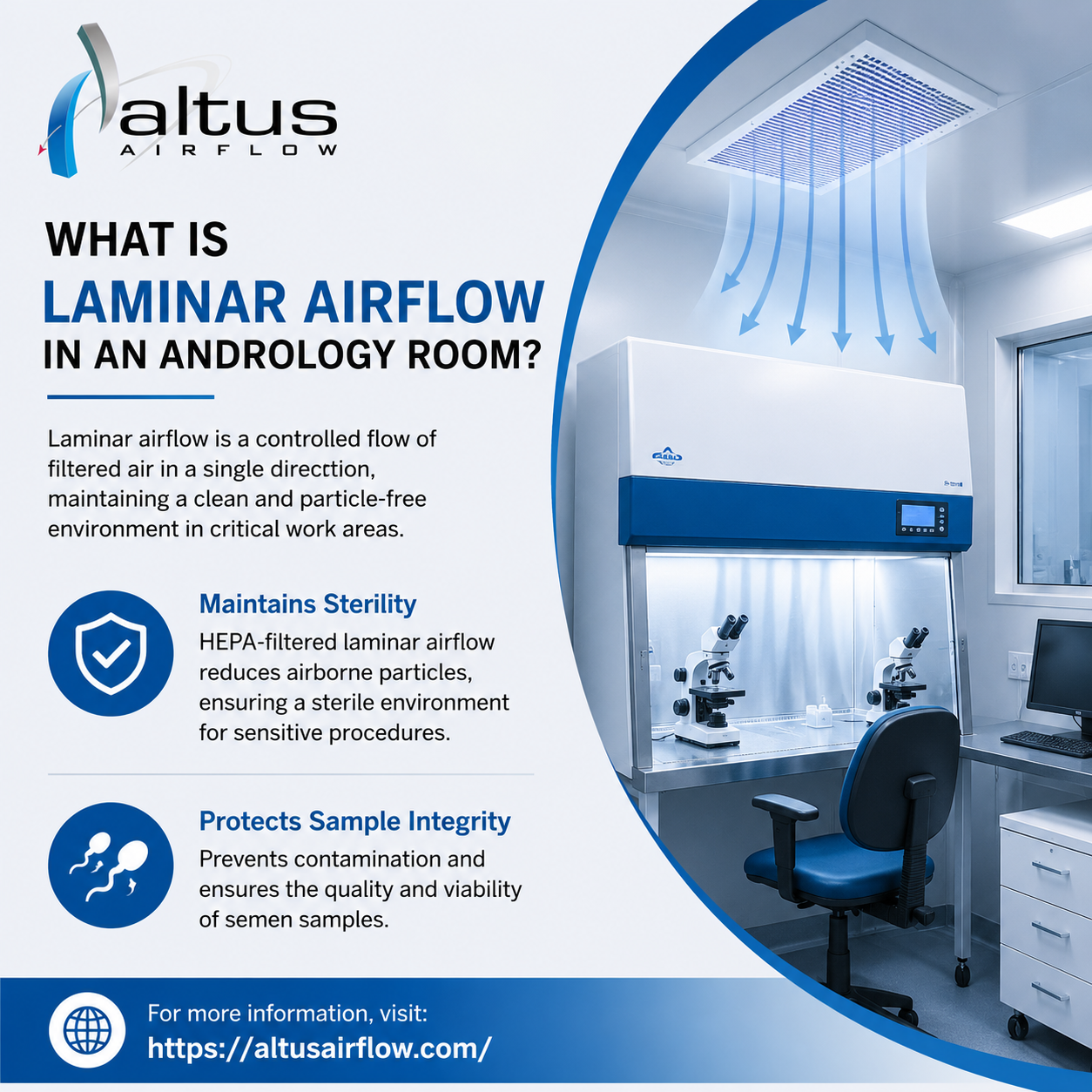
Laminar airflow refers to the controlled movement of filtered air in a single direction at a consistent speed.
Unlike turbulent airflow, where air moves randomly, laminar airflow creates:
- Uniform air movement
- Reduced airborne contamination
- Controlled working conditions
This technology is a fundamental component of modern Andrology Room Design.
Why Air Quality Matters in Andrology Laboratories
Andrology laboratories process sensitive reproductive samples that require protection from contamination.
Airborne contaminants may include:
- Dust particles
- Bacteria
- Fungi
- Viruses
- Chemical pollutants
Maintaining excellent air quality supports accurate laboratory procedures.
What Is a Laminar Airflow System?
A laminar airflow system is a specialized ventilation unit designed to deliver highly filtered air across a designated workspace.
The system typically includes:
- HEPA filters
- Blowers
- Airflow chambers
- Control systems
Together, these components maintain clean air conditions.
How Laminar Airflow Works
The process begins when air is drawn into the filtration system.
The air passes through:
- Pre-filters
- HEPA filters
- Airflow distribution units
The filtered air is then released in a uniform direction across the working area.
Role of HEPA Filters
HEPA filters are essential components of laminar airflow systems.
These filters remove:
- Fine dust particles
- Microorganisms
- Airborne contaminants
HEPA filtration significantly improves laboratory cleanliness.
Types of Laminar Airflow Systems
There are two primary types of laminar airflow systems:
Horizontal Laminar Airflow
In horizontal systems, air moves from the back of the unit toward the operator.
Benefits include:
- Consistent airflow
- Effective contamination control
- Easy accessibility
Vertical Laminar Airflow
In vertical systems, air flows downward from the ceiling toward the work surface.
Advantages include:
- Reduced contamination risk
- Better operator protection
- Efficient particle removal
Both configurations are used depending on laboratory requirements.
Importance of Laminar Airflow in Andrology Laboratories
Laminar airflow supports several critical laboratory functions.
These include:
- Sample protection
- Environmental control
- Regulatory compliance
- Laboratory efficiency
Effective contamination control improves overall laboratory performance.
Protection of Sperm Samples
Sperm cells are highly sensitive to environmental conditions.
Laminar airflow helps protect samples from:
- Airborne particles
- Microbial contamination
- Environmental fluctuations
This protection supports sample integrity.
Improved Laboratory Accuracy
Contaminated samples can lead to inaccurate test results.
Laminar airflow contributes to:
- Reliable analyses
- Consistent outcomes
- Improved diagnostic accuracy
Accurate results support better treatment decisions.
Enhanced Infection Control
Infection prevention is a priority in reproductive healthcare facilities.
Laminar airflow helps reduce:
- Airborne microbial presence
- Cross-contamination risks
- Environmental contamination
These benefits improve laboratory safety.
Support for IVF Procedures
Many fertility centers combine andrology laboratories with IVF facilities.
Laminar airflow supports:
- Gamete handling
- Embryo culture preparation
- Sample processing
Controlled environments contribute to successful outcomes.
Role in Cryopreservation Areas
Cryopreservation involves the storage of reproductive samples at extremely low temperatures.
Laminar airflow helps maintain:
- Clean working conditions
- Safe handling procedures
- Sample integrity
Contamination prevention is critical during storage preparation.
Integration with HVAC Systems
Laminar airflow systems often work alongside HVAC infrastructure.
HVAC systems manage:
- Temperature
- Humidity
- Air pressure
Together, they create a stable laboratory environment.
Positive Pressure Environment
Many andrology laboratories use positive pressure systems.
Positive pressure:
- Prevents contaminated air from entering
- Supports cleanroom conditions
- Enhances environmental control
This strategy complements laminar airflow technology.
Air Changes Per Hour
Laboratory standards often specify air change requirements.
Frequent air changes help:
- Remove contaminants
- Maintain cleanliness
- Improve air quality
Airflow systems contribute significantly to these goals.
Environmental Monitoring
Modern laboratories continuously monitor environmental conditions.
Parameters may include:
- Temperature
- Humidity
- Air pressure
- Particle counts
Monitoring helps verify system performance.
Cleanroom Principles in Andrology Rooms
Many advanced andrology laboratories incorporate cleanroom concepts.
These principles emphasize:
- Controlled airflow
- Air filtration
- Surface cleanliness
Laminar airflow is central to cleanroom design.
Compliance with Laboratory Standards
Regulatory bodies often recommend strict environmental controls.
Laminar airflow supports compliance with:
- Laboratory quality standards
- Healthcare regulations
- Fertility clinic guidelines
Compliance enhances operational credibility.
Energy Efficiency of Modern Systems
Modern airflow systems are increasingly energy efficient.
Features may include:
- Variable speed controls
- Energy-saving motors
- Smart monitoring systems
Efficiency helps reduce operating costs.
Maintenance of Laminar Airflow Systems
Routine maintenance is essential for optimal performance.
Maintenance tasks include:
- Filter inspections
- Airflow testing
- Equipment servicing
Regular maintenance preserves system reliability.
HEPA Filter Testing
HEPA filters require periodic evaluation.
Testing helps verify:
- Filtration efficiency
- Structural integrity
- Airflow performance
Proper filter maintenance ensures contamination control.
Airflow Validation
Validation confirms that airflow remains within required specifications.
Testing may include:
- Velocity measurements
- Smoke visualization studies
- Particle count verification
Validation supports laboratory quality assurance.
Staff Safety Benefits
Laminar airflow systems also protect laboratory personnel.
Benefits include:
- Reduced exposure to contaminants
- Improved working conditions
- Enhanced workplace safety
Staff protection contributes to operational efficiency.
Benefits of Modern Andrology Room Design
A well-planned laboratory environment offers several advantages.
These include:
- Better workflow
- Improved contamination control
- Enhanced operational efficiency
- Greater regulatory compliance
Modern Andrology Room Design supports long-term laboratory success.
Future Trends in Laminar Airflow Technology
Technological advancements continue to improve laboratory environments.
Emerging trends include:
- Smart monitoring systems
- Automated airflow controls
- Energy-efficient filtration technologies
Innovation will continue shaping fertility laboratory design.
Why Fertility Clinics Invest in Laminar Airflow
Fertility clinics prioritize patient outcomes and laboratory quality.
Laminar airflow helps achieve:
- Better sample protection
- Improved laboratory reliability
- Higher operational standards
These benefits support clinical excellence.
Conclusion
Laminar airflow is one of the most important environmental control technologies used in modern fertility laboratories. By delivering highly filtered air in a controlled and uniform manner, it helps protect reproductive samples from contamination while supporting laboratory accuracy, infection control, and regulatory compliance. Integrated with HVAC systems, HEPA filtration units, positive pressure environments, and environmental monitoring technologies, laminar airflow creates the clean conditions required for sensitive andrology procedures and fertility treatments.
Altus Airflow specializes in designing advanced laboratory environments that incorporate high-performance airflow systems, contamination control solutions, and modern engineering standards. Through innovative infrastructure and technical expertise, Altus Airflow helps fertility clinics develop reliable, efficient, and future-ready laboratories that support superior reproductive healthcare outcomes.
FAQs
1. What is laminar airflow in Andrology Room Design?
Andrology Room Design incorporates laminar airflow systems that provide a continuous stream of HEPA-filtered air moving in a uniform direction to reduce contamination and maintain a clean laboratory environment.
2. Why is laminar airflow important in an andrology laboratory?
It helps protect reproductive samples from airborne contaminants and improves laboratory accuracy.
3. What role do HEPA filters play in laminar airflow systems?
HEPA filters remove fine particles, microorganisms, and contaminants from the air.
4. What is the difference between horizontal and vertical laminar airflow?
Horizontal systems move air toward the operator, while vertical systems direct air downward onto the work surface.
5. Does laminar airflow improve infection control?
Yes, it helps reduce airborne contamination and supports cleaner laboratory conditions.
Read Our Previous Blog --------------->How are electrical systems integrated into cardiac modular OTs?

 English