


 SPARK Website
3D X-Ray Baggage Scanner vs Traditional Systems: What’s Better?
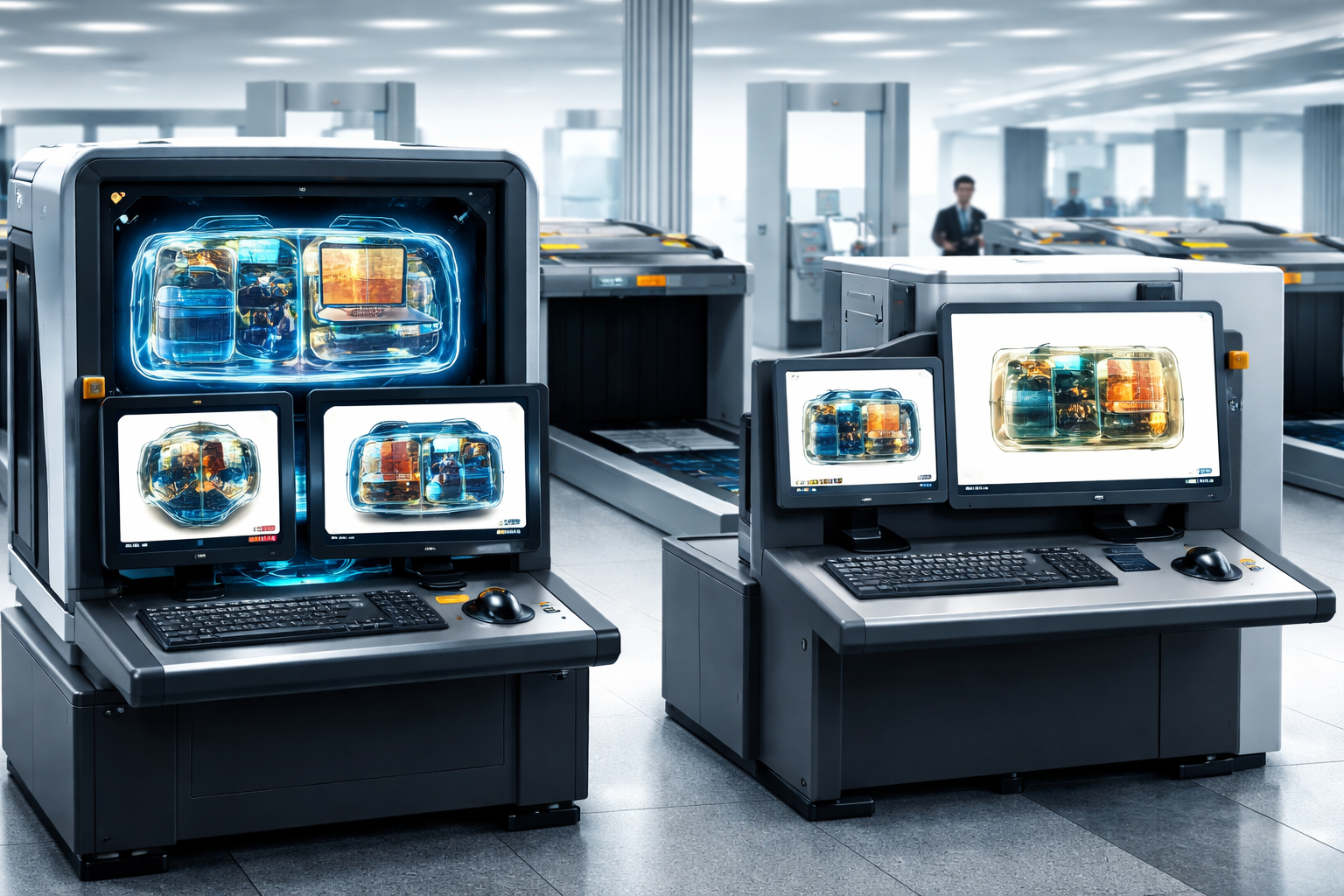
In today’s fast-evolving security landscape, ensuring safety without compromising efficiency has become a top priority across industries. From airports and railway stations to corporate offices and public venues, baggage screening systems play a crucial role in identifying potential threats. Over the years, security technologies have undergone significant transformation, shifting from basic scanning methods to more advanced imaging solutions.
One of the most notable advancements is the introduction of the 3D X-Ray Baggage scanner, which promises enhanced detection capabilities compared to traditional systems. But how do these modern solutions truly compare with older technologies? And which one is better suited for today’s security demands? Let’s explore both systems in detail.
Understanding Traditional X-Ray Baggage Scanners
Traditional X-ray baggage scanners have been widely used for decades. These systems operate using 2D imaging technology, where X-rays pass through an object to produce a flat image. Security personnel analyze these images to identify suspicious items based on shape, density, and color coding.
Key Features of Traditional Systems:
-
2D Imaging: Produces a flat, single-angle image of the scanned object
-
Color Coding: Helps differentiate materials such as organic, inorganic, and metallic items
-
Manual Interpretation: Requires trained operators to identify threats
-
Cost-Effective: Generally more affordable compared to advanced systems
Limitations:
While traditional scanners have served well, they come with several challenges:
-
Limited Depth Perception: Overlapping objects can obscure critical details
-
Higher Dependence on Human Judgment: Increases the risk of human error
-
Slower Threat Detection: Complex baggage requires more time to analyze
-
Difficulty in Identifying Sophisticated Threats
What is a 3D X-Ray Baggage Scanner?
Modern security demands have led to the development of 3D imaging technology in baggage scanning. Unlike traditional systems, these scanners generate volumetric images, allowing operators to view objects from multiple angles.
This advanced system uses computed tomography (CT) technology to reconstruct detailed 3D images of the contents inside baggage. Security personnel can rotate, zoom, and analyze items in depth, significantly improving threat detection accuracy.
How 3D Scanning Technology Works
3D scanning systems utilize multiple X-ray projections to create a complete three-dimensional image. These images are then processed using advanced algorithms and artificial intelligence.
Key Functionalities:
-
Multi-Angle Visualization: Enables viewing from different perspectives
-
Automated Threat Detection: AI-assisted analysis reduces manual effort
-
Material Discrimination: Accurately identifies substances based on density
-
High-Speed Processing: Allows faster throughput in high-traffic areas
Introducing Advanced Inspection Systems
In the middle of this technological evolution, systems like the Isometric 3D Xray baggage inspection system have emerged as game-changers. These solutions offer enhanced imaging precision and allow operators to analyze baggage with greater clarity and confidence.
Such systems are particularly beneficial in high-security environments where accuracy and speed are critical.
Key Differences Between 3D and Traditional Systems
1. Imaging Capability
-
Traditional: 2D flat images
-
3D Systems: Detailed volumetric images with depth perception
3D systems clearly outperform traditional scanners when it comes to visual clarity and detail.
2. Threat Detection Accuracy
-
Traditional: Relies heavily on operator experience
-
3D Systems: Combines AI with human analysis
Advanced systems significantly reduce false positives and missed threats.
3. Speed and Efficiency
-
Traditional: Slower, especially with complex baggage
-
3D Systems: Faster scanning with automated alerts
This makes 3D systems ideal for high-traffic environments like airports.
4. Ease of Use
-
Traditional: Requires extensive training
-
3D Systems: User-friendly interfaces with automated support
Operators can quickly adapt to modern systems with minimal training.
5. Cost Consideration
-
Traditional: Lower initial investment
-
3D Systems: Higher upfront cost but better long-term ROI
While advanced systems may seem expensive initially, they offer long-term benefits in terms of efficiency and reduced risk.
Advantages of 3D X-Ray Baggage Scanners
1. Enhanced Security
3D imaging allows for better identification of concealed threats, including explosives and prohibited items hidden within dense objects.
2. Reduced Human Error
Automation and AI assistance minimize reliance on manual interpretation.
3. Faster Decision-Making
Operators can quickly analyze images without needing to rescan baggage.
4. Improved Passenger Experience
Faster screening reduces queues and wait times in busy areas.
5. Future-Ready Technology
These systems are designed to adapt to evolving security threats.
When Traditional Systems Still Make Sense
Despite the advantages of modern scanners, traditional systems are not entirely obsolete. They may still be suitable in:
-
Low-Traffic Areas: Small offices or buildings with minimal security risk
-
Budget-Constrained Environments: Organizations with limited funds
-
Basic Screening Needs: Where advanced threat detection is not critical
Industries Benefiting from 3D Scanning Technology
The adoption of advanced baggage scanning systems is rapidly increasing across various sectors:
-
Airports & Aviation
-
Metro Stations & Railways
-
Corporate Offices
-
Government Buildings
-
Shopping Malls & Event Venues
Companies like Krystalvision Image Systems Pvt. Ltd. are playing a key role in delivering cutting-edge security solutions tailored to modern requirements.
Challenges of Implementing 3D Systems
While highly beneficial, adopting 3D systems comes with certain challenges:
-
High Initial Investment
-
Integration with Existing Infrastructure
-
Training Requirements for Staff
-
Maintenance Costs
However, these challenges are often outweighed by the long-term advantages.
Future of Baggage Scanning Technology
The future of security screening lies in intelligent automation and real-time threat detection. Emerging trends include:
-
AI-Powered Decision Systems
-
Cloud-Based Monitoring
-
Remote Screening Capabilities
-
Integration with Smart Surveillance Systems
3D scanning technology is expected to become the industry standard as organizations prioritize safety and efficiency.
Conclusion: Which One is Better?
When comparing both technologies, it is clear that 3D baggage scanners offer a significant advantage over traditional systems. They provide superior imaging, faster processing, and more accurate threat detection.
However, the choice ultimately depends on specific requirements:
-
If budget and simplicity are priorities, traditional systems may suffice
-
If security, efficiency, and future readiness are essential, 3D systems are the better choice
For organizations aiming to stay ahead in security technology, investing in advanced scanning solutions is a smart and strategic decision.
Frequently Asked Questions (FAQs)
1. What is the main difference between 2D and 3D baggage scanners?
The primary difference lies in imaging. 2D scanners provide flat images, while 3D scanners offer detailed, multi-angle views for better analysis.
2. Are 3D baggage scanners more accurate?
Yes, they provide higher accuracy due to advanced imaging and AI-based threat detection.
3. Do 3D scanners require special training?
While some training is needed, modern systems are designed to be user-friendly and easier to operate.
4. Are traditional scanners still used today?
Yes, especially in smaller facilities or areas with lower security requirements.
5. Is investing in 3D scanning technology worth it?
Absolutely. Despite higher initial costs, the long-term benefits in security and efficiency make it a valuable investment.

 عربي
عربي