


 SPARK Website
How Proper Power Tool Maintenance Reduces Costs and Waste
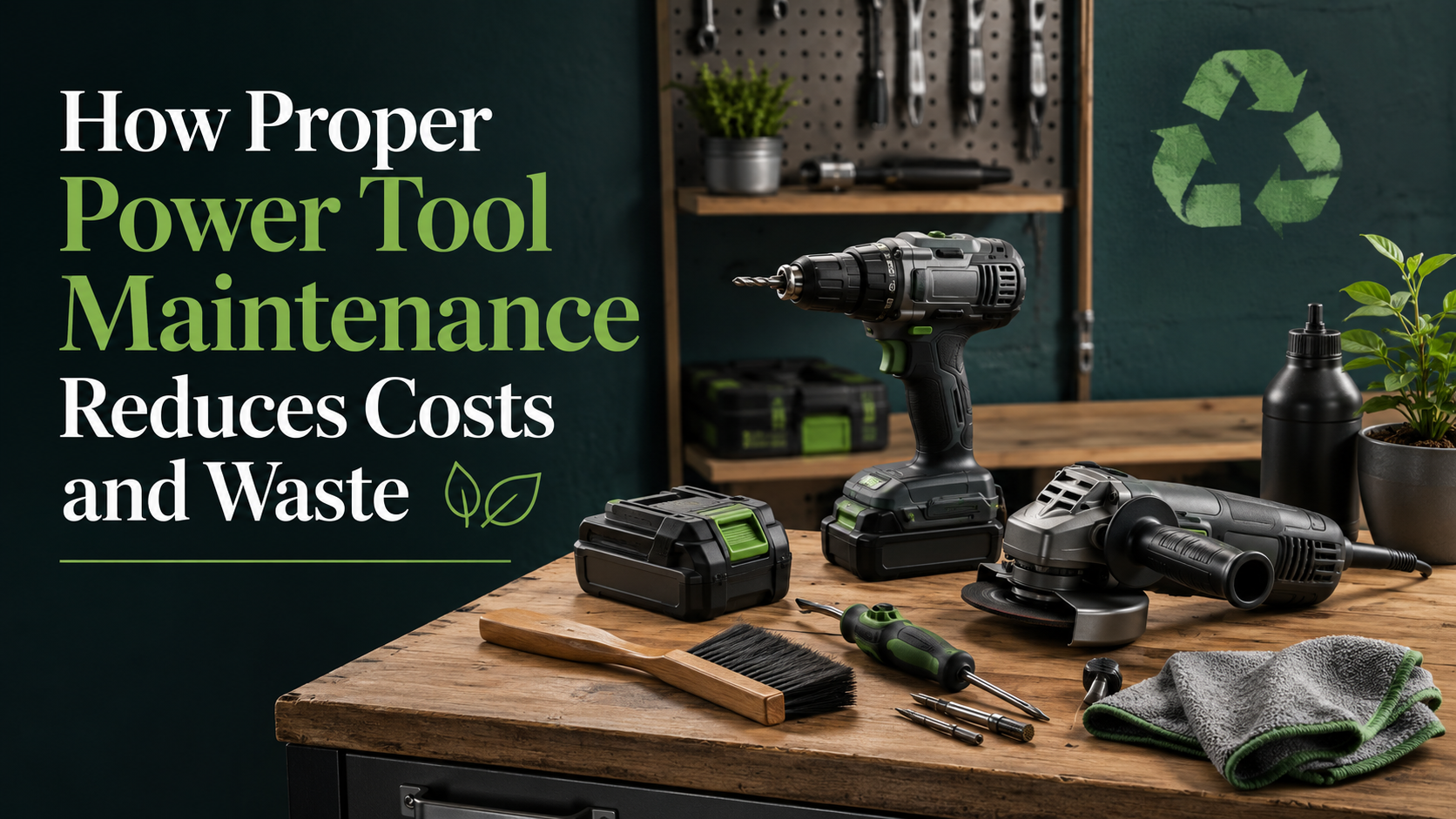
Power tools are essential for construction, renovation, woodworking, metalworking, gardening, and many everyday repair tasks. Whether used by professionals, small businesses, craftsmen, or homeowners, tools such as drills, angle grinders, saws, sanders, rotary hammers, and cordless machines help people work faster, more accurately, and more efficiently.
However, many power tools are replaced earlier than necessary. In some cases, this happens because the tool is low quality or used beyond its limits. But very often, the reason is much simpler: poor maintenance, incorrect storage, or the use of unsuitable accessories.
Proper tool maintenance is not only a technical habit. It is also a practical way to reduce costs, extend the lifespan of equipment, improve safety, and reduce waste. In a time when businesses and consumers are becoming more aware of sustainability, taking better care of tools is a simple but important step toward more responsible resource use.
Why Tool Maintenance Matters
Every power tool is exposed to stress during work. Dust, moisture, heat, vibration, heavy loads, and contact with different materials gradually affect its performance. Even a high-quality machine can lose efficiency if it is not cleaned, stored, and used correctly.
One of the most common problems is overheating. When ventilation openings become blocked by dust or debris, the motor cannot cool properly. As a result, the tool may lose power, work unevenly, or eventually fail. In cordless tools, excessive heat can also affect the battery and reduce its capacity over time.
Regular maintenance helps prevent these problems. A clean and well-kept tool works more efficiently, lasts longer, and is safer to use. For professionals, this means fewer interruptions and lower repair costs. For homeowners and DIY users, it means getting more value from each purchase.
Cleaning Tools After Use
Cleaning is one of the easiest and most effective ways to extend the life of a power tool. After cutting, drilling, sanding, grinding, or working with construction materials, dust often remains on the tool body, inside ventilation areas, and around moving parts.
If this dust is not removed, it can build up and affect cooling, switches, bearings, and other components. Fine particles from wood, concrete, metal, plaster, or stone can be especially harmful when they enter sensitive areas of the machine.
After use, tools should be cleaned with a dry cloth, a soft brush, or compressed air at moderate pressure. Special attention should be paid to ventilation slots, handles, switches, and the area around the chuck, blade, or disc. The goal is not to disassemble the tool after every job, but to prevent dirt from becoming a long-term problem.
This small habit takes only a few minutes, but it can significantly reduce wear and improve performance.
Correct Storage Conditions
Storage is another important part of tool care. Many tools are damaged not during work, but while they are stored in unsuitable conditions. Moisture, cold, heat, and dust can all reduce the lifespan of equipment.
Power tools should be stored in a dry and clean place. They should not be left directly on the floor, outside, in damp basements, or in areas with large temperature changes. Moisture can cause corrosion, damage electrical contacts, and affect metal components.
Whenever possible, tools should be kept in their original case, a toolbox, a cabinet, or a dedicated storage area. Accessories such as drill bits, cutting discs, sanding papers, blades, and screwdriver bits should also be organized. This helps prevent damage and makes it easier to choose the correct accessory for each task.
Good storage also improves safety. A well-organized workshop reduces the risk of accidents, lost parts, and unnecessary tool replacement.
Taking Care of Cordless Tool Batteries
Cordless tools have become extremely popular because they provide flexibility and freedom of movement. However, the battery is one of the most important and expensive parts of a cordless system. Poor battery care can reduce runtime, performance, and overall tool value.
Batteries should not be stored fully discharged for long periods. They should also be protected from extreme heat, freezing temperatures, and moisture. Using the correct charger is equally important, because unsuitable charging can damage battery cells or reduce their lifespan.
It is also a good practice to avoid pushing a cordless tool far beyond its intended capacity. If a machine is constantly forced to perform heavy tasks for which it was not designed, both the motor and the battery will suffer.
By taking care of batteries properly, users can extend the working life of their cordless tools and reduce the need to buy replacement batteries too often.
Using the Right Accessories
Many tool failures are caused not by the machine itself, but by the use of unsuitable or low-quality accessories. A dull drill bit, an incorrect cutting disc, a worn sanding pad, or a poor-quality screwdriver bit can make the tool work harder than necessary.
When the accessory is not suitable for the material or task, the tool may overheat, vibrate excessively, lose efficiency, or suffer mechanical stress. This not only affects the result but also shortens the life of the tool.
For example, using the right disc for metal, stone, or wood is essential when working with an angle grinder. Using a sharp and suitable drill bit reduces pressure on the drill. Choosing the correct blade for a saw improves cutting performance and lowers the risk of kickback.
The right accessory helps the tool work as intended. It improves accuracy, saves time, and protects the machine from unnecessary wear.
Maintenance as a Sustainable Practice
Sustainability is often associated with renewable energy, recycling, and eco-friendly materials. However, one of the most practical forms of sustainability is simply using products for longer.
When a tool is maintained properly and serves for many years, fewer replacements are needed. This reduces waste, lowers the demand for new raw materials, and decreases the environmental impact related to manufacturing, packaging, and transportation.
Power tools contain metal, plastic, electronics, batteries, and other materials that require energy and resources to produce. Replacing tools too often creates unnecessary waste, especially when the old equipment could have remained useful with better care.
For businesses, this approach also has financial benefits. A company that maintains its tools well spends less on replacements, reduces downtime, and increases productivity. For individual users, it means better value and fewer unnecessary purchases.
In this way, proper maintenance connects economic efficiency with environmental responsibility.
Repair Before Replacement
In many cases, a tool that appears to be failing does not need to be replaced immediately. Sometimes the issue is simple: worn carbon brushes, a damaged cable, a blocked ventilation area, a loose part, or an old accessory.
Before buying a new tool, it is worth checking whether the existing one can be cleaned, repaired, or serviced. Of course, safety must always come first. If a tool shows signs of burning smell, electrical problems, unusual noise, sparks, or excessive vibration, it should be inspected carefully and not used until the issue is understood.
Repairing a tool can often be more economical and more sustainable than replacing it. Even when replacement becomes necessary, learning from the cause of the failure can help prevent the same problem with future equipment.
Building Better Habits
Good maintenance does not require complicated procedures. It is mostly about building simple habits:
-
Clean tools after use.
-
Store them in a dry and organized place.
-
Use the right accessories for the task.
-
Avoid overloading the machine.
-
Take care of batteries and chargers.
-
Check for unusual sounds, heat, or vibration.
-
Replace worn accessories on time.
These small actions can make a big difference over the lifetime of a tool.
For professionals, tool maintenance should be part of daily work discipline. For homeowners and DIY users, it can become a simple routine after every project. In both cases, the result is the same: safer work, better performance, lower costs, and less waste.
Conclusion
Proper power tool maintenance is one of the simplest ways to reduce expenses and support more responsible consumption. A well-maintained tool performs better, lasts longer, and helps users avoid unnecessary repairs or premature replacement.
In a world where resources, costs, and sustainability matter more than ever, taking care of the tools we already own is a smart and practical choice. Cleaning, correct storage, proper battery care, and the use of suitable accessories are small steps that create long-term benefits.
For users looking for reliable tools, accessories, and equipment for home, garden, workshop, or professional use, suppliers such as Mashini Instrumenti can be a useful source of practical solutions and product information.

 English