


 SPARK Website
How to Build a Business Case for SAP Automation That CFOs Actually Approve
Organizations investing in SAP automation often focus on technical capabilities, but CFOs care about one thing above all else: measurable business value. To secure budget approval, your business case must clearly demonstrate how SAP automation impacts revenue, costs, productivity, compliance, and long-term scalability.
Key Points to Include in Your SAP Automation Business Case
1. Define the Current Business Problem
Start by identifying existing inefficiencies within SAP processes. These may include manual data entry, invoice processing delays, reporting bottlenecks, approval cycle issues, or reconciliation errors. Quantifying these challenges creates a strong foundation for the business case.
2. Calculate the Financial Impact
CFOs expect numbers, not assumptions. Measure:
- Hours spent on manual tasks
- Labor costs associated with repetitive processes
- Error correction expenses
- Compliance and audit-related costs
- Revenue losses caused by delays
Presenting actual financial data makes the automation proposal more credible.
3. Highlight Expected ROI
Show how automation will generate returns. Include:
- Reduced operational costs
- Faster process execution
- Improved employee productivity
- Lower error rates
- Reduced compliance risks
A projected ROI within 12–24 months is often highly attractive to financial decision-makers.
4. Focus on Strategic Business Outcomes
Beyond cost savings, explain how SAP automation supports larger organizational goals. Examples include improved customer experience, faster decision-making, scalable operations, and increased business agility.
5. Present Risk Reduction Benefits
Automation minimizes human error and improves process consistency. Demonstrate how automated workflows strengthen governance, audit readiness, regulatory compliance, and data accuracy across SAP environments.
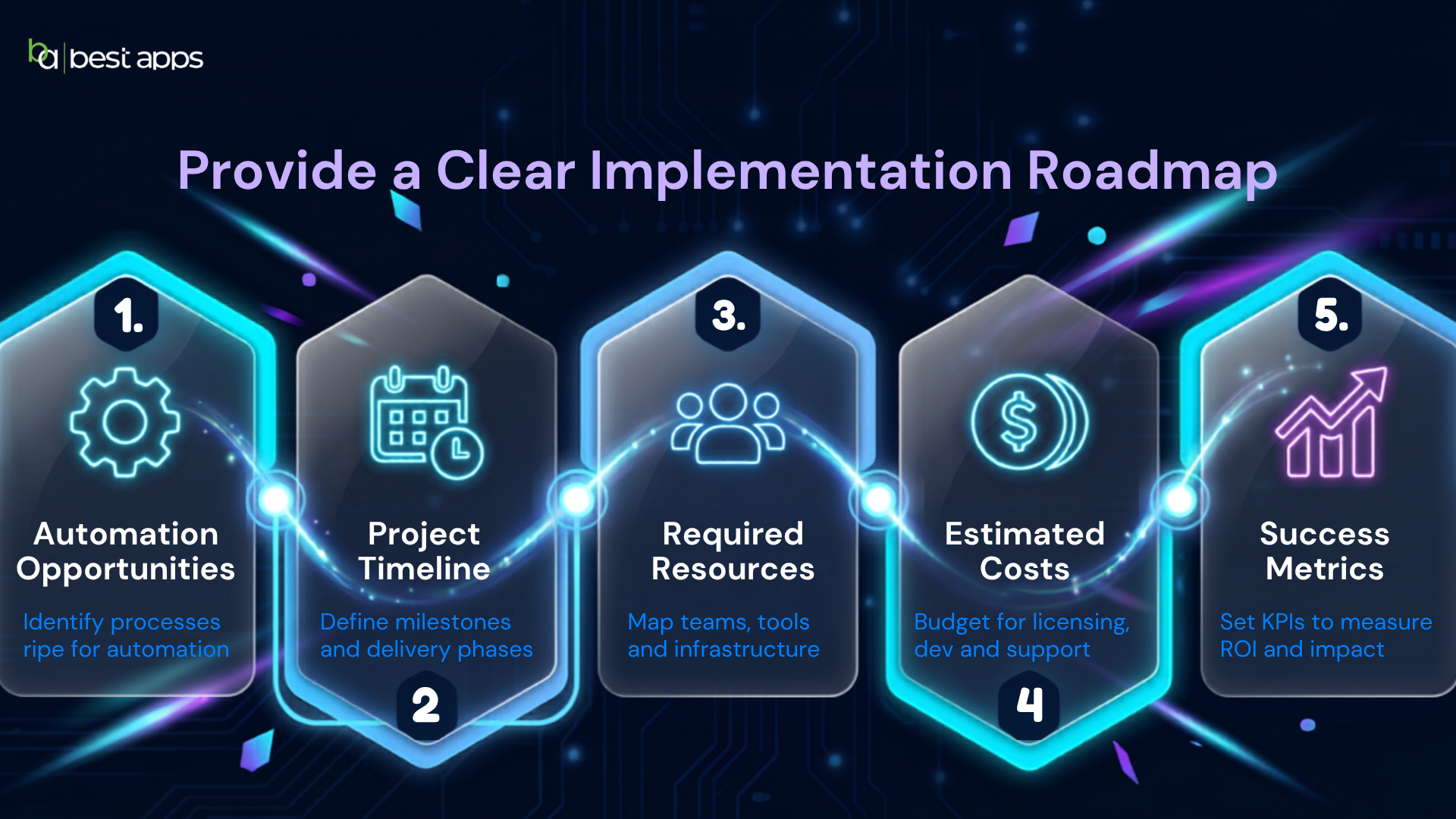
6. Provide a Clear Implementation Roadmap
Outline:
- Automation opportunities
- Project timeline
- Required resources
- Estimated costs
- Success metrics
A structured roadmap reduces uncertainty and increases executive confidence.
7. Include Measurable KPIs
Track success using metrics such as:
- Process cycle time reduction
- Cost savings achieved
- Error rate improvement
- Employee productivity gains
- Compliance performance
These KPIs help CFOs evaluate whether the investment delivers expected results.
Conclusion
A successful SAP automation business case goes beyond technical features and focuses on business outcomes. CFOs approve projects that demonstrate clear ROI, cost savings, risk reduction, and strategic value. By presenting measurable financial benefits, realistic implementation plans, and performance metrics, organizations can significantly improve their chances of securing executive approval and accelerating their SAP automation initiatives.

 عربي
عربي