


 SPARK Website
UTI ICD-10 Code Guide 2026
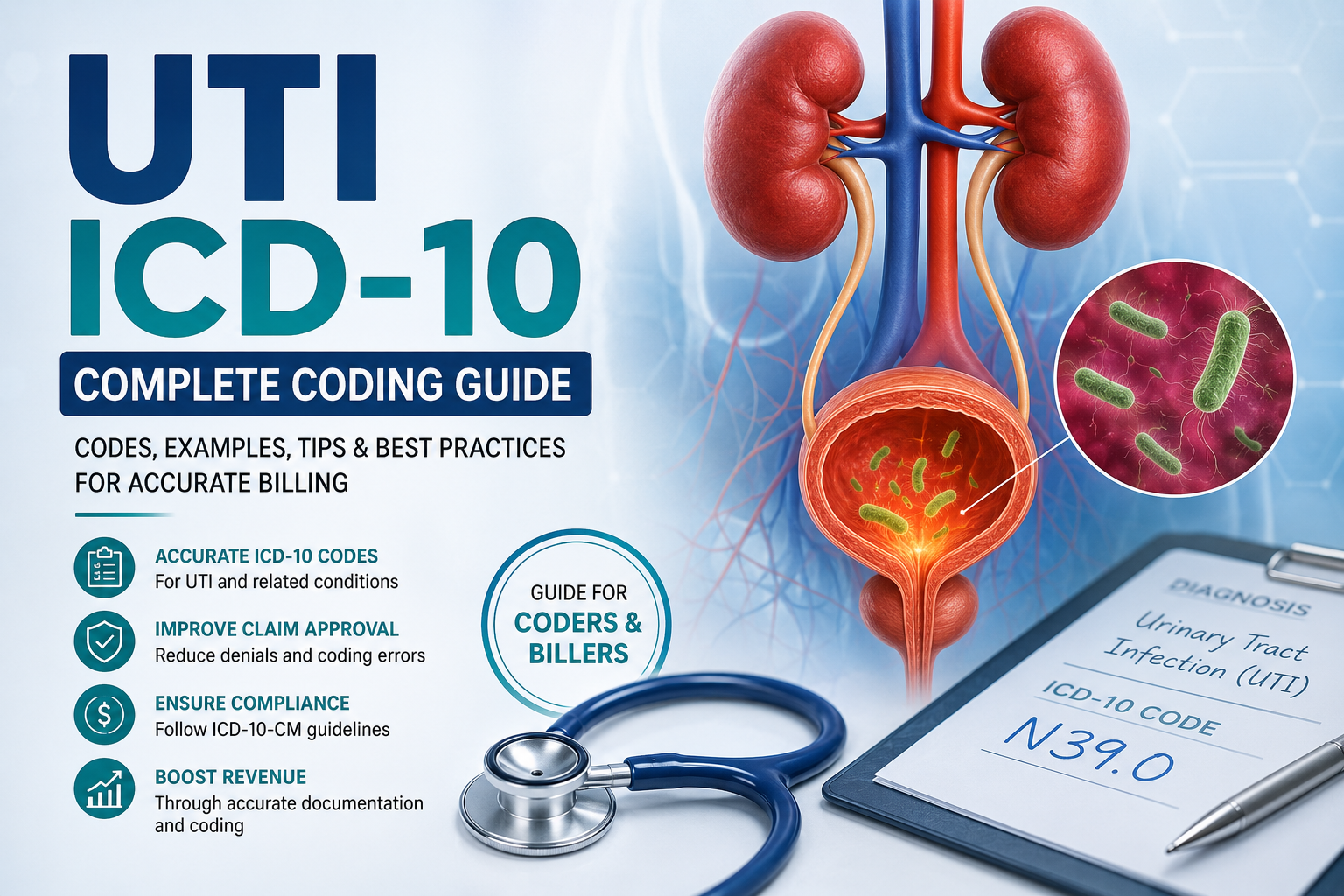
Urinary Tract Infection (UTI) is one of the most frequently diagnosed conditions in outpatient and inpatient settings. Accurate documentation and correct ICD-10 coding are essential for proper reimbursement, compliance, and clean claim submission.
In this expert-level guide, you will learn everything about UTI ICD-10 coding, including correct code selection, documentation tips, common coding mistakes, and billing best practices aligned with Google’s Helpful Content Update principles.
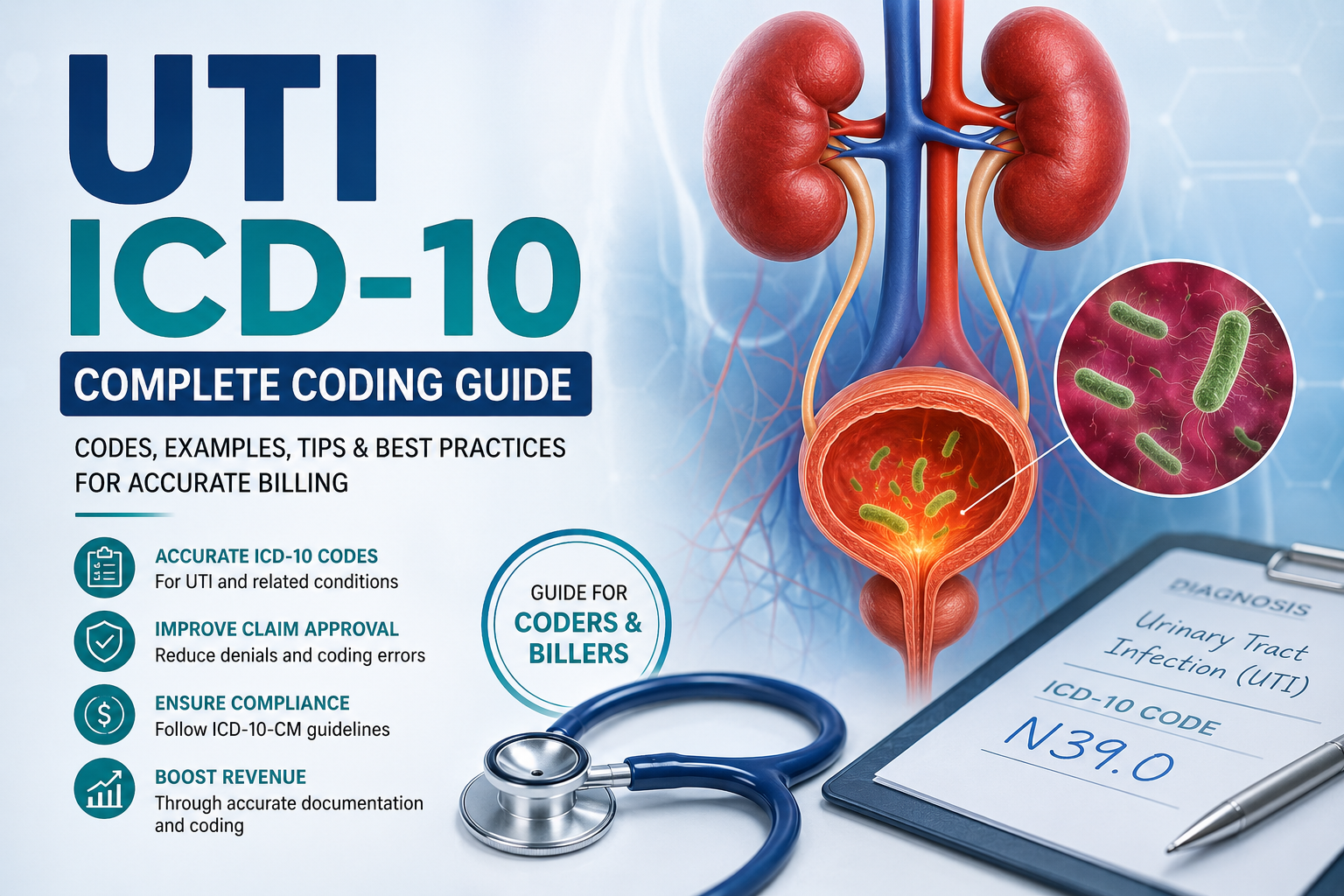
What is UTI (Urinary Tract Infection)?
A Urinary Tract Infection (UTI) is an infection that can affect any part of the urinary system, including:
- Bladder (cystitis)
- Urethra (urethritis)
- Kidneys (pyelonephritis)
- Ureters
Most UTIs are caused by bacteria, especially E. coli, and are more common in females.
From a medical coding perspective, UTIs require precise classification based on:
- Site of infection
- Severity
- Acute vs chronic condition
- Recurrent infection status
- Associated hematuria
Primary UTI ICD-10 Code
N39.0 – Urinary tract infection, site not specified
This is the most commonly used ICD-10 code for UTI when:
- The documentation does not specify location (bladder, kidney, etc.)
- The provider only documents “UTI” without further details
However, coders should avoid defaulting to N39.0 when more specific documentation is available.
Specific ICD-10 Codes for UTI
Accurate coding improves reimbursement and reduces claim denials. Here are the most important UTI-related ICD-10 codes:
1. Cystitis (Bladder Infection)
- N30.00 – Acute cystitis without hematuria
- N30.01 – Acute cystitis with hematuria
- N30.90 – Cystitis, unspecified
2. Pyelonephritis (Kidney Infection)
- N10 – Acute pyelonephritis
- N11.0 – Chronic pyelonephritis
- N12 – Tubulo-interstitial nephritis, not specified as acute or chronic
3. Recurrent UTI
- N39.0 + additional documentation for recurrence (if supported in records)
UTI ICD-10 With Hematuria
When hematuria is documented along with UTI:
- Always code hematuria separately if required:
- R31.9 – Hematuria, unspecified
- Or use combined codes when applicable (e.g., cystitis with hematuria)
Proper sequencing depends on the reason for encounter.
Common Documentation Issues in UTI Coding
One of the biggest challenges in UTI ICD-10 coding is incomplete provider documentation.
Common Problems:
- Only writing “UTI” without site specification
- Missing acute vs chronic distinction
- Not documenting culture results
- No mention of symptoms (dysuria, frequency, urgency)
Best Practice:
Providers should clearly document:
- Infection site (bladder, kidney, etc.)
- Type (acute/chronic/recurrent)
- Clinical findings
- Lab confirmation (urine culture if available)
Coding Guidelines for UTI (ICD-10-CM Compliance)
To stay compliant with ICD-10-CM guidelines:
Follow these rules:
- Code to the highest level of specificity
- Do not assume infection site without documentation
- Use combination codes when available
- Sequence principal diagnosis based on reason for visit
Example:
If patient presents with fever and diagnosed with acute pyelonephritis:
- N10 – Acute pyelonephritis should be primary code
Medical Billing Impact of Accurate UTI Coding
Correct ICD-10 coding for UTI directly affects:
- Claim approval rate
- Reimbursement speed
- Audit risk reduction
- Revenue cycle efficiency
Incorrect or vague coding (like overusing N39.0) often leads to:
- Claim rejections
- Downcoding
- Insurance audits
UTI ICD-10 Coding Tips for Medical Coders
Here are expert-level tips used in professional medical billing companies:
✔ Always review provider notes carefully
✔ Query physician for missing details
✔ Check lab reports for confirmation
✔ Avoid default coding habits
✔ Stay updated with ICD-10 annual revisions
Final Thoughts
Accurate UTI ICD-10 coding is critical for clean claims, compliance, and proper reimbursement. Medical coders must rely on detailed documentation rather than assumptions. The more specific the diagnosis, the more accurate and profitable the coding process becomes.
If you're working in medical billing or revenue cycle management, mastering UTI coding is essential for reducing denials and improving financial outcomes.

 عربي
عربي