


 SPARK Website
How Is Workflow Optimized in an Andrology Room Setup?
Introduction
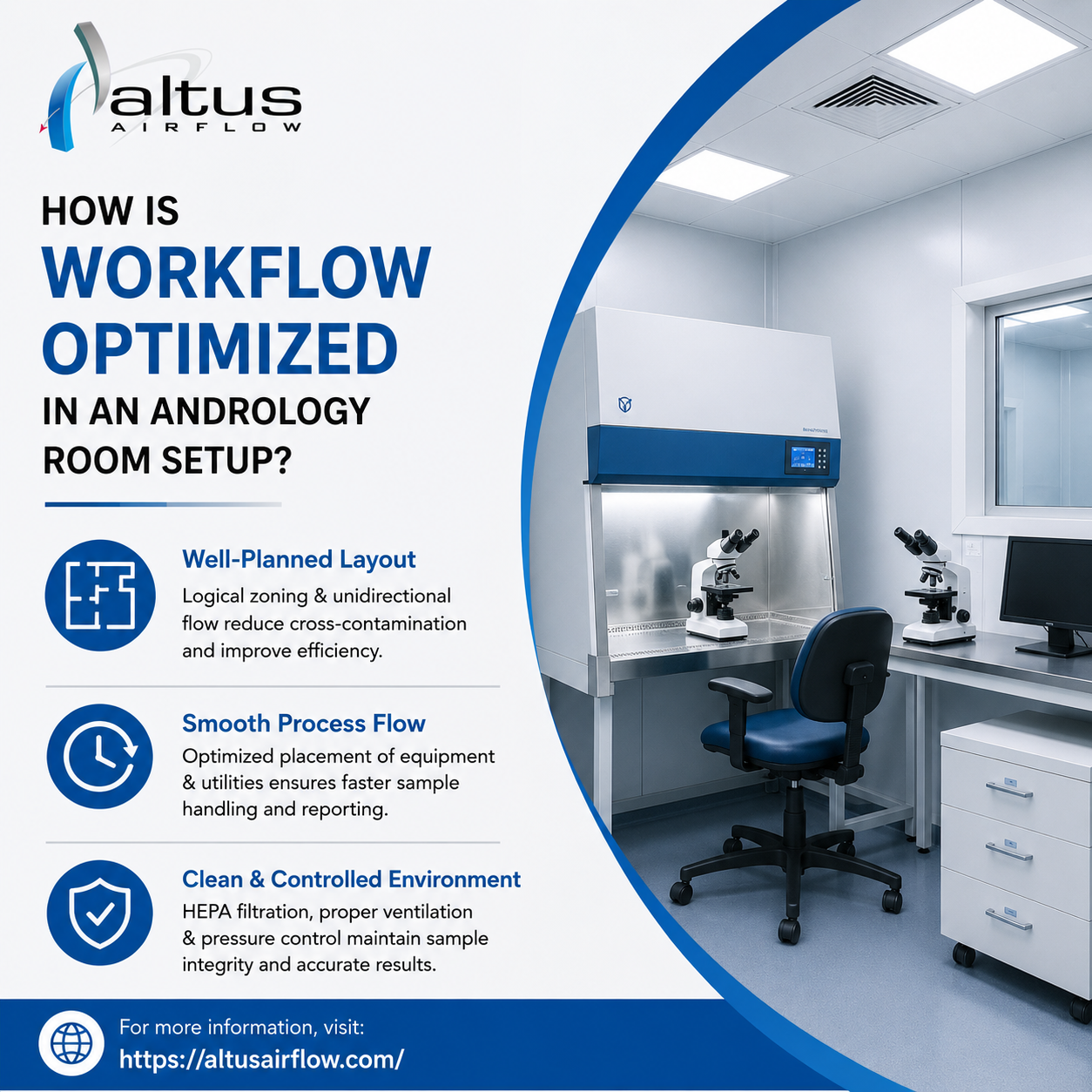
Efficiency is one of the most important factors in the success of any fertility clinic or reproductive health laboratory. Andrology laboratories handle sensitive biological samples that require precise processing, accurate testing, and controlled environmental conditions. This is why many healthcare facilities partner with an experienced Andrology Room Setup Company to design laboratory spaces that support smooth and efficient workflows. Workflow optimization in an andrology room involves more than simply arranging equipment. It requires careful planning of laboratory zones, sample movement pathways, environmental controls, staff workstations, storage areas, and equipment placement. Every element must work together to create a seamless process from sample collection to analysis, reporting, and storage.
This article explores how workflow is optimized in an andrology room setup and why proper planning is essential for long-term laboratory success.
Why Workflow Optimization Matters in Andrology Laboratories
Andrology laboratories perform various tasks that require precision and consistency.
Workflow optimization helps:
- Improve sample handling
- Reduce processing delays
- Enhance staff productivity
- Maintain sample integrity
- Support quality control
An efficient laboratory layout contributes directly to better clinical outcomes.
Understanding Laboratory Workflow
Workflow refers to the sequence of activities performed within the laboratory.
Typical processes include:
- Patient registration
- Sample collection
- Sample transportation
- Laboratory analysis
- Data recording
- Report generation
- Sample storage
Each step must be organized to minimize unnecessary movement and delays.
Strategic Space Planning
Effective workflow begins with proper space planning.
Laboratory designers evaluate:
- Available floor area
- Operational requirements
- Equipment needs
- Staff movement patterns
A professional Andrology Room Setup Company creates layouts that maximize efficiency while maintaining compliance with healthcare standards.
Zoning of Laboratory Areas
One of the most important workflow optimization strategies is laboratory zoning.
Common zones include:
- Reception area
- Sample collection room
- Sample processing area
- Analysis section
- Storage room
- Administrative workspace
Clearly defined zones reduce confusion and improve operational flow.
Dedicated Sample Collection Areas
Sample collection rooms are designed to provide privacy and convenience.
Benefits include:
- Reduced patient stress
- Improved sample quality
- Streamlined collection procedures
Proper placement of collection rooms supports efficient laboratory operations.
Optimized Sample Flow Pathways
Sample movement should follow a logical sequence.
An optimized pathway reduces:
- Transportation time
- Handling errors
- Contamination risks
Samples move smoothly from collection to processing and analysis.
Separation of Clean and Contaminated Areas
Maintaining separation between clean and potentially contaminated zones is essential.
This strategy helps:
- Prevent cross-contamination
- Improve infection control
- Maintain sample quality
Physical barriers and designated pathways support safe operations.
Efficient Workstation Design
Workstations are central to laboratory productivity.
Well-designed workstations offer:
- Easy equipment access
- Comfortable working conditions
- Organized workflows
Staff can perform tasks more efficiently when workstations are properly arranged.
Equipment Placement Optimization
Equipment should be positioned according to workflow requirements.
Factors considered include:
- Frequency of use
- Process sequence
- Accessibility
Proper placement reduces unnecessary movement and saves time.
Centralized Processing Areas
Centralized processing areas improve laboratory efficiency.
Advantages include:
- Faster sample handling
- Better staff coordination
- Improved supervision
Centralization reduces delays during routine procedures.
Integration of Laboratory Instruments
Modern laboratories use multiple instruments for analysis and testing.
Integration helps:
- Streamline workflows
- Improve data management
- Reduce manual intervention
Connected systems improve operational efficiency.
Use of Automated Systems
Automation plays a growing role in andrology laboratories.
Automated systems help:
- Reduce manual errors
- Increase processing speed
- Improve consistency
Automation supports higher productivity without compromising accuracy.
Computer-Assisted Semen Analysis Systems
Automated semen analysis systems accelerate testing procedures.
Benefits include:
- Faster assessments
- Standardized results
- Reduced subjectivity
Technology enhances laboratory performance.
Laboratory Information Management Systems
LIMS software supports workflow optimization by managing data efficiently.
Key functions include:
- Sample tracking
- Documentation management
- Report generation
Digital workflows reduce administrative burdens.
Barcode Tracking Systems
Accurate sample identification is essential.
Barcode systems provide:
- Traceability
- Error reduction
- Faster processing
Tracking technology improves laboratory reliability.
HVAC System Integration
Environmental control systems directly impact laboratory operations.
HVAC systems regulate:
- Temperature
- Humidity
- Air quality
Stable conditions support consistent workflows and sample integrity.
HEPA Filtration and Air Quality Management
Clean air contributes to efficient laboratory performance.
HEPA filtration helps:
- Reduce contamination
- Protect samples
- Improve environmental quality
Air quality management supports uninterrupted laboratory operations.
Controlled Environmental Conditions
Environmental consistency is critical for laboratory success.
Monitoring systems maintain:
- Stable temperatures
- Appropriate humidity levels
- Clean air conditions
Reliable environments reduce workflow disruptions.
Ergonomic Design Principles
Staff efficiency depends on workplace comfort.
Ergonomic design helps:
- Reduce fatigue
- Improve concentration
- Increase productivity
Comfortable workspaces support better performance.
Storage Optimization
Organized storage systems improve workflow efficiency.
Storage areas accommodate:
- Consumables
- Reagents
- Laboratory supplies
Easy access reduces delays during testing procedures.
Dedicated Equipment Storage
Proper equipment storage protects valuable assets.
Benefits include:
- Improved organization
- Reduced clutter
- Faster equipment retrieval
Well-planned storage enhances operational efficiency.
Cryogenic Storage Planning
Laboratories that offer sperm preservation services require cryogenic storage systems.
Proper planning ensures:
- Easy access
- Safe storage
- Efficient sample management
Storage design supports long-term laboratory operations.
Staff Movement Optimization
Laboratory layouts should minimize unnecessary walking.
Efficient movement patterns help:
- Save time
- Reduce fatigue
- Increase productivity
Careful planning improves daily operations.
Reduced Cross-Traffic
Cross-traffic can create bottlenecks and increase contamination risks.
Optimized layouts help:
- Separate workflows
- Improve organization
- Enhance safety
Reduced congestion contributes to smoother operations.
Communication and Collaboration Areas
Laboratory teams often require collaborative spaces.
These areas support:
- Staff discussions
- Reporting activities
- Quality reviews
Efficient communication improves workflow coordination.
Quality Control Integration
Quality control should be integrated into daily operations.
Workflow planning includes:
- Verification checkpoints
- Monitoring procedures
- Documentation systems
Quality assurance supports reliable results.
Environmental Monitoring Systems
Continuous monitoring helps maintain operational consistency.
Systems track:
- Temperature
- Humidity
- Air quality
- Equipment performance
Monitoring prevents disruptions and supports compliance.
Waste Management Planning
Efficient waste disposal contributes to workflow optimization.
Waste management systems help:
- Maintain cleanliness
- Improve safety
- Reduce contamination risks
Proper disposal procedures support laboratory efficiency.
Safety and Compliance Considerations
Workflow design must align with healthcare regulations.
Compliance measures include:
- Infection control
- Environmental standards
- Occupational safety requirements
Regulatory compliance supports smooth operations.
Digital Documentation Workflows
Digital records improve efficiency throughout the laboratory.
Benefits include:
- Faster reporting
- Improved accessibility
- Reduced paperwork
Digital transformation enhances workflow management.
Backup Systems for Operational Continuity
Unexpected disruptions can impact productivity.
Backup systems support:
- Power continuity
- Equipment operation
- Environmental stability
Operational resilience is an important part of workflow planning.
Future Trends in Workflow Optimization
Andrology laboratories continue to evolve.
Emerging innovations include:
- Artificial intelligence
- Smart monitoring systems
- Robotics
- Cloud-based laboratory management
Future technologies will further improve efficiency.
Benefits of Optimized Workflow in Andrology Rooms
A well-designed laboratory provides several advantages:
- Faster sample processing
- Improved accuracy
- Better patient experience
- Enhanced staff productivity
- Reduced contamination risks
Workflow optimization contributes to long-term laboratory success.
Conclusion
Partnering with an experienced Andrology Room Setup Company ensures that workflow considerations are integrated into every stage of laboratory development. Companies such as Altus Airflow specialize in creating advanced andrology laboratory environments that enhance operational efficiency and support high-quality fertility services. By working with trusted experts like Altus Airflow, healthcare facilities can establish future-ready laboratories designed for long-term performance and success.
FAQs
1. How does an Andrology Room Setup Company optimize laboratory workflow?
An Andrology Room Setup Company optimizes workflow through strategic zoning, equipment placement, environmental controls, sample flow planning, automation, and efficient workspace design.
2. Why is workflow important in andrology laboratories?
Efficient workflow improves productivity, reduces errors, and supports accurate sample processing.
3. How does automation improve laboratory efficiency?
Automation reduces manual tasks, improves consistency, and accelerates testing procedures.
4. What role does HVAC play in workflow optimization?
HVAC systems maintain stable environmental conditions that support uninterrupted laboratory operations.
5. Why are barcode systems used in andrology laboratories?
Barcode systems improve sample tracking, reduce identification errors, and enhance traceability.
Read Our Previous Blog --------------->What safety features are included in turnkey cardiac OT projects?

 عربي
عربي