Level progression in Geometry Vibes is carefully designed to challenge players step by step. Early stages help players get familiar with movement and timing, but difficulty quickly escalates. Later levels introduce layered mechanics, such as gravity shifts, rapid directional changes, and mixed gameplay modes. These elements often appear in quick succession, requiring players to adapt instantly. The constant variation prevents the gameplay from becoming predictable and keeps players fully engaged.
Another factor that increases the game’s complexity is the limited use of checkpoints. Many levels require a full, uninterrupted run from start to finish. This design choice demands consistency and mental endurance. Players must maintain focus for extended periods, knowing that a single mistake will reset their progress. While this can be frustrating, it also enhances the satisfaction of completing a difficult level.
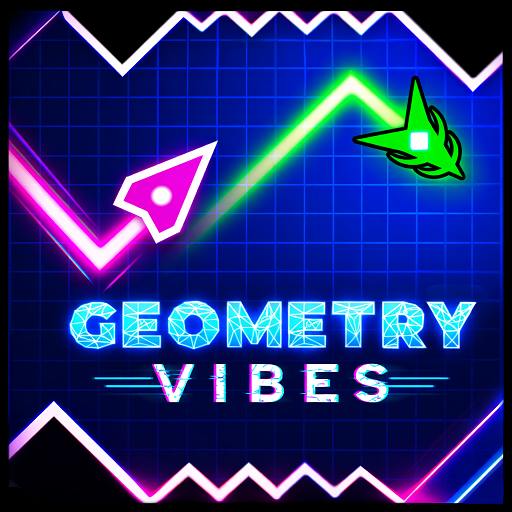
Visually, Geometry Vibes uses bright colors and clean geometric designs to maintain clarity during fast gameplay. The smooth animations and responsive controls ensure that players can rely on what they see and feel. At the same time, visual effects often sync with the music, reinforcing the rhythm-based gameplay and adding another layer of immersion.
Beyond its mechanics, Geometry Vibes challenges players psychologically. It requires patience, resilience, and a willingness to improve through repetition. Players gradually build muscle memory and sharpen their reflexes, turning early failures into valuable learning experiences. This continuous improvement loop is a key reason why the game remains engaging over time.
In conclusion, Geometry Vibes is a perfect example of how a simple concept can evolve into a deeply complex gaming experience. Through its rhythm-driven design, demanding level structure, and emphasis on precision, the game offers a rewarding challenge for players who are willing to push their limits.



 SPARK Website

 English