INTRODUCTION
In recent years, fertility clinics across India have witnessed rapid growth, driven by increasing awareness and advancements in assisted reproductive technologies. At the heart of successful fertility treatments lies a crucial factor—IVF Lab Design In India. A well-designed IVF laboratory is essential not only for operational efficiency but also for maintaining a contamination-free environment that ensures optimal embryo development and higher success rates.
Contamination in IVF labs can arise from airborne particles, volatile organic compounds (VOCs), microbes, and even human activity. Given the sensitivity of gametes and embryos, even minimal contamination can lead to failed cycles or compromised outcomes. This is where specialized IVF lab design plays a transformative role in preventing contamination through advanced engineering, strict protocols, and strategic planning.
Understanding Contamination Risks in IVF Laboratories
Before exploring how design prevents contamination, it is important to understand the types of contaminants commonly found in IVF labs:
- Biological Contaminants: Bacteria, fungi, and viruses
- Chemical Contaminants: VOCs from paints, adhesives, and cleaning agents
- Particulate Matter: Dust, skin flakes, and airborne debris
- Cross-Contamination: Transfer of contaminants via personnel or equipment
These contaminants can negatively affect fertilization, embryo culture, and implantation success, making contamination control a top priority.
The Role of IVF Lab Design In India in Contamination Control
IVF Lab Design In India integrates architectural planning, engineering systems, and laboratory best practices to create a controlled and sterile environment. It focuses on minimizing contamination risks at every stage—from construction to daily operations.
Key Design Features That Prevent Contamination
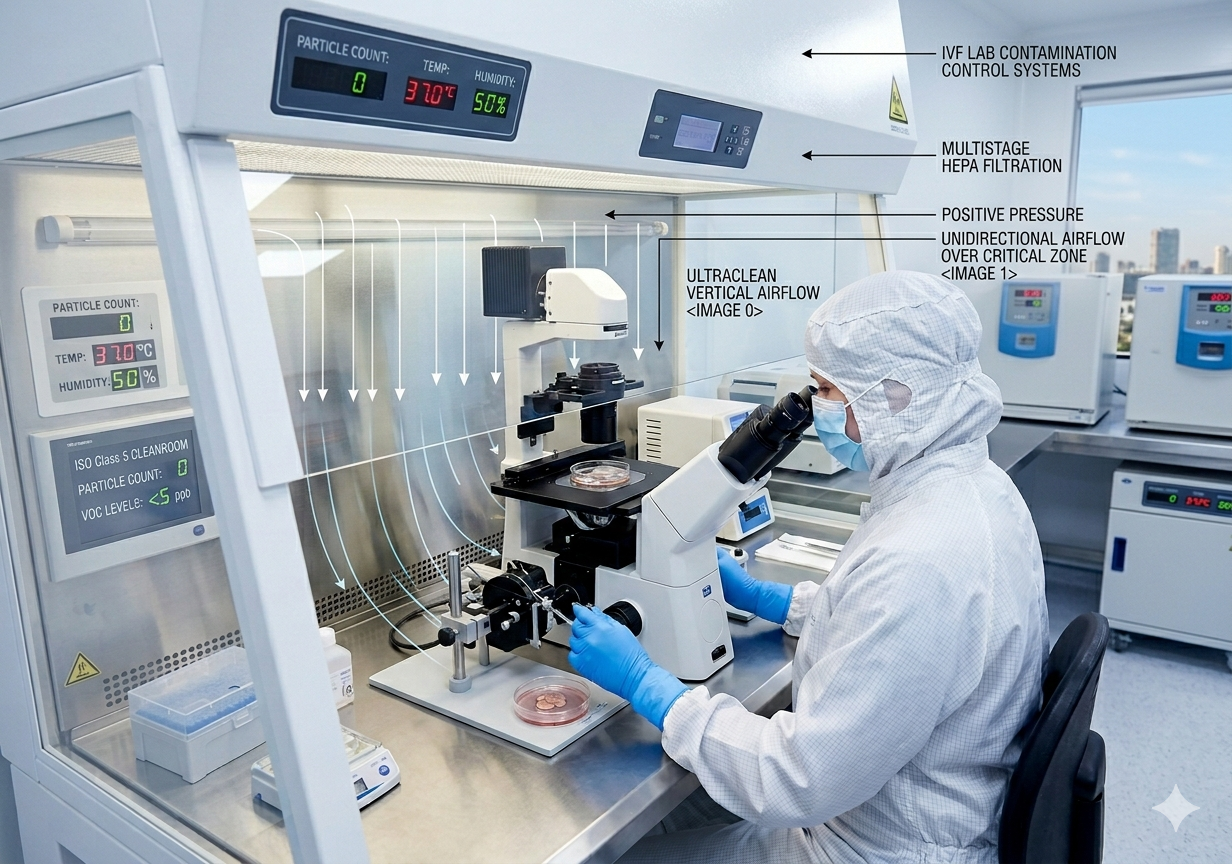
1. Advanced Air Filtration and Airflow Systems
Air quality is the most critical factor in contamination control.
- HEPA Filters remove up to 99.97% of airborne particles.
- Laminar Airflow Systems ensure a uniform flow of clean air across workstations.
- Positive Pressure Rooms prevent unfiltered air from entering the lab.
These systems maintain a clean and controlled atmosphere essential for embryo development.
2. Cleanroom Classification and Zoning
IVF laboratories in India follow stringent cleanroom standards.
- Segregated Zones: Clean, semi-clean, and non-clean areas
- Airlocks and Gowning Areas: Act as barriers against contamination
- Restricted Access: Limits entry to trained personnel only
Zoning ensures that contamination is contained and does not spread across critical areas.
3. Use of Low VOC and Non-Toxic Materials
Materials used in construction significantly impact air quality.
- Low VOC paints, adhesives, and sealants
- Non-porous wall panels and flooring
- Anti-microbial surfaces
By reducing chemical emissions, IVF Lab Design In India protects embryos from toxic exposure.
4. Seamless Surfaces and Hygienic Interiors
Surface design plays a vital role in preventing microbial growth.
- Seamless flooring and wall finishes
- Rounded corners to eliminate dust traps
- Easy-to-clean materials
These features simplify cleaning and reduce the risk of contamination buildup.
5. Specialized HVAC Systems
Heating, Ventilation, and Air Conditioning systems are customized for IVF labs.
- Controlled temperature and humidity levels
- High air exchange rates
- Activated carbon filters for VOC removal
A well-designed HVAC system ensures consistent environmental conditions and minimizes contamination.
6. Optimized Workflow and Lab Layout
Efficient lab design reduces contamination caused by movement.
- Unidirectional workflow
- Separate entry and exit points
- Dedicated zones for specific procedures
This minimizes cross-contamination and enhances operational efficiency.
7. Personnel Hygiene and Protocol Integration
Human activity is a major contamination source.
- Dedicated gowning rooms
- Strict hygiene protocols
- Limited access to critical zones
IVF Lab Design In India incorporates infrastructure that enforces these protocols effectively.
8. Equipment Placement and Isolation
Strategic placement of equipment reduces contamination risks.
- Isolated incubation areas
- Minimal equipment overlap
- Easy access for cleaning and maintenance
Proper arrangement ensures a controlled working environment.
9. Continuous Monitoring Systems
Real-time monitoring is essential for maintaining lab conditions.
- Air quality monitoring systems
- Particle counters
- Environmental sensors
These systems help detect contamination early and allow timely corrective actions.
10. Waste Management and Sterilization Systems
Proper waste disposal prevents contamination spread.
- Segregated waste disposal systems
- Regular sterilization protocols
- Safe handling of biological waste
Effective waste management is integral to contamination control.
Importance of Regulatory Compliance in India
IVF labs in India must adhere to guidelines set by regulatory bodies such as:
- Indian Council of Medical Research (ICMR)
- National Accreditation Board for Hospitals & Healthcare Providers (NABH)
Compliance ensures that labs maintain high standards of cleanliness, safety, and operational efficiency.
Technological Advancements Supporting Contamination Control
Modern IVF Lab Design In India incorporates cutting-edge technologies:
- Time-Lapse Incubators: Reduce exposure to external air
- Air Purification Systems: Maintain ultra-clean environments
- Automation: Minimizes human intervention
These technologies enhance contamination prevention and improve lab performance.
Benefits of Effective IVF Lab Design
A contamination-free IVF lab offers several advantages:
- Improved embryo quality
- Higher success rates
- Enhanced patient safety
- Better compliance with regulations
- Increased operational efficiency
Investing in advanced lab design ultimately leads to better clinical outcomes.
Challenges in Maintaining Contamination-Free IVF Labs in India
Despite advanced design strategies, certain challenges persist:
- High setup and maintenance costs
- Need for skilled professionals
- Continuous monitoring requirements
- Strict adherence to protocols
However, these challenges can be managed with proper planning and expert design solutions.
Future Trends in IVF Lab Design In India
The future of IVF lab design is evolving rapidly with innovations such as:
- Smart labs with AI-based monitoring
- Eco-friendly and sustainable materials
- Advanced filtration technologies
- Increased automation and robotics
These trends will further enhance contamination control and efficiency in IVF labs.
Conclusion
IVF Lab Design In India plays a crucial role in preventing contamination by integrating advanced airflow systems, cleanroom standards, non-toxic materials, and optimized workflows. Every aspect of the lab—from air quality to personnel movement—is carefully planned to maintain a sterile and controlled environment. This not only ensures better embryo development but also improves overall treatment success rates.
With expert solutions and innovative approaches, Altus Airflow helps fertility clinics achieve world-class contamination control and operational excellence in IVF laboratories.
Frequently Asked Questions (FAQs)
1. How does IVF Lab Design In India help prevent contamination?
IVF Lab Design In India helps prevent contamination by using HEPA filters, controlled airflow, cleanroom zoning, and non-toxic materials to maintain a sterile environment.
2. Why is air filtration important in IVF labs?
Air filtration is essential because IVF Lab Design In India relies on removing airborne particles and VOCs that can harm embryos and affect success rates.
3. What materials are used to reduce contamination in IVF labs?
IVF Lab Design In India uses low VOC, non-porous, and anti-microbial materials to minimize chemical and biological contamination.
4. How does workflow design impact contamination control?
A well-planned workflow in IVF Lab Design In India reduces unnecessary movement and prevents cross-contamination between different lab zones.
5. What technologies are used in IVF labs to control contamination?
IVF Lab Design In India incorporates technologies like HEPA filtration, air monitoring systems, and time-lapse incubators to maintain a clean environment.
Read Our Previous Blog------>How does IVF Laboratory Design help prevent contamination?



 SPARK Website

 عربي
عربي