


 SPARK Website
IPTV Service in 2026: The Ultimate Guide to Streaming TV Like a Pro
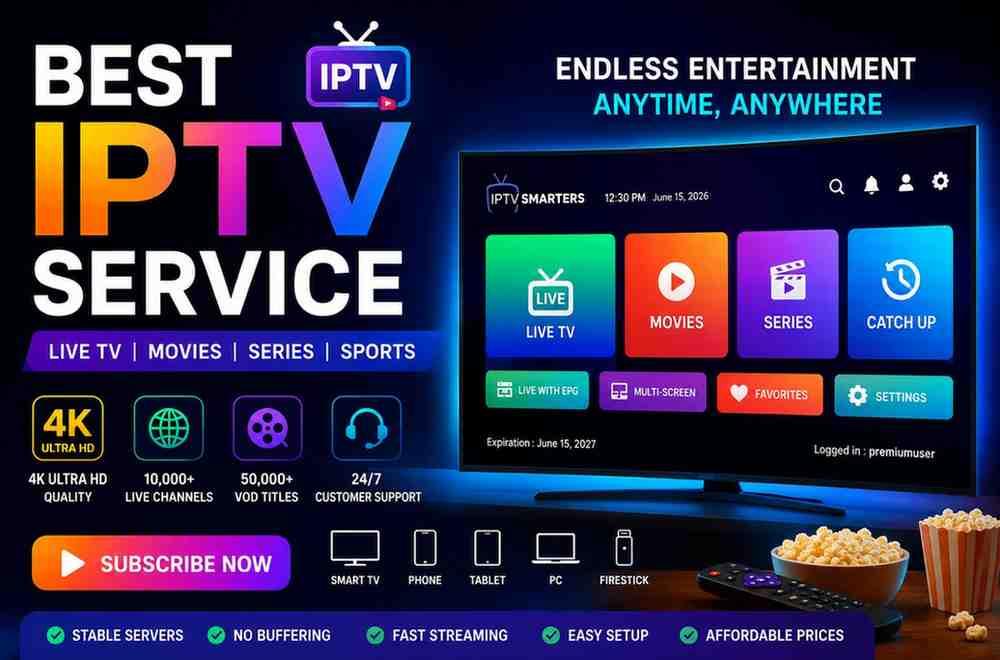
IPTV Service in 2026: The Ultimate Guide to Streaming TV Like a Pro
What Is an IPTV Service?
An IPTV service — short for Internet Protocol Television — is a method of delivering television content over the internet rather than through traditional satellite or cable infrastructure. Instead of needing a dish on your roof or a cable box under your TV, an IPTV service streams live channels, movies, TV shows, and sports events directly to any internet-connected device. The technology has existed in some form since the late 1990s, but in 2026 it has matured into one of the most practical and cost-effective ways to watch television.
Unlike Netflix or Amazon Prime, which are on-demand platforms with curated libraries, an IPTV service typically offers thousands of live channels from dozens of countries, alongside a video-on-demand (VOD) library and catch-up TV functionality. This makes it a direct replacement for cable or satellite rather than a complement to it.
How Does an IPTV Service Work?
The mechanics behind a modern IPTV service are straightforward. Content is encoded into digital packets and delivered via the internet using standard protocols. When you subscribe, you receive an M3U playlist file or access to a dedicated app. Your media player — whether it is a Smart TV, Android box, Firestick, or smartphone — reads that playlist and fetches the stream from the provider's servers in real time.
Quality depends on two factors: the provider's server infrastructure and your own internet connection. A reputable IPTV service runs redundant servers across multiple data centers to minimize downtime and buffering. For HD content you need at least 10 Mbps; for 4K streams, 25 Mbps or more is recommended. Most households with a standard broadband plan can comfortably run an IPTV service on multiple devices simultaneously.
The Three Core Components of Any IPTV Service
- Live TV: Real-time streaming of broadcast channels — news, sports, entertainment, kids, and international content.
- Video on Demand (VOD): A library of movies and TV series you can watch at any time.
- Catch-Up TV: The ability to watch content that aired in the last 7–30 days, similar to a cloud DVR.
Why Millions Are Switching to an IPTV Service in 2026
The cable TV industry has been shrinking for a decade, and 2026 is the year more households than ever are making the switch. The reasons are both financial and practical. The average cable bill in the United States now exceeds $120 per month. A comparable IPTV service costs a fraction of that — typically $15–$30 per month — while delivering more channels, better picture quality, and far greater flexibility.
Beyond cost, IPTV services offer something cable cannot: device freedom. You are not tied to a specific room or a rented set-top box. Your subscription works on Smart TVs, Android phones and tablets, iPhones, iPads, Windows and Mac computers, Amazon Firestick, Nvidia Shield, Roku, and more. You can watch your favorite channels on the commute to work or stream a live sports match from a hotel room abroad.
Key Features to Look for in a Quality IPTV Service
Not all IPTV services are created equal. When evaluating options in 2026, these are the features that separate the best from the rest:
1. Channel Count and Variety
Premium providers offer upward of 20,000 live channels spanning sports, news, entertainment, kids, lifestyle, and international programming from regions including the UK, US, Canada, France, Germany, India, Arabic countries, and more. The breadth of international content is a major advantage over local cable packages.
2. Stream Quality and Resolution
Look for a service that offers channels in SD, HD, Full HD, and 4K. In 2026, most top-tier providers stream the majority of their channels at 1080p, with 4K available for premium sports events and select VOD titles.
3. Server Uptime and Anti-Freeze Technology
Uptime guarantees of 99.9% are the industry standard for reputable providers. Anti-buffering and anti-freeze technology — achieved through content delivery networks (CDNs) and load-balanced servers — ensures you rarely experience interruptions even during peak viewing hours like major sporting events.
4. VOD Library Size
The best services include a VOD library of 50,000+ movies and TV show episodes, updated daily with the latest releases. This turns your IPTV service into a one-stop entertainment hub, eliminating the need for separate streaming subscriptions.
5. Multi-Device and Multi-Connection Support
Most households have multiple screens. A quality IPTV service allows at least two simultaneous connections per subscription, with premium plans supporting four or more. This means everyone in the family can watch different content at the same time without extra cost.
6. Electronic Program Guide (EPG)
A well-organized EPG (TV guide) is essential for navigating thousands of channels. The best services update their EPG every 24 hours so you always know what is on and what is coming up.
Setting Up Your IPTV Service: A Step-by-Step Overview
Getting started with an IPTV service in 2026 is easier than ever. Here is the general process:
- Choose a provider and sign up for a subscription plan. Most offer monthly, quarterly, and annual billing.
- Receive your credentials — typically a username, password, and M3U URL or portal URL — via email within minutes of subscribing.
- Install a compatible app on your device. Popular options include IPTV Smarters Pro, TiviMate, Smart IPTV, and GSE Smart IPTV.
- Enter your credentials into the app. The channel list and VOD library will load automatically.
- Start watching. Browse live channels, search the VOD library, or set up favorites for quick access.
The entire setup process typically takes less than 10 minutes from subscription to first stream.
IPTV Service vs. Cable vs. Satellite: A Direct Comparison
| Feature | IPTV Service | Cable TV | Satellite TV |
|---|---|---|---|
| Monthly Cost | $15–$30 | $80–$150+ | $70–$120+ |
| Number of Channels | 20,000+ | 200–500 | 200–350 |
| 4K Content | Yes | Limited | Limited |
| International Channels | Yes, extensive | Very limited | Limited |
| Multi-Device Viewing | Yes | Extra cost | Extra cost |
| Setup Required | Software only | Hardware install | Dish install |
| Contract Required | Usually no | Often yes | Often yes |
Is an IPTV Service Right for You?
If you watch live sports, international news, or a mix of entertainment from different countries, an IPTV service is almost certainly the best value available in 2026. It is also the right choice if you are tired of being locked into long-term contracts with cable or satellite providers. The flexibility of a monthly subscription with no cancellation fees gives you complete control over your entertainment spending.
Families benefit enormously from multi-connection plans that allow different household members to watch different content simultaneously. Expats and travelers find IPTV especially valuable for accessing home-country channels from anywhere in the world.
How to Choose the Best IPTV Service Provider
With hundreds of providers competing for your attention, the selection process can feel overwhelming. Focus on these four criteria:
- Trial period: Any trustworthy provider offers a free or low-cost trial. Test stream quality, channel availability, and app usability before committing.
- Customer support: 24/7 support via live chat or ticket system is essential. Avoid providers with no support channel.
- Reseller transparency: Know whether you are buying directly from the source or through a reseller. Direct providers tend to offer better uptime and faster issue resolution.
- Payment security: Only subscribe through platforms with secure payment processing. Be cautious of providers that only accept cryptocurrency with no other options.
The Best Devices for Enjoying an IPTV Service
The device you use to watch your IPTV service shapes your experience as much as the service itself. Here is a breakdown of the most popular devices and how they perform with IPTV:
Amazon Firestick (4K Max)
The Amazon Firestick remains one of the most popular IPTV devices in 2026. The 4K Max model supports HDR10+, Dolby Vision, and Dolby Atmos, delivering a premium audio-visual experience at an accessible price point. IPTV Smarters Pro and TiviMate are both available as sideloaded apps, and the Firestick's Alexa integration adds voice search capability to your IPTV channel guide.
Android TV Boxes (NVIDIA Shield Pro, Xiaomi Mi Box)
Android TV boxes offer the most flexibility for IPTV use. The NVIDIA Shield Pro is the premium option, with processing power that handles 4K AV1 streams effortlessly and a Plex Media Server capability that extends beyond basic IPTV use. For budget-conscious users, the Xiaomi Mi Box S (2nd Gen) offers a solid Android TV experience at under $60.
Smart TVs with Native IPTV Support
Samsung Tizen OS and LG webOS Smart TVs both support the Smart IPTV app directly from their app stores, making native IPTV viewing possible without any additional hardware. Sony Google TV models support IPTV Smarters Pro and GSE Smart IPTV. Newer smart TV models in 2026 increasingly support direct M3U playlist loading via native TV player apps.
Smartphones and Tablets
Both iOS and Android are fully supported by all major IPTV apps. Watching your IPTV service on a smartphone or tablet is ideal for travel, commuting, or viewing in rooms without a dedicated TV setup. Cellular 5G connections now deliver sufficient bandwidth for HD IPTV streaming on the go without relying on Wi-Fi.
Troubleshooting Common IPTV Service Issues
Even the best IPTV service occasionally encounters issues. Understanding how to diagnose and resolve common problems quickly keeps your viewing experience smooth:
- Buffering on a single channel: Switch to the alternative stream link for that channel, or try a different server if your provider offers multiple. Check that your internet speed meets the minimum requirement for that stream's resolution.
- App crashes or freezes: Clear the app's cache (Android devices: Settings > Apps > [IPTV App] > Clear Cache). Ensure your app is updated to the latest version. Restart your device if cache clearing does not resolve the issue.
- EPG not loading: Force a manual EPG refresh in your app settings. Some apps cache EPG data and do not automatically refresh it. Manual refresh typically resolves missing or outdated guide information within minutes.
- Specific channels missing: Contact your provider's support. Channels occasionally move to new stream URLs or are temporarily unavailable during infrastructure maintenance. Quality providers restore missing channels within hours when notified.
IPTV Service and Network Security: What You Need to Know
Using an IPTV service does not inherently create network security risks, but there are a few best practices worth following. Use your IPTV service through an official app rather than loading streams in a web browser — browser-based IPTV players are more vulnerable to tracking and performance issues than dedicated apps. Consider using a reputable VPN to encrypt your streaming traffic, particularly on public Wi-Fi networks. Keep your IPTV app and device firmware updated to benefit from the latest security patches. These precautions ensure that your IPTV service experience is not just high-quality but also appropriately secure.
Frequently Asked Questions About IPTV Service
Final Thoughts: Making the Switch to IPTV in 2026
The shift from traditional broadcast television to IPTV service is one of the most significant changes in how we consume media. In 2026, the technology is mature, the content libraries are vast, and the pricing is undeniably competitive with every alternative. Whether you are a sports fan who needs every match, a family that watches a mix of local and international content, or a traveler who wants their home channels wherever they go, there is an IPTV plan built for your needs.
The only question left is which provider to choose — and the best answer starts with a trial. Test the service, verify the quality for yourself, and then decide. With no contracts required by most premium providers, there is nothing to lose and everything to gain.

 English