


 SPARK Website
Medical Billing for Mental Health in the USA: Strategies to Improve Reimbursements and Practice Growth
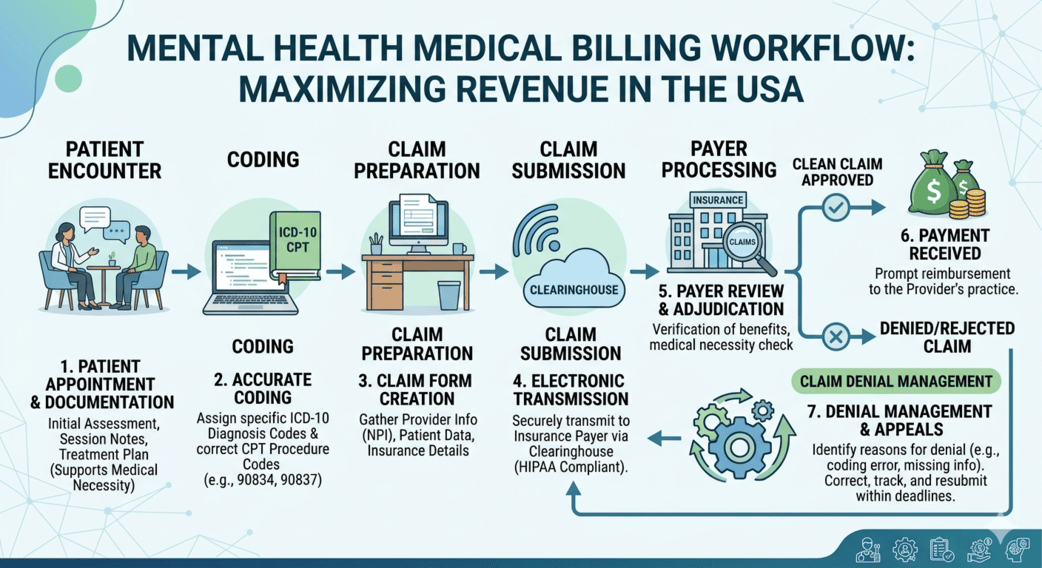
Mental healthcare has become an essential part of the healthcare system in the USA. As awareness of behavioral health conditions continues to rise, mental health providers are experiencing increased patient demand. However, delivering quality care is only one part of running a successful practice. Managing claims, insurance requirements, documentation, and reimbursements can be equally challenging.
This is where medical billing for mental health becomes critical. Accurate billing processes help providers receive timely payments, reduce claim denials, and maintain financial stability. Whether you operate a private therapy practice, psychiatric clinic, counseling center, or behavioral health organization, understanding mental health billing is essential for long-term success.
Why Medical Billing for Mental Health Is Different
Mental health billing differs significantly from other medical specialties. Behavioral health services often involve:
- Longer treatment durations
- Multiple therapy session types
- Frequent insurance authorization requirements
- Complex documentation standards
- Telehealth billing regulations
- Specialized CPT and diagnosis coding
Unlike many medical specialties that focus on procedures, mental health providers primarily bill for evaluation, therapy sessions, medication management, and ongoing treatment plans. This creates unique challenges that require specialized expertise.
As a result, many practices rely on dedicated mental health billing services to manage their claims efficiently and maximize reimbursement opportunities.
Common Challenges in Mental Health Medical Billing
Behavioral health providers face several billing-related obstacles that can impact revenue.
Insurance Verification Issues
Insurance plans often have different behavioral health benefits than physical health benefits. Coverage limitations, session caps, and authorization requirements can vary significantly between payers.
Without proper verification, practices risk:
- Claim denials
- Delayed payments
- Patient billing disputes
- Unexpected out-of-pocket costs
Prior Authorization Requirements
Many insurance carriers require prior authorization for mental health treatment. Missing authorization details can lead to denied claims, even when services were medically necessary.
Coding Errors
Accurate coding is essential in mental health medical billing. Incorrect CPT or ICD-10 codes can trigger claim rejections and payment delays.
Common coding mistakes include:
- Using outdated codes
- Incorrect session duration codes
- Mismatched diagnosis documentation
- Missing modifiers
Documentation Compliance
Mental health records must support medical necessity while complying with privacy regulations. Incomplete documentation often leads to audits and reimbursement challenges.
The Importance of Specialized Mental Health Billing
Mental health providers benefit significantly from billing professionals who understand behavioral health regulations.
Specialized billing services for mental health help practices:
- Improve claim acceptance rates
- Reduce administrative workload
- Minimize coding errors
- Accelerate reimbursements
- Ensure compliance with payer requirements
Mental health billing specialists stay updated on changing payer policies and reimbursement guidelines, helping providers avoid costly mistakes.
Key Components of Effective Mental Health Billing
Successful billing involves much more than claim submission. It requires a comprehensive process that addresses every stage of the revenue cycle.
Patient Eligibility Verification
Before treatment begins, insurance benefits should be verified carefully.
Verification includes:
- Coverage status
- Copayment requirements
- Deductible balances
- Session limitations
- Telehealth eligibility
- Authorization requirements
This step helps prevent future billing complications.
Accurate Coding
Correct coding remains the foundation of successful mental health billing.
Frequently used services include:
- Psychiatric diagnostic evaluations
- Individual psychotherapy
- Group therapy
- Family counseling
- Medication management
- Crisis intervention services
Accurate code selection ensures providers receive appropriate reimbursement for services rendered.
Claim Submission
Claims should be submitted promptly and accurately to avoid delays.
Best practices include:
- Reviewing documentation before submission
- Checking payer-specific guidelines
- Monitoring claim status regularly
- Correcting errors quickly
Payment Posting
Accurate payment posting allows practices to identify underpayments, denied claims, and reimbursement discrepancies.
Regular reconciliation helps maintain financial accuracy and improve cash flow management.
Denial Management
Even well-managed practices encounter denied claims.
Effective denial management includes:
- Identifying denial trends
- Correcting claim errors
- Filing appeals when necessary
- Updating internal billing processes
A proactive approach can recover significant lost revenue.
How Mental Health Billing Services Improve Revenue
Many providers underestimate how much revenue is lost through billing inefficiencies.
Professional mental health billing services can help practices increase collections through:
Reduced Claim Denials
Experienced billing teams understand payer requirements and submit cleaner claims, leading to fewer denials.
Faster Reimbursements
Efficient claim processing shortens payment cycles and improves cash flow.
Improved Patient Collections
Transparent billing procedures help patients understand their financial responsibilities, reducing collection challenges.
Better Financial Reporting
Detailed reporting provides insights into practice performance, helping providers make informed business decisions.
The Role of Technology in Mental Health Billing Solutions
Technology has transformed healthcare billing operations.
Modern mental health billing solutions often include:
- Electronic claim submission
- Automated eligibility verification
- Appointment integration
- Revenue tracking dashboards
- Denial management tools
- Telehealth billing support
These technologies reduce manual work and improve billing accuracy.
For example, a behavioral health clinic using automated eligibility verification can identify insurance issues before appointments occur, reducing claim denials and improving patient satisfaction.
Why Mental Health Providers Outsource Billing
Administrative responsibilities can quickly overwhelm providers.
Many organizations choose billing services for mental health providers because outsourcing allows clinicians to focus on patient care rather than administrative tasks.
Benefits of outsourcing include:
- Lower staffing costs
- Access to billing experts
- Improved compliance
- Enhanced collections
- Reduced administrative burden
- Scalable support for growing practices
Outsourcing can be especially valuable for independent therapists and small behavioral health practices that lack dedicated billing departments.
Selecting the Right Mental Health Billing Company
Not all billing partners offer the same level of expertise.
When evaluating a mental health billing company, providers should consider:
Industry Experience
Behavioral health billing requires specialized knowledge. Look for companies with proven mental health experience.
Transparency
Reliable billing partners provide clear reporting and regular communication.
Compliance Standards
Ensure the company follows HIPAA regulations and payer-specific guidelines.
Technology Integration
Billing systems should integrate smoothly with electronic health records and practice management software.
Performance Metrics
Review key indicators such as:
- Clean claim rate
- Collection percentage
- Denial rate
- Average reimbursement turnaround time
These metrics provide insight into billing effectiveness.
Comparing Mental Health Billing Companies
The growing demand for behavioral healthcare has led to an increase in specialized billing providers.
When comparing mental health billing companies, practices should focus on value rather than cost alone.
A low-cost provider may not offer:
- Behavioral health expertise
- Comprehensive denial management
- Detailed reporting
- Ongoing compliance support
Choosing a partner that understands the complexities of mental health reimbursement can generate significantly greater financial returns over time.
The Importance of Medical Billing Services in Behavioral Healthcare
Professional medical billing services play a vital role in maintaining financial stability for mental health providers.
These services support:
- Accurate claim processing
- Revenue optimization
- Insurance follow-up
- Denial resolution
- Financial reporting
As reimbursement regulations become more complex, specialized billing support becomes increasingly valuable.
Why Medical Coding Services Matter
Coding accuracy directly affects reimbursement outcomes.
Professional medical coding services help ensure:
- Proper CPT code selection
- Accurate diagnosis coding
- Compliance with payer requirements
- Reduced audit risks
- Improved claim acceptance rates
For mental health practices, coding precision can significantly impact overall revenue performance.
Benefits of Medical Billing and Coding Services
Combining medical billing and coding services creates a streamlined workflow that improves operational efficiency.
Advantages include:
- Reduced administrative burden
- Faster claims processing
- Better reimbursement accuracy
- Stronger compliance standards
- Enhanced financial performance
Integrated billing and coding support allows providers to focus on delivering quality patient care.
Revenue Cycle Management Services for Mental Health Practices
Successful practices understand that billing extends beyond claim submission.
Comprehensive revenue cycle management services address every stage of the reimbursement process, including:
- Patient registration
- Insurance verification
- Coding
- Claim submission
- Payment posting
- Denial management
- Patient collections
An effective revenue cycle strategy helps maximize revenue while reducing operational inefficiencies.
The Role of Credentialing Services
Provider enrollment is often overlooked, yet it plays a critical role in reimbursement success.
Professional credentialing services help ensure providers are properly enrolled and approved with insurance networks.
Benefits include:
- Faster payer enrollment
- Reduced reimbursement delays
- Improved compliance
- Ongoing credential maintenance
- Expanded network participation opportunities
Without proper credentialing, even correctly submitted claims may be denied or delayed.
Looking Ahead: The Future of Mental Health Billing
The behavioral health industry continues to evolve rapidly.
Emerging trends include:
- Increased telehealth utilization
- Expanded insurance coverage
- Value-based reimbursement models
- AI-assisted billing technologies
- Enhanced compliance monitoring
Practices that adapt to these changes will be better positioned for long-term success.
As mental healthcare demand continues to grow across the USA, efficient billing systems will remain essential for sustaining both patient care and financial performance.
Supporting Practice Growth with Expert Billing Solutions
Organizations such as 247 Medical Billing Services recognize the unique challenges associated with behavioral health reimbursement. By combining specialized expertise in mental health billing, coding accuracy, revenue optimization, and compliance management, healthcare providers can strengthen financial performance while maintaining their focus on patient outcomes.
Whether a practice requires assistance with claim processing, coding accuracy, reimbursement management, or payer enrollment, a strategic approach to billing operations can create measurable improvements in revenue and operational efficiency.
Conclusion
Effective medical billing for mental health is far more than an administrative function—it is a critical component of practice success. From accurate coding and claim submission to denial management and reimbursement optimization, every step influences financial stability.
By leveraging specialized mental health billing services, implementing reliable mental health billing solutions, and utilizing comprehensive support such as medical billing services, medical coding services, medical billing and coding services, revenue cycle management services, and credentialing services, mental health providers can reduce administrative burdens and improve revenue outcomes.
As behavioral healthcare continues to expand throughout the USA, practices that prioritize efficient billing strategies will be better equipped to deliver quality patient care while maintaining sustainable growth.
Frequently Asked Questions (FAQs)
1. What is medical billing for mental health?
Medical billing for mental health involves submitting and managing insurance claims for behavioral health services such as therapy, counseling, psychiatric evaluations, medication management, and related treatments.
2. Why is mental health billing more complex than other specialties?
Mental health billing often includes unique authorization requirements, therapy-specific coding, session limitations, telehealth regulations, and extensive documentation standards that increase billing complexity.
3. What are the benefits of outsourcing mental health billing services?
Outsourcing can reduce claim denials, improve reimbursement rates, lower administrative workload, increase compliance, and allow providers to focus more on patient care.
4. How do mental health billing solutions improve practice efficiency?
Mental health billing solutions automate key processes such as eligibility verification, claim submission, payment tracking, and denial management, improving both accuracy and productivity.
5. What role do medical coding services play in mental health billing?
Medical coding services ensure accurate CPT and ICD-10 code selection, helping practices reduce claim rejections, maintain compliance, and maximize reimbursements.
6. Why are credentialing services important for mental health providers?
Credentialing services help providers enroll with insurance networks, maintain payer participation, reduce reimbursement delays, and ensure claims are processed correctly.

 عربي
عربي