


 SPARK Website
What Your Child Will Actually Learn at a British Curriculum School in the UAE?
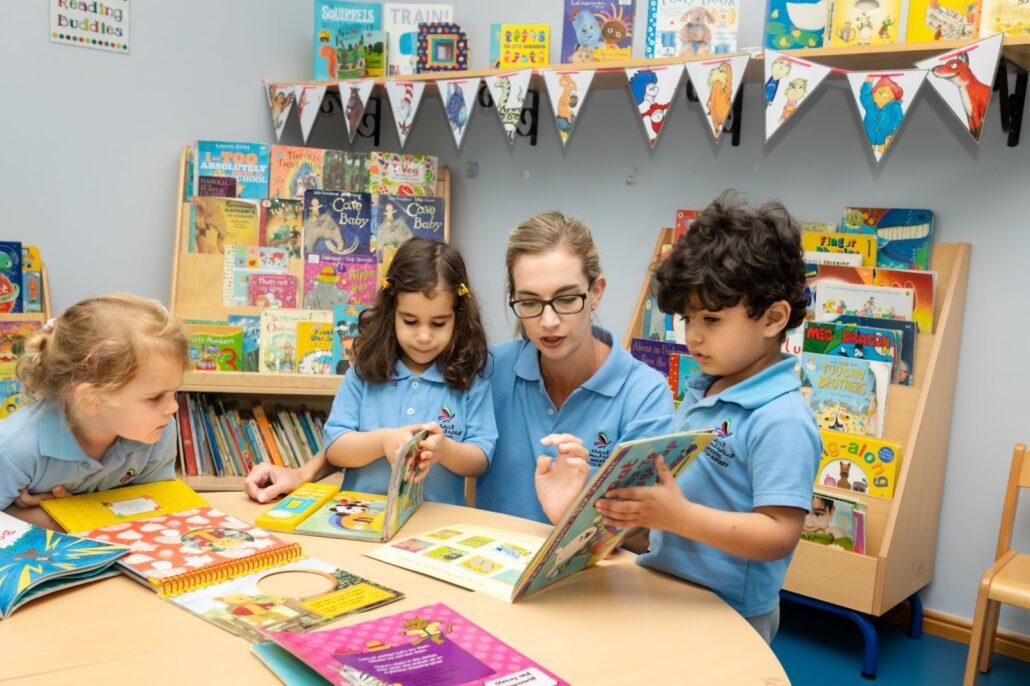
If you are a Sharjah resident, you would be familiar with the British curriculum. When it comes to enrolling your child, it’s important to understand what it actually means, what your child will learn in a British curriculum school in the UAE, and what they will be able to do when each phase ends.
This guide discovers the subjects, the skills, and what real progress looks like from Year 1 through to Year 9 and beyond.
How is the British Curriculum structured in the UAE?
Before you explore the subjects, it’s important to understand the structure. The English National Curriculum UAE is organised into 5 main stages. Each phase covers particular learning goals across year groups.
Here's how it maps out:
|
Key Stage |
Years |
Ages |
|
EYFS (Foundation) |
Reception |
3–5 |
|
KS1 |
Year 1–2 |
5–7 |
|
KS2 |
Year 3–6 |
7–11 |
|
KS3 |
Year 7–9 |
11–14 |
|
KS4 (GCSE) |
Year 10–11 |
14–16 |
What Subjects Does Your Child Study in a British Curriculum School in the UAE?
KS1 (Years 1–2): Building the Foundations
The formal learning begins from this phase. The UK curriculum subjects that UAE schools deliver at KS1 include:
- English: Phonics, early reading, and spoken communication
- Mathematics: Counting, basic arithmetic, shapes, and measurement
- Science: Simple concepts in biology, materials, and seasonal changes
- Foundation subjects: Art, Music, History, Geography, and Physical Education
What Skills Does the British Curriculum Develop at This Stage?
The focus is on learning to learn. Children develop number confidence, phonics awareness, and the ability to ask questions and investigate. They carry these habits through every stage later.
These habits carry through to every later stage. Most British curriculum primary schools in the UAE deliver daily phonics sessions and numeracy lessons to reinforce these fundamentals. When Year 1 ends, children sit a phonics screening test. In
At the end of Year 1, children sit a phonics screening check. Year 2 includes national assessments covering reading, maths, grammar, and spelling. These results guide class groupings into KS2.
KS2 (Years 3–6): Broadening and Deepening
The curriculum expands in KS2. At this stage, the core subjects that British curriculum schools maintain include English, Mathematics, and Science. The wor
KS2 is where the curriculum genuinely expands. The core subjects in the British curriculum schools at this stage are English, Mathematics, and Science. The academic workload increases significantly at this stage.
Core Subjects at KS2
- English: Analytical reading, structured writing, and growing vocabulary
- Mathematics: Fractions, percentages, geometry, and early algebra concepts
- Science: Introduction to biology, chemistry, and physics through hands-on experiments
Foundation and Enrichment Subjects
Students also study History, Geography, Design & Technology, Computing, Music, Art & Design, and Physical Education. Most British curriculum primary schools in the UAE also introduce Modern Foreign Language, commonly Arabic or French, at this stage.
How does assessment work at KS2?
SAT-style tests in Maths and English are the British curriculum assessment methods that are used when Year 6 ends. Along with teacher assessments, these results inform subject-set decisions and secondary school placement.
This is the stage when academic expectations feel noticeably higher . Times Tables practice and regular reading at home help students a lot.
KS3 (Years 7–9): The Critical Thinking Years
Understanding how the British curriculum progresses from Year 1 to Year 9 in Sharjah makes transitioning smooth.
Understanding how the British curriculum progresses from Year 1 to Year 9 in Sharjah (and across the UAE) is especially important at this transition. During KS3, students move from primary learning into secondary education and begin studying subjects in greater depth.
What Does Your Child Study in KS3?
Subjects are now taught by specialist teachers rather than a single class teacher. The curriculum typically includes:
- English Language and English Literature
- Mathematics
- Biology, Chemistry, and Physics (often taught as separate sciences)
- History and Geography
- Modern Foreign Languages (French, Spanish, or Arabic)
- Design & Technology
- Computing and Digital Literacy
- Art, Music, Drama, and Physical Education
- PSHE (Personal, Social, Health and Economic Education)
KS1 KS2 KS3 Learning Outcomes: What Changes?
At KS3, students are expected to think analytically, not just recall facts. In English, they engage with classic and modern literature. In Maths, they apply reasoning to financial and real-world problems. In Science, they begin separating disciplines and designing their own investigations.
Many UAE schools follow the British Schools Overseas (BSO) framework. These schools are inspected against the same standards to ensure consistent quality across the Emirates.
The UAE Difference: What's Added to the English National Curriculum?
British curriculum schools in the UAE are not the same as those in the UK. The content, such as Algebra, Shakespeare, and Photosynthesis, is almost the same. UAE schools add some mandatory subjects, including:
- Islamic Studies: Compulsory for Muslim students
- UAE Social Studies and Moral Education: Covering Emirati culture, values, and citizenship
- Arabic Language: Required for all students in private UAE schools
This mix ensures that your child receives a globally acknowledged British education and develops cultural literacy for life in the UAE.
From KS3 to Beyond: The IGCSE Pathway and What It Means
Students enter KS4 and start working toward their IGCSEs (International General Certificate of Secondary Education) after Year 9. This qualification opens the doors to universities across the globe.
IGCSE Pathway Sharjah and UAE: How Does It Work?
Students usually study around 11 subjects at KS4. These include English, Math, Science, and compulsory cores. Then they choose among optional subjects that align with their interests.
The IGCSE pathway in Sharjah leads students logically to A Levels at KS5. Students specialize in 3-4 major subjects for university entry in this phase. Some schools offer IB diplomas or BTEC alternatives to accommodate different learner profiles.
Beyond Subjects: The Skills British Schools Actually Build
Here's what the Year 1 to Year 9 British curriculum UAE journey actually develops in your child:
Academic Skills
- Structured literacy from phonics through literary analysis
- Mathematical reasoning from basic counting to applied problem-solving
- Scientific enquiry that forms a hypothesis, testing, and drawing conclusions
Personal and Social Skills
- Confidence through Oracy (speaking and listening across all subjects)
- Resilience built through progressive assessments
- Teamwork and collaboration embedded in group projects from KS1 onwards
Digital and Creative Skills
- Computing is introduced from Year 1, building on programming concepts by KS3
- Art, Music, and Drama were maintained throughout, not dropped as "extras."
The Hope English School is the perfect example of this approach. It supports both academic achievement and wider personal development across all key stages. This is the standard many top British curriculum institutions in the UAE aim to uphold.
How to Use This When Choosing a School?
When you visit or research a British curriculum school in the UAE, ask these specific questions:
- How is phonics delivered in KS1?
- What assessments are used between key stages?
- How are the UAE-mandated subjects integrated?
- What does the IGCSE pathway look like from Year 7?
- How is oracy, speaking, and listening built into everyday lessons?
Final Words!
In short, the British curriculum is a 13-year developmental journey. It builds critical thinking, personal character, and academic competence in layers. In the UAE, the curriculum is strengthened by cultural diversity and local subjects that enrich the learning experience.
Whether your child is starting Year 1 or preparing for IGCSEs, understanding each stage helps you support their progress.

 English