How Instagram Analytics Report Services Improve Social Media Strategy and Cross-Platform Brand Consistency

0
5

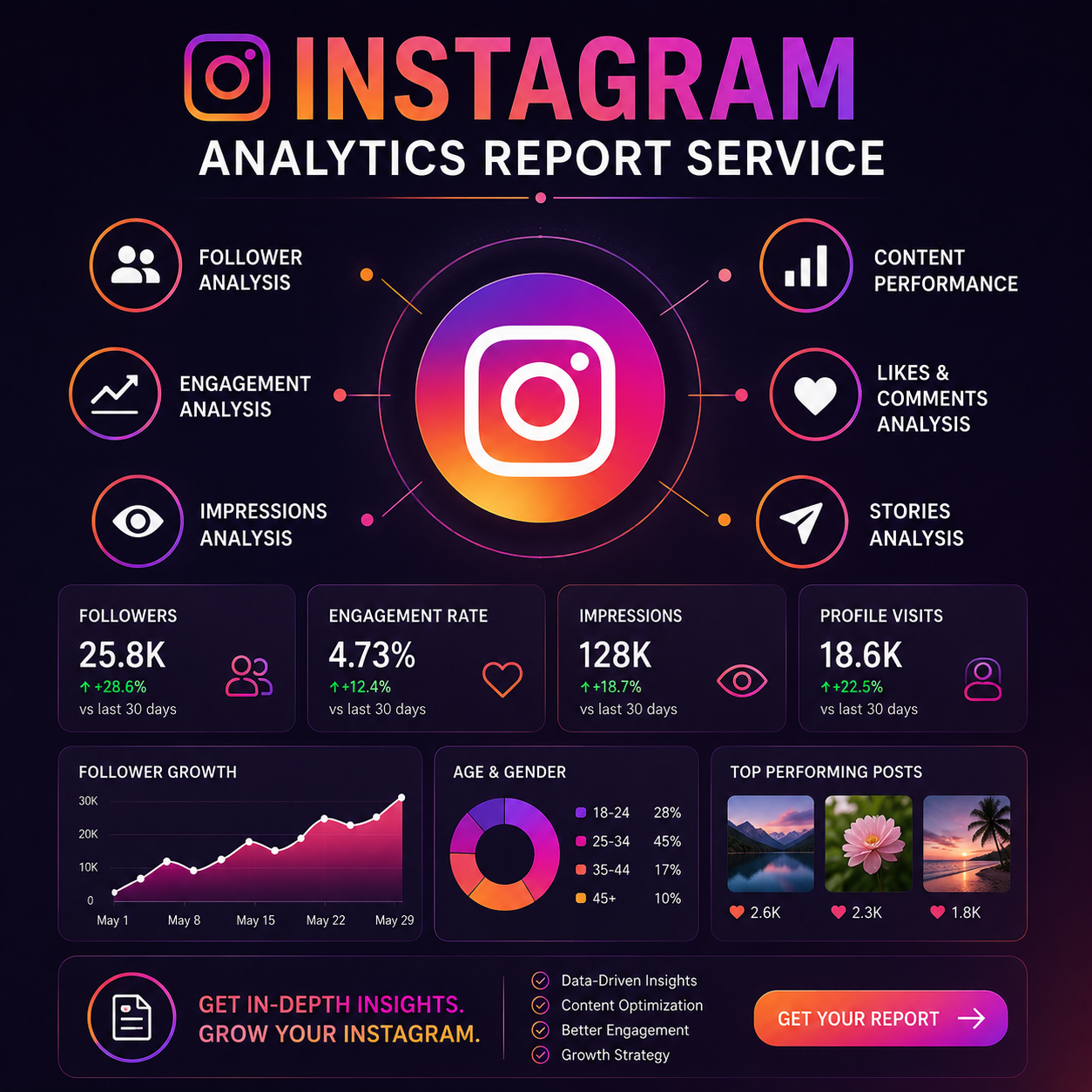
Instagram has become one of the most influential social media platforms for businesses, creators, and personal brands seeking to increase visibility and engage audiences. However, achieving consistent growth requires more than posting content regularly. Brands need data-driven insights to understand audience behavior, content performance, engagement patterns, and conversion opportunities. An Instagram analytics report service helps organizations evaluate key performance metrics and identify actionable improvements. Combined with a Social media strategy report and Cross-platform brand message analysis, businesses can align their messaging, optimize campaigns, and strengthen digital performance. Additional areas such as Instagram engagement analysis, audience behavior reporting, content performance evaluation, social media KPI tracking, digital marketing performance reporting, and brand consistency audits further enhance decision-making. This article explores how Instagram analytics reporting helps businesses improve audience engagement, strengthen branding, and maximize marketing effectiveness.

Introduction

Instagram continues to play a major role in digital marketing strategies across industries. From small businesses and startups to global brands and influencers, organizations rely on Instagram to connect with audiences, promote products, and build communities. However, simply creating content does not guarantee success. Understanding how audiences interact with posts, stories, reels, and campaigns is essential for achieving meaningful results. Analytics reporting provides valuable insights that help businesses evaluate performance, improve engagement, and optimize marketing investments. When combined with broader social media reporting and cross-platform messaging analysis, Instagram analytics becomes a powerful tool for building stronger audience relationships and supporting long-term digital growth. As competition continues to increase on social platforms, data-driven strategies have become essential for brands seeking sustainable success.

Understanding Instagram Analytics

Instagram analytics refers to the process of collecting, measuring, and evaluating performance data from Instagram accounts.

Analytics help businesses understand:

  • Audience behavior
  • Content performance
  • Engagement trends
  • Growth patterns
  • Campaign effectiveness

This information supports more informed marketing decisions.

Why Instagram Analytics Matters

Without analytics, businesses often rely on assumptions rather than evidence.

Analytics help answer important questions such as:

  • Which content performs best?
  • Who is engaging with the brand?
  • What drives audience growth?
  • Which campaigns generate results?

These insights improve overall marketing effectiveness.

What Is an Instagram Analytics Report Service?

An Instagram analytics report service provides structured reporting that evaluates account performance using measurable data.

Reports typically include:

  • Engagement metrics
  • Audience insights
  • Reach and impressions
  • Content effectiveness
  • Growth trends
  • Campaign performance

The goal is to transform raw data into actionable recommendations.

The Growing Importance of Data-Driven Marketing

Modern marketing relies heavily on data.

Organizations use analytics to:

  • Reduce uncertainty
  • Improve targeting
  • Increase engagement
  • Optimize budgets
  • Strengthen campaign performance

Data-driven strategies generally outperform intuition-based approaches.

Key Components of Instagram Analytics Reports

Comprehensive reports often include several categories of analysis.

Audience Analysis

Understanding who interacts with content.

Engagement Evaluation

Measuring audience interactions.

Content Performance Assessment

Identifying high-performing content.

Growth Tracking

Monitoring audience expansion.

Conversion Analysis

Evaluating business outcomes.

These components provide a complete view of performance.

Understanding Audience Behavior

Audience behavior reveals how users engage with content.

Insights may include:

  • Viewing habits
  • Content preferences
  • Interaction patterns
  • Activity times

Understanding behavior improves content planning.

Audience Demographics and Market Insights

Audience demographics help businesses understand their followers.

Common demographic categories include:

  • Age groups
  • Gender distribution
  • Geographic locations
  • Languages
  • Interests

Demographic analysis supports audience targeting and personalization.

Instagram Engagement Analysis

Engagement remains one of the most important indicators of content effectiveness.

Important engagement metrics include:

  • Likes
  • Comments
  • Shares
  • Saves
  • Story interactions

Strong engagement often reflects audience interest and trust.

Measuring Reach and Impressions

Reach measures how many unique users see content.

Impressions indicate how often content appears.

These metrics help evaluate:

  • Brand visibility
  • Content distribution
  • Audience exposure

Higher visibility often contributes to stronger brand awareness.

Content Performance Evaluation

Different content formats produce different results.

Performance evaluation helps identify:

  • High-performing posts
  • Successful reels
  • Effective stories
  • Popular content themes

These insights guide future content strategies.

Instagram Reels Analytics

Reels have become one of Instagram's most important growth tools.

Analytics help measure:

  • Views
  • Watch time
  • Shares
  • Reach
  • Engagement

Understanding reel performance supports audience growth.

Story Performance Reporting

Instagram Stories provide valuable engagement opportunities.

Story analytics often track:

  • Views
  • Exits
  • Replies
  • Link clicks
  • Completion rates

These metrics help improve story strategies.

Follower Growth Analysis

Growth reporting evaluates audience expansion over time.

Important indicators include:

  • New followers
  • Unfollows
  • Growth trends
  • Retention patterns

Growth analysis reveals whether branding efforts are attracting audiences.

Social Media KPI Tracking

Key performance indicators help businesses measure progress.

Common KPIs include:

  • Engagement rate
  • Reach growth
  • Conversion rate
  • Website traffic
  • Audience growth

Tracking KPIs supports goal-focused marketing.

Understanding Social Media Strategy Reports

A Social media strategy report evaluates overall social media performance and strategic direction.

These reports often examine:

  • Platform performance
  • Content effectiveness
  • Audience behavior
  • Marketing objectives

Strategic reporting helps organizations improve decision-making.

Why Social Media Strategy Reporting Matters

Strategy reports help businesses:

  • Identify opportunities
  • Improve performance
  • Strengthen targeting
  • Allocate resources effectively

They provide a roadmap for future growth.

Cross-Platform Marketing Performance

Most brands operate across multiple platforms.

Performance comparisons often include:

  • Instagram
  • Facebook
  • LinkedIn
  • TikTok
  • YouTube
  • X

Cross-platform analysis helps identify strengths and weaknesses.

Understanding Cross-Platform Brand Message Analysis

A Cross-platform brand message analysis evaluates how consistently a brand communicates across digital channels.

Areas evaluated include:

  • Messaging consistency
  • Visual identity
  • Brand voice
  • Content themes
  • Audience perception

Consistency strengthens recognition and trust.

Why Brand Consistency Matters

Consistent messaging helps audiences:

  • Recognize brands faster
  • Build trust
  • Understand brand values
  • Develop stronger connections

Consistency supports long-term brand growth.

Brand Voice Evaluation

Brand voice reflects how organizations communicate.

A strong voice should be:

  • Consistent
  • Authentic
  • Recognizable
  • Audience-focused

Voice analysis helps improve communication effectiveness.

Social Media Content Strategy Optimization

Analytics help refine content strategies.

Optimization areas include:

  • Content formats
  • Posting schedules
  • Audience targeting
  • Engagement techniques

Strategic improvements often increase performance.

Competitor Analysis and Benchmarking

Competitor evaluations help businesses understand industry standards.

Analysis may include:

  • Engagement rates
  • Audience growth
  • Content strategies
  • Campaign performance

Benchmarking supports continuous improvement.

Campaign Performance Reporting

Campaign reporting measures marketing effectiveness.

Key metrics include:

  • Reach
  • Engagement
  • Click-through rates
  • Conversions
  • Return on investment

Campaign analysis supports better planning.

Digital Marketing Performance Reporting

Instagram data often contributes to broader marketing evaluations.

Performance reports may examine:

  • Traffic generation
  • Lead acquisition
  • Conversion outcomes
  • Revenue impact

Integrated reporting improves business decision-making.

Organic Social Media Performance Analysis

Organic content remains important for building trust and relationships.

Analysis helps evaluate:

  • Audience engagement
  • Community growth
  • Content relevance

Organic growth often supports long-term success.

Paid Campaign Analysis

Paid campaigns help accelerate visibility.

Reporting evaluates:

  • Ad performance
  • Budget efficiency
  • Conversion effectiveness
  • Audience targeting

Paid campaign analysis improves advertising results.

Comparing Organic and Paid Performance

Comparative analysis helps businesses understand:

  • Which approach performs better
  • Cost efficiency
  • Engagement differences
  • Conversion outcomes

These insights support budget allocation decisions.

Social Media ROI Evaluation

Return on investment remains a critical marketing metric.

ROI analysis helps determine:

  • Campaign value
  • Revenue contribution
  • Cost effectiveness

Understanding ROI supports smarter investments.

Data Visualization and Reporting

Effective reports present information clearly.

Visualization techniques include:

  • Charts
  • Graphs
  • Dashboards
  • Trend comparisons

Clear reporting improves usability.

Common Instagram Marketing Challenges

Businesses often face challenges such as:

Low Engagement

Content fails to attract interactions.

Weak Audience Growth

Follower expansion slows.

Poor Conversion Rates

Traffic does not produce desired outcomes.

Inconsistent Messaging

Brand communication varies across channels.

Analytics help identify solutions.

Future Trends in Instagram Analytics

Several trends continue influencing social media reporting.

Artificial Intelligence

AI improves data interpretation.

Predictive Analytics

Future performance forecasting becomes more accurate.

Real-Time Reporting

Businesses gain faster insights.

Personalization

Audience-specific strategies become more effective.

Cross-Platform Integration

Unified reporting continues expanding.

Building a Data-Driven Social Media Strategy

Successful brands rely on data rather than assumptions.

Best practices include:

  • Continuous monitoring
  • KPI tracking
  • Audience analysis
  • Content optimization
  • Strategic testing

Data-driven strategies generally produce stronger long-term results.

Conclusion

An Instagram analytics report service provides valuable insights that help businesses understand audience behavior, improve engagement, and strengthen marketing performance. When combined with a Social media strategy report and Cross-platform brand message analysis, organizations gain a comprehensive understanding of how audiences interact with content across digital channels. Additional evaluations such as Instagram engagement analysis, content performance reporting, brand voice assessment, social media KPI tracking, competitor benchmarking, and digital marketing performance analysis further support strategic decision-making. As social media competition continues increasing, businesses that leverage analytics effectively will be better positioned to improve visibility, strengthen audience relationships, and achieve sustainable digital growth.

Frequently Asked Questions (FAQs)

1. What is an Instagram analytics report service?

An Instagram analytics report service evaluates account performance using data such as engagement, reach, audience demographics, content effectiveness, growth trends, and campaign results. The goal is to provide actionable insights for improving marketing performance.

2. Why are Instagram analytics important for businesses?

Instagram analytics help businesses understand audience behavior, measure content performance, improve engagement, optimize campaigns, and make data-driven decisions that support growth.

3. What information is included in an Instagram analytics report?

Reports typically include engagement metrics, audience demographics, follower growth, content performance, reach, impressions, conversion data, and campaign effectiveness.

4. What is a social media strategy report?

A social media strategy report evaluates overall social media performance and provides recommendations for improving content, audience targeting, engagement, and campaign effectiveness.

5. What does cross-platform brand message analysis involve?

Cross-platform brand message analysis examines how consistently a brand communicates across different social media channels, websites, and digital platforms.

6. How does audience demographic analysis improve marketing?

Demographic analysis helps businesses understand who their audiences are, allowing them to create more relevant content and improve targeting accuracy.

7. Why is engagement important on Instagram?

Engagement reflects audience interest and interaction. Higher engagement often leads to stronger visibility, improved reach, and better brand relationships.

8. How often should Instagram analytics be reviewed?

Most businesses benefit from monthly reporting, while active campaigns may require weekly or real-time analysis for faster optimization.

9. Can Instagram analytics improve ROI?

Yes. Analytics identify successful strategies and eliminate ineffective tactics, helping businesses allocate resources more efficiently and improve return on investment.

10. What is the future of Instagram analytics?

AI-powered reporting, predictive analytics, audience personalization, real-time dashboards, and integrated cross-platform measurement are expected to shape the future of Instagram analytics.


 
 
البحث
الأقسام
إقرأ المزيد
أخرى
Top 5 Reasons Skin Sciences Whitening Serum Is Best in Pakistan 2026
Finding a whitening serum that delivers visible results without damaging the skin can be...
بواسطة Skincare Blogging 2026-06-06 10:04:30 0 160
أخرى
What is Hypertherm Plasma Consumable? Complete Guide
If you’ve ever worked with a plasma cutting machine, you already know that the real magic...
بواسطة EGP Sales 2026-04-17 06:56:54 0 463
أخرى
Welding Safety Training Lahore
Welding Safety Training Lahore – Build Safe and Professional Welding Skills Welding is one...
بواسطة Mohsin Naseer 2026-06-02 06:34:16 0 77
أخرى
Safe Cosmetic Surgery in Riyadh for Youthful and Balanced Features
Modern beauty goals are increasingly focused on achieving natural-looking improvements that...
بواسطة Hydrafacia Saudia 2026-05-18 12:17:02 0 98
Opinion
How Is Switzerland Tumor Ablation Market Advancing Minimally Invasive Cancer Treatment?
Switzerland Tumor Ablation Market Summary: According to the latest report published by Data...
بواسطة Workin Dbmr 2026-05-20 14:29:53 0 145