


 SPARK Website
Pipe Laying Works for Telecom Infrastructure: Advanced Underground Pipe Installation & Fibre Duct Engineering Solutions
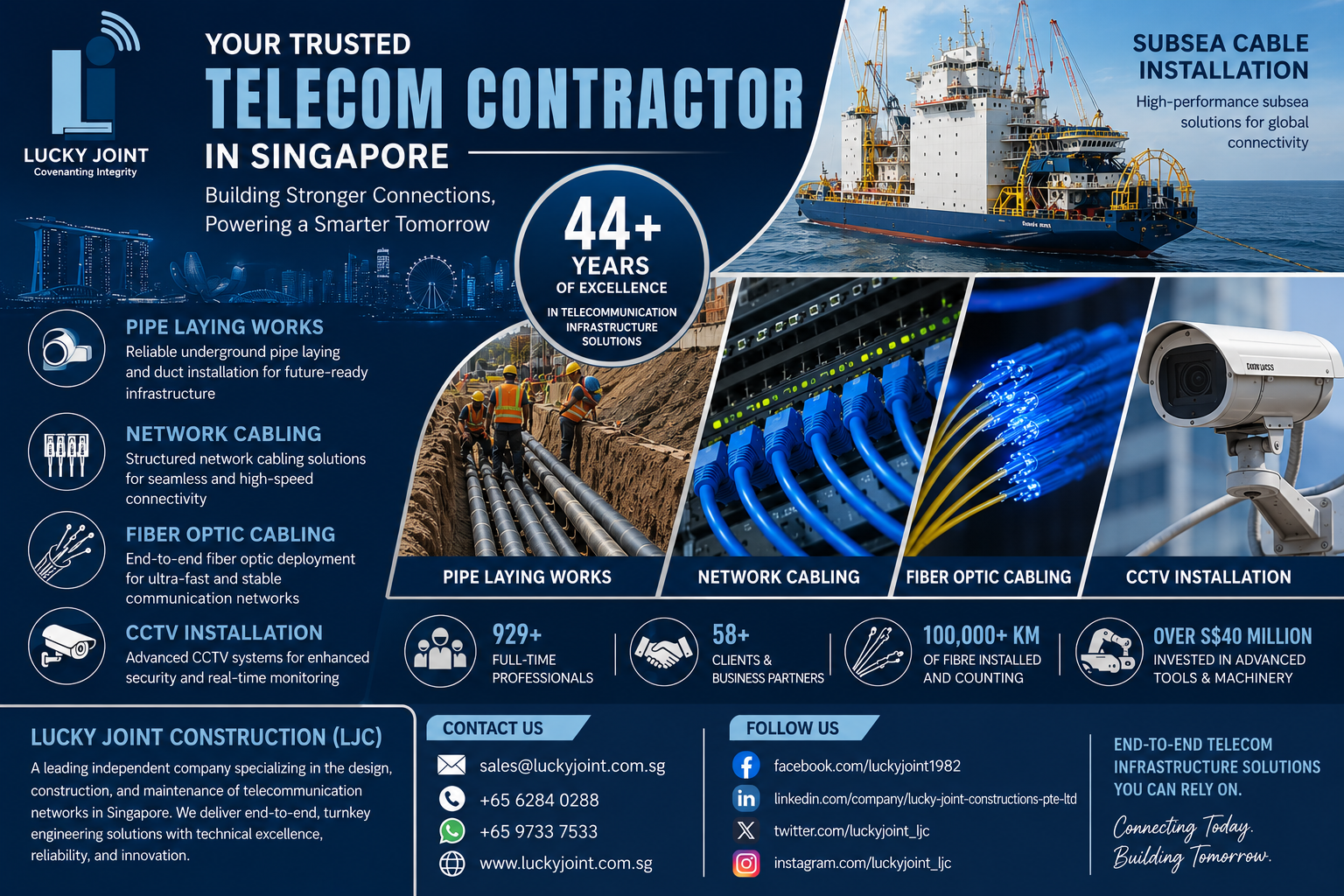
Pipe Laying Works for Modern Telecom Infrastructure and Underground Utility Networks
Overview of Pipe Laying Works in Infrastructure Industry
Pipe Laying Works represent a foundational component of modern civil and telecommunication infrastructure development. These works involve the systematic installation of underground pipes, ducts, and conduits designed to support utilities such as fibre optic networks, electrical distribution systems, water pipelines, and integrated communication networks.
In high-density urban environments such as Singapore, Pipe Laying Construction is a critical enabler of sustainable infrastructure expansion. It ensures secure, scalable, and protected pathways for essential services while minimizing surface disruption and long-term maintenance risks.
Lucky Joint Construction (LJC) is a leading independent company specializing in the design, construction, and maintenance of telecommunication networks in Singapore. With over 44+ years of experience, 929+ skilled professionals, 58+ clients and partners, and more than 100,000 km of fibre deployed, LJC delivers end-to-end Infrastructure Pipeline Works supported by advanced engineering capabilities and over S$40 million investment in machinery and tools.
What is Pipe Laying Works?
Pipe Laying Works refer to the engineered process of installing underground pipelines and duct systems to facilitate safe and efficient transmission of utilities. These works include excavation, trenching, pipe alignment, jointing, backfilling, and system testing.
In telecom engineering, Pipe Laying Works are primarily used for:
- Fibre optic duct installation
- Telecommunication network expansion
- Underground utility routing
- Data and power cable protection systems
Importance of Pipe Laying in Telecom Networks
Telecom networks depend heavily on robust Underground Pipe Installation systems. Without properly engineered ducts and conduits, fibre optic cables are exposed to physical damage, environmental stress, and operational failures.
Key advantages include:
- Protection of fibre optic infrastructure
- Long-term operational reliability
- Reduced maintenance costs
- Scalability for future network expansion
- Improved signal integrity and performance
Telecommunication Pipe Laying ensures that high-speed connectivity infrastructure remains stable, secure, and future-ready.
Underground Pipe Installation Methods
Underground Pipe Installation involves multiple engineering methodologies depending on soil conditions, project complexity, and urban constraints.
1. Open-Cut Trenching
Traditional excavation method used for straightforward Pipe Laying Construction in low-traffic areas.
2. Trenchless Pipe Laying
A modern method used to reduce surface disruption. Common techniques include:
- Horizontal Directional Drilling (HDD)
- Microtunneling
- Pipe jacking systems
3. Duct Laying Works Integration
Duct systems are installed alongside protective layers to house fibre and telecom cables safely.
These methods form the backbone of Utility Pipe Laying Solutions in modern infrastructure projects.
Trenching and Cable Duct Installation Techniques
Cable Duct Installation requires precise engineering alignment and depth control to ensure structural safety and compliance.
Standard process includes:
- Site surveying and geotechnical analysis
- Marking and excavation planning
- Duct placement with alignment control
- Sand bedding and protective layering
- Backfilling and compaction
This ensures durability and long-term performance of Underground Utility Construction systems.
Fibre Optic Network Pipe Laying Solutions
Fibre Optic Duct Laying is a specialized segment of Pipeline Engineering Services focused on high-speed communication infrastructure.
Applications include:
- Broadband expansion networks
- Subsea cable landing support systems
- Urban fibre distribution grids
- Enterprise connectivity infrastructure
LJC has supported large-scale fibre deployments exceeding 100,000 km of installed fibre, demonstrating deep capability in Telecom Network Infrastructure Works.
Civil Engineering Aspects of Pipe Installation
Civil engineering plays a critical role in Civil Pipe Installation Services, ensuring structural integrity and compliance with safety standards.
Key engineering considerations include:
- Load-bearing capacity of soil
- Underground utility mapping
- Structural reinforcement requirements
- Environmental impact control
- Drainage and water table management
These parameters ensure safe execution of Infrastructure Pipeline Works in dense urban environments.
Project Planning and Execution Process
Effective Pipe Laying Works require structured project lifecycle management:
Planning Phase
- Feasibility studies
- Utility mapping
- Regulatory approvals
Execution Phase
- Excavation and trenching
- Pipe and duct installation
- Quality inspection
Completion Phase
- Pressure testing
- As-built documentation
- Handover and commissioning
This structured approach ensures precision and reliability in Underground Pipe Installation projects.
Safety and Compliance Standards
Safety is a core requirement in all Pipe Laying Construction projects.
Key compliance areas include:
- Workplace safety protocols
- Traffic management systems
- Utility damage prevention standards
- Environmental protection guidelines
LJC maintains strict adherence to industry safety frameworks to ensure zero-compromise execution across all projects.
Modern Technologies in Pipe Laying Works
Modern Utility Pipe Laying Solutions leverage advanced engineering technologies such as:
- GIS-based underground mapping systems
- Laser-guided trenching equipment
- Automated duct alignment tools
- Smart inspection systems
- Digital twin infrastructure modeling
These technologies significantly enhance accuracy, speed, and efficiency in Civil Pipe Installation Services.
Challenges in Underground Infrastructure Projects
Underground infrastructure development presents multiple engineering challenges:
- Dense urban utility congestion
- Soil variability and instability
- Limited working space
- Environmental restrictions
- High precision alignment requirements
Telecom engineering companies must adopt advanced planning and execution strategies to overcome these constraints effectively.
LJC Capability in Telecom Pipe Laying Works
Lucky Joint Construction (LJC) is recognized as a trusted leader in Telecommunication Pipe Laying and Infrastructure Pipeline Works in Singapore.
With a workforce of 929+ professionals, decades of engineering expertise, and a strong client base of 58+ partners, LJC delivers turnkey solutions across:
- Communication Engineering
- Telco Solutions
- Security Systems
- ICT & Datacomm
- Electrical Power Distribution
- EV & Solar Solutions
- Product Distribution
- Professional Engineering Services
Their integrated capability ensures seamless execution from design to deployment.
Why Choose Lucky Joint Construction (LJC)
LJC stands out in the telecom infrastructure sector due to:
- 44+ years of industry experience
- Large-scale fibre deployment expertise
- Advanced construction machinery investment
- Strong engineering workforce strength
- Proven track record in Underground Utility Construction
The company is widely recognized as a preferred vendor for telecom infrastructure development across Singapore.
Service Integration with Telecom Infrastructure Projects
LJC provides end-to-end integration across:
- Fibre backbone deployment
- Underground duct systems
- Data communication infrastructure
- Electrical and power distribution networks
This integrated approach ensures complete lifecycle management of telecom infrastructure projects.
Future of Underground Utility Networks
The future of Pipe Laying Works is driven by automation, smart infrastructure, and sustainable engineering practices.
Emerging trends include:
- Smart city underground utility grids
- AI-based infrastructure monitoring
- Trenchless expansion technologies
- High-density fibre optic networks
LJC continues to invest in innovation to support next-generation Telecom Network Infrastructure Works.
Digital Presence and Industry Engagement
Lucky Joint Construction (LJC) maintains a strong digital presence across global platforms:
- Facebook: https://www.facebook.com/luckyjoint1982/
- LinkedIn: https://www.linkedin.com/company/lucky-joint-constructions-pte-ltd
- Twitter (X): https://twitter.com/luckyjoint_ljc
- Instagram: https://www.instagram.com/luckyjoint_ljc/
Contact Lucky Joint Construction (LJC)
Email: sales@luckyjoint.com.sg
Tel: +65 6284 0288
WhatsApp: +65 9733 7533
Visit: https://www.luckyjoint.com.sg/
FAQ Section
1. What is Pipe Laying Works?
Pipe Laying Works refer to the installation of underground pipelines and ducts used for telecom, water, electrical, and utility infrastructure systems.
2. What is underground pipe installation in telecom?
It is the process of installing protective ducts and conduits that carry fibre optic cables and communication networks safely underground.
3. How is duct laying performed in infrastructure projects?
Duct laying involves trenching, alignment, installation of protective ducts, bedding, and backfilling to secure telecom and utility cables.
4. What is fibre optic pipe laying used for?
It is used for deploying high-speed communication networks, including broadband, enterprise connectivity, and telecom backbone infrastructure.
5. Why is pipe laying important in telecom networks?
It ensures protection, scalability, and long-term reliability of fibre optic and communication systems.
6. What safety standards are followed in pipe laying works?
Projects follow strict excavation safety, utility protection, environmental compliance, and traffic management protocols.
7. Why is LJC a leader in telecom infrastructure?
LJC has 44+ years of experience, extensive fibre deployment expertise, advanced machinery, and a strong engineering workforce delivering large-scale telecom projects.
Conclusion
Pipe Laying Works form the backbone of modern telecom infrastructure, enabling secure and scalable underground utility networks essential for digital connectivity. With advanced engineering methods, trenchless technologies, and structured project execution, these systems ensure long-term reliability and performance.
Lucky Joint Construction (LJC) continues to lead the industry in Telecommunication Pipe Laying, Fibre Optic Duct Installation, and Underground Utility Construction across Singapore.
For professional consultation and turnkey infrastructure solutions:
Contact Lucky Joint Construction (LJC)
Email: sales@luckyjoint.com.sg
Tel: +65 6284 0288
WhatsApp: +65 9733 7533

 عربي
عربي