


 SPARK Website
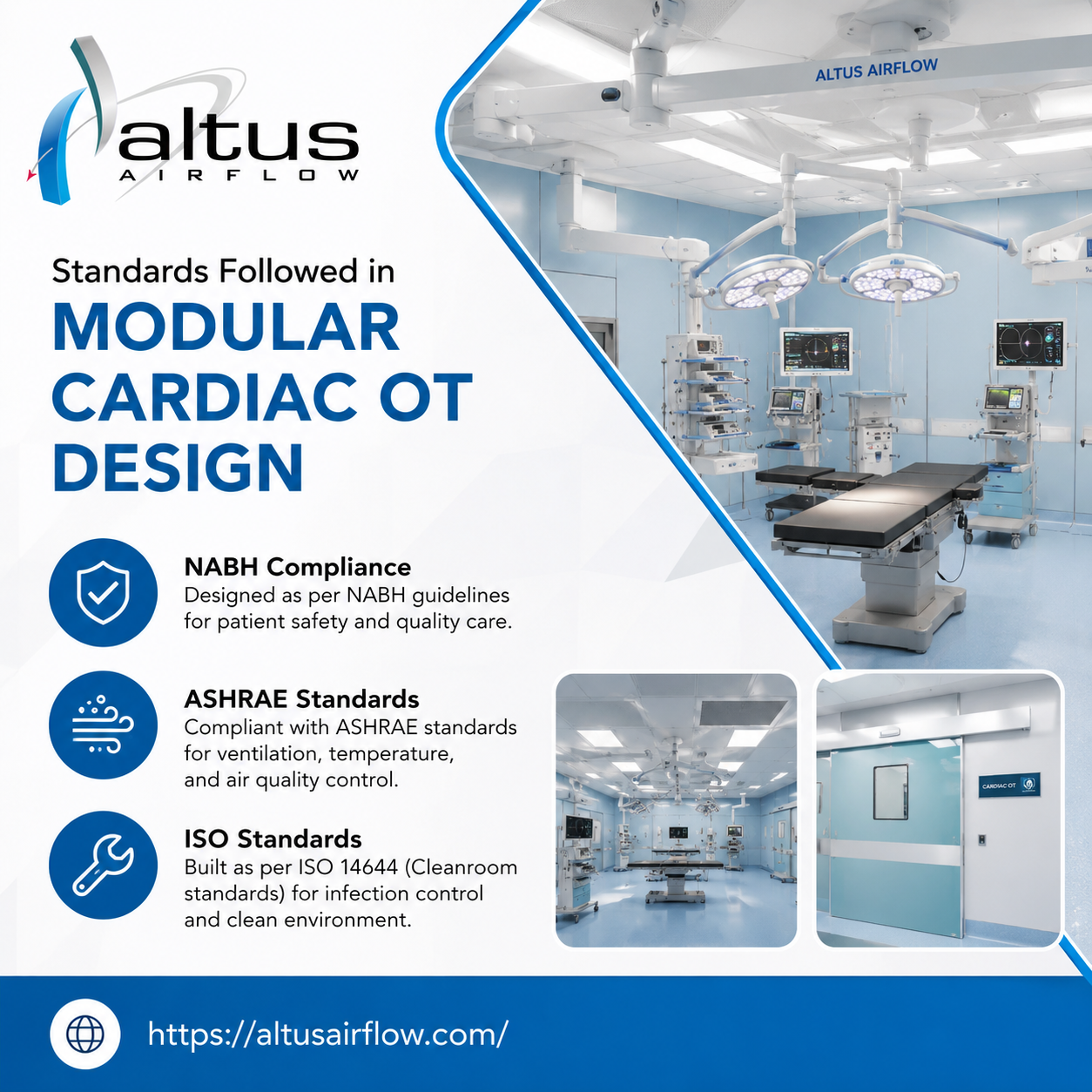
What Standards Are Followed in Modular Cardiac OT Design?
Introduction
Modern hospitals are increasingly investing in advanced surgical infrastructure to improve patient safety, operational efficiency, and clinical outcomes. Among the most critical healthcare facilities are cardiac operation theatres, where complex cardiovascular procedures are performed. A Modular Cardiac Operation Theatre is designed to provide a highly controlled, sterile, and technologically advanced environment that supports these demanding surgeries. However, achieving such an environment requires strict adherence to various national and international standards. These standards govern every aspect of operation theatre design, including architecture, HVAC systems, air quality, infection control, electrical safety, medical gas systems, cleanroom performance, and environmental monitoring. By following established guidelines, hospitals can ensure that their cardiac OTs meet regulatory requirements while providing safe and effective surgical environments.
The design of a cardiac operation theatre is far more complex than that of a conventional healthcare room. Because cardiac surgeries involve high-risk procedures, open surgical fields, and prolonged operating times, even minor environmental issues can affect patient safety. Therefore, modular cardiac OT design is based on carefully defined standards that help maintain consistency, reliability, and quality.
Understanding Modular Cardiac OT Design
A modular operation theatre is a prefabricated surgical environment built using advanced engineering systems and specialized materials.
Its primary objectives include:
- Infection prevention
- Environmental control
- Patient safety
- Workflow efficiency
- Regulatory compliance
Standards help ensure these objectives are achieved consistently.
Why Standards Matter in Cardiac Operation Theatres
Cardiac surgeries demand exceptional precision and cleanliness.
Standards provide:
- Design consistency
- Performance benchmarks
- Safety requirements
- Quality assurance
Compliance helps hospitals maintain reliable surgical environments.
NABH Guidelines
One of the most widely followed standards in healthcare infrastructure is provided by the National Accreditation Board for Hospitals & Healthcare Providers.
NABH guidelines address:
- Patient safety
- Infection control
- Facility design
- Quality management
These guidelines play a major role in cardiac OT planning.
Importance of NABH Compliance
Hospitals pursuing accreditation must ensure their operation theatres align with NABH requirements.
Benefits include:
- Improved credibility
- Better quality management
- Enhanced patient confidence
Compliance demonstrates commitment to healthcare excellence.
ISO Standards in Modular OT Design
International Organization for Standardization (ISO) standards influence many aspects of operation theatre engineering.
Relevant ISO standards may cover:
- Quality management
- Environmental systems
- Medical infrastructure
ISO compliance supports consistency and operational reliability.
Cleanroom Standards
A Modular Cardiac Operation Theatre often incorporates cleanroom principles to maintain high levels of air cleanliness.
Cleanroom standards focus on:
- Particle control
- Air filtration
- Environmental monitoring
These standards help reduce contamination risks.
Air Quality Standards
Air quality is one of the most important considerations in cardiac OT design.
Standards define acceptable levels for:
- Airborne particles
- Microbial contamination
- Ventilation performance
Maintaining proper air quality supports infection prevention.
HVAC Design Standards
HVAC systems are essential for environmental control.
Design standards govern:
- Airflow patterns
- Temperature control
- Humidity regulation
- Pressure differentials
These parameters help maintain stable surgical environments.
HEPA Filtration Requirements
HEPA filtration is a standard feature in modern cardiac operation theatres.
Standards specify:
- Filtration efficiency
- Air cleanliness levels
- Maintenance procedures
HEPA filters support contamination control.
Laminar Airflow Standards
Many cardiac OTs use laminar airflow systems.
Standards guide:
- Airflow velocity
- Air distribution
- Coverage areas
Proper implementation helps maintain sterility around the surgical field.
Positive Pressure Requirements
Positive pressure systems are critical in operation theatres.
Standards ensure:
- Clean air flows outward
- Contaminated air remains outside
- Environmental integrity is maintained
Pressure control supports infection prevention.
Temperature Standards
Temperature regulation is essential for patient safety and equipment performance.
Guidelines establish acceptable temperature ranges to:
- Support surgical procedures
- Improve comfort
- Maintain environmental stability
Consistent temperatures enhance OT performance.
Humidity Standards
Humidity control is necessary for both infection prevention and equipment protection.
Standards define humidity levels that help:
- Prevent microbial growth
- Reduce static electricity
- Improve environmental consistency
Balanced humidity supports reliable operation.
Air Changes Per Hour (ACH)
Air change requirements are a key aspect of OT design.
Standards specify minimum air changes per hour to:
- Remove contaminants
- Maintain cleanliness
- Improve air circulation
Proper ACH levels contribute to a safer environment.
Medical Gas Pipeline Standards
Cardiac surgeries require reliable medical gas systems.
Standards cover:
- Pipeline installation
- Gas outlet placement
- Safety measures
- Monitoring systems
Compliance ensures uninterrupted gas delivery.
Electrical Safety Standards
Electrical systems must meet strict safety requirements.
Standards address:
- Power distribution
- Grounding systems
- Equipment protection
- Emergency power supplies
Electrical reliability is essential during surgery.
Isolated Power System Guidelines
Many operation theatres use isolated power systems.
Benefits include:
- Reduced electrical hazards
- Enhanced patient protection
- Improved equipment safety
Standards ensure proper implementation and performance.
Emergency Power Backup Requirements
Cardiac surgeries cannot tolerate power interruptions.
Standards require:
- UPS systems
- Backup generators
- Emergency circuits
These measures support operational continuity.
OT Lighting Standards
Surgical lighting must provide excellent visibility.
Standards define requirements related to:
- Illumination levels
- Shadow control
- Color rendering
Proper lighting supports surgical precision.
Wall Panel Standards
Modular wall systems must meet healthcare-specific requirements.
Standards focus on:
- Smooth surfaces
- Durability
- Cleanability
- Antimicrobial performance
Proper wall materials improve hygiene.
Flooring Standards
Operation theatre flooring must support safety and cleanliness.
Standards typically require:
- Seamless construction
- Anti-static properties
- Chemical resistance
These features help maintain sterile conditions.
Fire Safety Regulations
Fire protection is a critical element of OT design.
Relevant standards address:
- Fire alarms
- Smoke detection
- Emergency exits
- Fire-resistant materials
Compliance protects patients and staff.
Environmental Monitoring Standards
Environmental monitoring helps verify OT performance.
Monitoring systems typically track:
- Air pressure
- Temperature
- Humidity
- Air quality
Continuous monitoring supports quality assurance.
Infection Control Guidelines
Infection control standards influence nearly every aspect of OT design.
These standards help ensure:
- Sterile environments
- Controlled airflow
- Effective filtration
Strong infection-control measures improve patient safety.
Equipment Integration Standards
Modern cardiac OTs contain advanced medical equipment.
Design standards ensure:
- Proper spacing
- Safe installation
- Functional integration
This improves workflow and operational efficiency.
Accessibility and Ergonomic Standards
Operation theatres must support efficient movement of staff and equipment.
Design considerations include:
- Room layout
- Accessibility
- Workflow optimization
Ergonomic planning improves productivity and safety.
Validation and Testing Requirements
Before commissioning, operation theatres undergo extensive testing.
Validation may include:
- Airflow verification
- Pressure testing
- HVAC performance checks
- Electrical inspections
Testing confirms compliance with design standards.
Documentation and Quality Control
Standards require comprehensive documentation throughout the project.
This includes:
- Design records
- Validation reports
- Maintenance schedules
Proper documentation supports regulatory compliance.
Sustainability Considerations
Modern healthcare facilities increasingly focus on sustainability.
Design standards may encourage:
- Energy-efficient systems
- Resource conservation
- Sustainable materials
These practices reduce operational costs and environmental impact.
Future Trends in Cardiac OT Standards
As healthcare technologies evolve, standards continue to advance.
Future developments may include:
- Smart environmental controls
- AI-based monitoring systems
- Enhanced cleanroom technologies
- Digital compliance platforms
These innovations will further improve OT performance.
Why Compliance Is Essential
Compliance is not simply a regulatory requirement.
It provides:
- Improved patient safety
- Better surgical outcomes
- Enhanced reliability
- Long-term operational efficiency
Hospitals benefit significantly from adhering to established standards.
Conclusion
A properly designed Modular Cardiac Operation Theatre depends on strict adherence to recognized standards throughout planning, construction, validation, and operation. Organizations such as Altus Airflow specialize in delivering advanced healthcare infrastructure solutions that integrate environmental control systems, cleanroom engineering, and modular OT technologies. By partnering with experienced providers like Altus Airflow, hospitals can establish world-class cardiac operation theatres that meet modern healthcare requirements and support long-term clinical excellence.
FAQs
1. What standards are followed in a Modular Cardiac Operation Theatre?
A Modular Cardiac Operation Theatre typically follows NABH guidelines, ISO standards, cleanroom standards, HVAC requirements, infection-control regulations, medical gas standards, and electrical safety guidelines.
2. Why are NABH standards important for cardiac OTs?
NABH standards help ensure patient safety, quality management, infection control, and regulatory compliance.
3. What role do HEPA filters play in OT standards?
HEPA filters help maintain air cleanliness by removing airborne particles and contaminants.
4. Why is positive pressure required in operation theatres?
Positive pressure prevents contaminated air from entering the surgical area and supports infection control.
5. Are HVAC systems regulated by healthcare standards?
Yes, HVAC systems must meet standards related to airflow, temperature, humidity, and air quality.
Read Our Previous Blog --------------->Why is andrology room design important for fertility clinics?

 عربي
عربي