


 SPARK Website
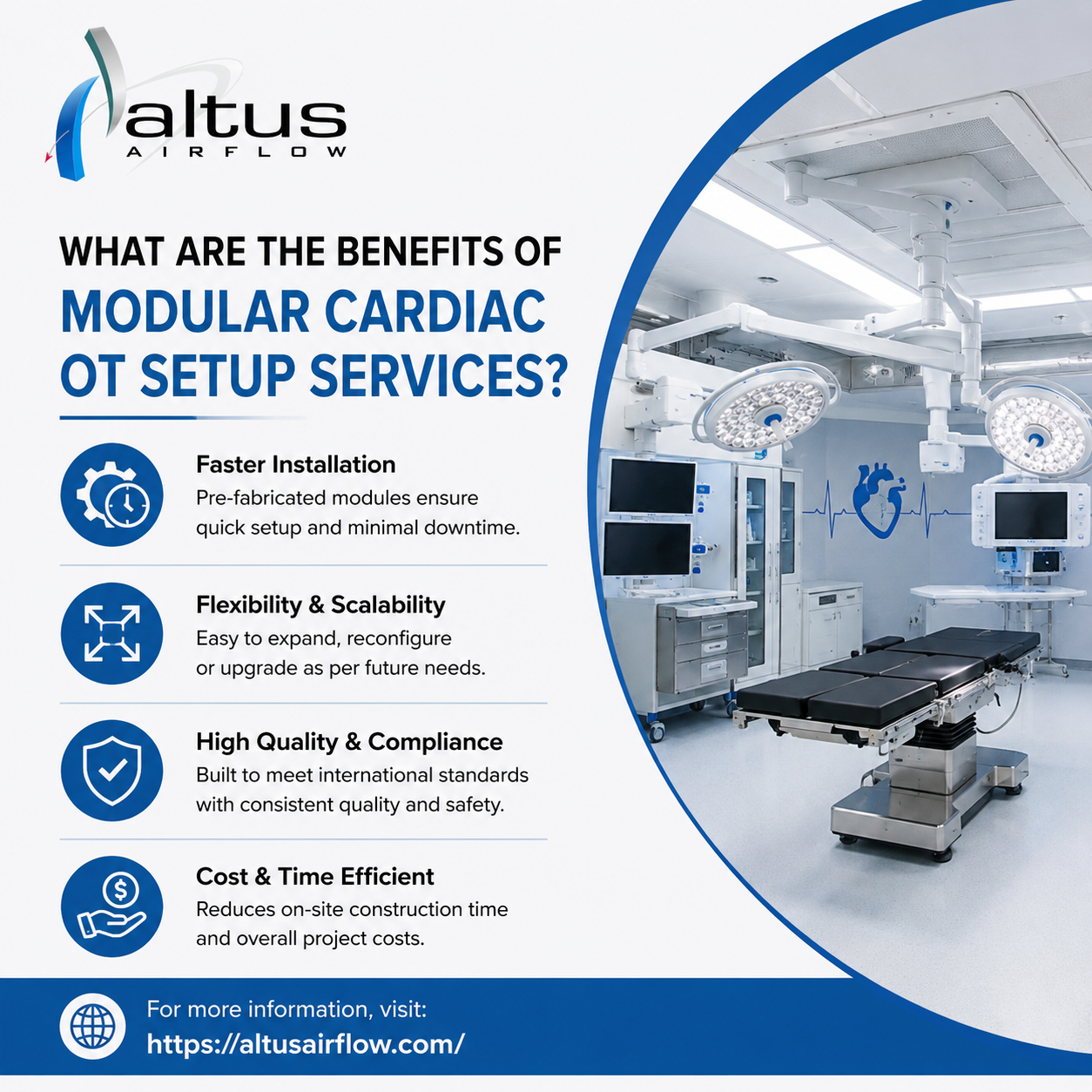
What Are the Benefits of Modular Cardiac OT Setup Services?
Introduction
The healthcare industry has witnessed significant advancements in surgical infrastructure, especially in cardiac care. Modern hospitals require highly specialized operation theatres that ensure patient safety, infection control, workflow efficiency, and technological integration. Modular Cardiac OT Setup Services have emerged as a preferred solution for healthcare facilities looking to establish advanced cardiac operation theatres with superior functionality and compliance. These services cover every aspect of operation theatre development, including planning, engineering, HVAC integration, modular construction, medical gas systems, and environmental controls.
Cardiac surgeries are among the most complex medical procedures performed in hospitals. They demand precision, sterile conditions, reliable infrastructure, and seamless coordination between surgical teams and medical equipment. Traditional operation theatre construction often involves multiple contractors and lengthy project timelines. In contrast, modular cardiac OT solutions provide an integrated and efficient approach that improves quality, reduces construction time, and enhances long-term operational performance.
Understanding Modular Cardiac OT Setup Services
A modular cardiac operation theatre is a specialized surgical facility developed using prefabricated components and integrated engineering systems.
These services typically include:
- Design and planning
- HVAC installation
- HEPA filtration systems
- Laminar airflow integration
- Electrical infrastructure
- Medical gas pipeline systems
- Validation and testing
The objective is to create a safe, efficient, and technologically advanced surgical environment.
Faster Project Completion
One of the most significant advantages of Modular Cardiac OT Setup Services is faster project execution.
Since many components are manufactured off-site and assembled on-site, hospitals benefit from:
- Reduced construction time
- Better scheduling
- Faster operational readiness
This allows healthcare facilities to begin serving patients sooner.
Improved Infection Control
Infection prevention is a critical concern during cardiac surgeries.
Modular operation theatres incorporate advanced infection-control technologies, including:
- HEPA filtration
- Laminar airflow systems
- Positive pressure environments
- Antimicrobial wall surfaces
These features help reduce the risk of surgical site infections.
Superior Air Quality Management
Air quality directly affects patient safety and surgical outcomes.
Modern cardiac OTs utilize sophisticated HVAC systems to maintain:
- Clean air
- Controlled temperature
- Stable humidity
- Proper airflow patterns
These environmental controls create safer surgical conditions.
HEPA Filtration Benefits
HEPA filters play an essential role in maintaining sterile operation theatres.
Their benefits include:
- Removal of airborne particles
- Reduced microbial contamination
- Improved air cleanliness
HEPA filtration helps support infection-free surgical environments.
Enhanced Laminar Airflow Performance
Laminar airflow systems provide continuous filtered air over the operating area.
Advantages include:
- Reduced contamination risks
- Improved sterile conditions
- Better airflow consistency
These systems are widely used in advanced cardiac surgery facilities.
Positive Pressure Protection
Positive pressure systems prevent contaminated air from entering the operation theatre.
Benefits include:
- Cleaner environments
- Better infection control
- Enhanced patient safety
Positive pressure is a standard feature of modern modular OTs.
Better Quality Control
Factory-manufactured modular components are produced under controlled conditions.
This results in:
- Consistent quality
- Precise manufacturing
- Reduced installation errors
Better quality control contributes to long-term reliability.
Customized Design Solutions
Every hospital has unique requirements.
Modular Cardiac OT Setup Services allow facilities to customize:
- Layouts
- Equipment placement
- Workflow design
- Infrastructure systems
Customized solutions improve operational efficiency.
Optimized Workflow Efficiency
Cardiac surgeries require smooth movement of staff, equipment, and supplies.
Modular OT planning focuses on:
- Equipment accessibility
- Surgical team coordination
- Emergency access routes
Efficient workflows improve procedural performance.
Seamless Equipment Integration
Modern cardiac surgeries depend on advanced medical technologies.
Modular solutions facilitate the integration of:
- Surgical pendants
- Imaging systems
- Monitoring equipment
- Operating tables
Proper integration enhances usability and efficiency.
Reliable HVAC System Performance
HVAC systems are among the most important components of a cardiac OT.
These systems regulate:
- Air quality
- Temperature
- Humidity
- Pressure differentials
Reliable HVAC performance supports patient safety and compliance.
Improved Temperature Control
Maintaining stable temperatures is essential during cardiac procedures.
Benefits include:
- Better patient comfort
- Equipment protection
- Staff efficiency
Consistent temperature control improves overall OT performance.
Effective Humidity Management
Humidity levels affect both equipment performance and infection control.
Proper humidity management helps:
- Reduce microbial growth
- Prevent static electricity
- Protect sensitive devices
This contributes to a stable surgical environment.
Advanced Medical Gas Infrastructure
Cardiac surgeries rely heavily on medical gas systems.
Modular OT projects include:
- Oxygen pipelines
- Medical air systems
- Vacuum systems
- Monitoring devices
Integrated infrastructure improves operational reliability.
Enhanced Electrical Safety
Cardiac OTs require dependable electrical systems.
Modern installations include:
- Isolated power systems
- Dedicated circuits
- Surge protection
- Emergency power supplies
Reliable electrical infrastructure supports uninterrupted surgical procedures.
UPS and Backup Power Integration
Unexpected power failures can disrupt surgeries.
Modular setups incorporate:
- UPS systems
- Backup generators
- Emergency circuits
These features ensure continuous operation.
Compliance with Healthcare Standards
Hospitals must meet strict regulatory requirements.
Modular cardiac OT projects are designed to comply with:
- NABH guidelines
- ISO standards
- Healthcare engineering regulations
Compliance supports accreditation and quality assurance.
Improved Durability and Longevity
Modular construction materials are selected for healthcare applications.
Benefits include:
- Resistance to wear
- Easy maintenance
- Long service life
Durable materials reduce long-term costs.
Easy Cleaning and Maintenance
Operation theatres require frequent cleaning and sanitization.
Modular surfaces are designed for:
- Easy disinfection
- Smooth cleaning processes
- Reduced contamination accumulation
These features support infection-control programs.
Reduced Construction Disruption
Hospitals often remain operational during infrastructure upgrades.
Modular construction minimizes:
- Noise
- Dust
- Operational interruptions
This allows healthcare facilities to continue providing services.
Scalability for Future Expansion
Healthcare technology continues to evolve.
Modular designs support:
- Equipment upgrades
- Additional services
- Future expansion
Scalability protects long-term investments.
Environmental Monitoring Capabilities
Modern operation theatres include monitoring systems that track:
- Air pressure
- Temperature
- Humidity
- Air quality
Continuous monitoring helps maintain compliance and performance.
Cost Efficiency
Although advanced, modular projects often provide cost advantages through:
- Reduced construction time
- Lower maintenance costs
- Improved operational efficiency
Long-term savings enhance return on investment.
Better Risk Management
Integrated planning helps reduce project risks associated with:
- Design conflicts
- Installation errors
- System incompatibilities
This improves project success rates.
Professional Testing and Validation
Before commissioning, all systems undergo comprehensive testing.
Validation procedures may include:
- Airflow testing
- Pressure verification
- HVAC performance checks
- Electrical inspections
Testing ensures readiness for clinical use.
Enhanced Patient Safety
Patient safety remains the primary objective of any cardiac OT.
Modular solutions contribute through:
- Improved infection control
- Reliable infrastructure
- Environmental stability
- Advanced monitoring systems
These factors support better surgical outcomes.
Future-Ready Surgical Infrastructure
Healthcare facilities require infrastructure that can adapt to emerging technologies.
Modular cardiac OTs provide:
- Flexible designs
- Technology integration capabilities
- Long-term scalability
Future-ready facilities remain competitive and efficient.
Why Hospitals Prefer Modular Solutions
Hospitals increasingly choose modular cardiac operation theatres because they provide:
- Faster implementation
- Superior quality
- Better compliance
- Improved efficiency
- Enhanced patient safety
These benefits make modular solutions a smart investment.
Conclusion
Modular cardiac OT setup services provide hospitals with a comprehensive solution for developing advanced surgical environments that prioritize patient safety, infection control, operational efficiency, and regulatory compliance. Through integrated HVAC systems, HEPA filtration, laminar airflow, modular construction, medical gas infrastructure, electrical systems, and environmental monitoring technologies, these services help create reliable and future-ready operation theatres. The result is improved surgical performance, reduced project complexity, and enhanced long-term value.
FAQs
1. What are the benefits of Modular Cardiac OT Setup Services?
Modular Cardiac OT Setup Services provide faster project completion, improved infection control, superior air quality management, regulatory compliance, equipment integration, and enhanced patient safety.
2. Why are modular cardiac OTs preferred over conventional OTs?
They offer quicker installation, better quality control, easier maintenance, and improved operational efficiency.
3. Do modular cardiac OTs include HEPA filtration systems?
Yes, HEPA filtration is commonly integrated to maintain clean air and reduce contamination risks.
4. How do modular cardiac OTs improve infection control?
They use HEPA filters, laminar airflow systems, positive pressure environments, and antimicrobial materials.
5. Are modular cardiac OTs compliant with healthcare regulations?
Yes, they are typically designed to meet NABH, ISO, and healthcare engineering standards.
Read Our Previous Blog ---------------> Why are HEPA filters used in andrology labs?

 عربي
عربي