


 SPARK Website
Ultra High Definition Surgical Display Market Trends, Demand and Forecast Report 2025–2033
Market Size
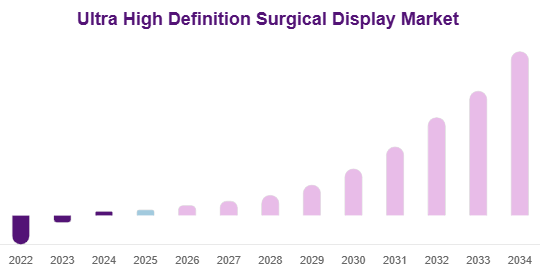
The global Ultra High Definition Surgical Display Market size was USD 146.64 billion in 2024 and is projected to grow from USD 155.97 billion in 2025 to USD 238.12 billion by 2033.
The market is expected to expand at a CAGR of 5.43% during the forecast period from 2025 to 2033.
Full Report: https://reedintelligence.com/market-analysis/ultra-high-definition-surgical-display-market
Introduction
The Ultra High Definition Surgical Display Market is witnessing significant growth due to the increasing adoption of advanced visualization technologies in modern healthcare facilities. Ultra high definition (UHD) surgical displays provide exceptional image clarity, enhanced color accuracy, and superior visualization during minimally invasive and complex surgical procedures. These displays enable surgeons to achieve improved precision, better decision-making, and enhanced patient outcomes.
As hospitals and surgical centers continue investing in advanced operating room technologies, demand for UHD surgical displays is increasing across various medical specialties. The integration of 4K and higher-resolution imaging systems, along with advancements in endoscopic and robotic-assisted surgery, is creating substantial growth opportunities for the market.
Market Drivers
Increasing Adoption of Minimally Invasive Surgeries
The growing preference for minimally invasive surgical procedures is a major driver of the Ultra High Definition Surgical Display Market. These procedures require highly detailed visual information, making UHD displays essential for accurate surgical navigation and precision.
Advancements in Medical Imaging Technologies
Continuous improvements in medical imaging systems, including endoscopy, laparoscopy, and robotic-assisted surgical platforms, are supporting demand for high-performance surgical displays capable of delivering superior image quality.
Growing Demand for Precision Surgery
Healthcare providers are increasingly focused on improving surgical outcomes and reducing procedural complications. UHD surgical displays provide enhanced visualization that supports greater surgical accuracy and operational efficiency.
Expansion of Healthcare Infrastructure
Investments in modern hospitals, specialty clinics, and advanced operating rooms are contributing to market growth. Emerging economies are also increasing healthcare expenditures to improve access to advanced surgical technologies.
Market Challenges
High Equipment Costs
Ultra high definition surgical displays involve significant acquisition and installation expenses. Budget limitations may restrict adoption among smaller healthcare facilities and developing regions.
Integration Complexity
The integration of UHD displays with existing imaging equipment, surgical systems, and hospital infrastructure can be technically challenging and require additional investments.
Maintenance and Upgrade Costs
Regular maintenance, software updates, and technology upgrades contribute to the total cost of ownership, creating financial considerations for healthcare providers.
Limited Access in Developing Regions
Healthcare institutions in certain developing countries may face challenges related to infrastructure limitations and funding constraints, affecting market penetration.
Request Free Sample: https://reedintelligence.com/market-analysis/ultra-high-definition-surgical-display-market/request-sample
Market Segmentation Analysis
By Resolution Type
4K Surgical Displays
4K surgical displays account for a significant share of the market due to their ability to deliver highly detailed images with exceptional clarity. These displays are widely used in minimally invasive and image-guided surgical procedures.
The segment continues to benefit from increasing adoption across hospitals and surgical centers seeking enhanced visualization capabilities.
8K Surgical Displays
8K surgical displays represent an emerging segment offering even greater image detail and accuracy. Advancements in imaging technologies are expected to support future growth within this segment.
By Display Size
Below 27 Inches
Displays below 27 inches are utilized in compact operating environments where space optimization is important. These systems provide flexibility while maintaining high image quality.
27 to 42 Inches
This segment represents a substantial portion of market demand due to its suitability for a wide range of surgical applications and operating room configurations.
Above 42 Inches
Large-format displays are increasingly utilized in advanced surgical suites, enabling multiple clinicians to view detailed surgical images simultaneously.
By Application
Endoscopy
Endoscopic procedures require high-resolution imaging for accurate diagnosis and treatment. UHD displays significantly enhance visualization and procedural efficiency.
Laparoscopy
Laparoscopic surgeries rely heavily on detailed visual information. High-definition surgical displays support improved precision and surgeon confidence during procedures.
Robotic-Assisted Surgery
The growing adoption of robotic-assisted surgical systems is generating strong demand for ultra high definition displays that provide real-time, highly detailed visualization.
Neurosurgery
Neurosurgical procedures require exceptional image quality and precision, making UHD displays a critical component of advanced operating environments.
Cardiovascular Surgery
Cardiovascular specialists increasingly utilize UHD visualization systems to improve procedural accuracy and patient safety.
By End User
Hospitals
Hospitals represent the largest end-user segment due to increasing investments in advanced operating rooms and surgical technologies.
Ambulatory Surgical Centers
Ambulatory surgical centers are adopting UHD surgical displays to improve procedural outcomes and enhance operational efficiency.
Specialty Clinics
Specialty healthcare facilities continue investing in advanced imaging technologies to support complex diagnostic and surgical procedures.
Regional Analysis
North America
North America holds a significant share of the Ultra High Definition Surgical Display Market due to advanced healthcare infrastructure, high technology adoption rates, and increasing investments in surgical innovation.
The region benefits from the presence of leading medical device manufacturers and strong healthcare spending.
Europe
Europe remains an important market supported by ongoing modernization of healthcare facilities, growing adoption of minimally invasive procedures, and strong regulatory standards.
Asia-Pacific
Asia-Pacific is expected to witness substantial growth during the forecast period. Expanding healthcare infrastructure, increasing surgical procedure volumes, and rising healthcare investments are driving market expansion.
Latin America
Latin America is gradually adopting advanced surgical technologies, creating opportunities for UHD surgical display manufacturers.
Middle East and Africa
The Middle East and Africa region is experiencing growing demand for advanced healthcare solutions as governments invest in healthcare modernization initiatives.
Top Players Analysis
The Ultra High Definition Surgical Display Market is characterized by strong competition among leading medical technology companies focused on innovation, product development, and global expansion.
1. Sony Corporation
Sony is a prominent provider of medical visualization solutions and offers advanced surgical display systems known for image quality, reliability, and technological innovation.
2. Barco NV
Barco specializes in medical imaging and surgical visualization technologies. The company continues to develop high-performance UHD display solutions for operating room applications.
3. EIZO Corporation
EIZO provides specialized medical display systems designed to deliver accurate image reproduction and exceptional visual performance for surgical environments.
4. Stryker Corporation
Stryker offers integrated surgical visualization systems and continues investing in advanced operating room technologies to enhance procedural outcomes.
5. Olympus Corporation
Olympus leverages its expertise in endoscopy and medical imaging to provide advanced display solutions supporting minimally invasive surgical procedures.
6. LG Electronics
LG develops high-resolution display technologies utilized in healthcare environments requiring superior image clarity and operational reliability.
7. Advantech Co., Ltd.
Advantech focuses on medical-grade display solutions and continues expanding its healthcare technology portfolio through innovation and product development.
8. Novanta Inc.
Novanta delivers advanced visualization technologies and supports the development of next-generation surgical imaging solutions.
Competitive Landscape
The competitive landscape is driven by technological innovation, product differentiation, and strategic partnerships. Manufacturers are focusing on improving display resolution, color accuracy, brightness, and integration capabilities to meet evolving healthcare requirements.
Companies are also investing in artificial intelligence-enabled visualization systems, advanced imaging technologies, and integrated operating room solutions to strengthen their market positions.
Future Outlook
The future of the Ultra High Definition Surgical Display Market appears highly promising due to the continued growth of minimally invasive surgery, robotic-assisted procedures, and advanced medical imaging technologies. Healthcare providers are expected to increase investments in next-generation visualization systems to improve surgical precision and patient outcomes.
Emerging trends such as 8K imaging, artificial intelligence-assisted surgery, and digital operating room integration are likely to create significant opportunities throughout the forecast period.
Conclusion
The Ultra High Definition Surgical Display Market is expected to experience sustained growth through 2033, supported by advancements in surgical visualization, increasing demand for minimally invasive procedures, and expanding healthcare infrastructure. UHD displays have become essential tools for improving surgical accuracy, efficiency, and clinical outcomes.
Despite challenges related to equipment costs and integration complexity, ongoing technological innovation and rising healthcare investments are expected to drive long-term market expansion. The industry's future will be shaped by next-generation imaging technologies, enhanced surgical workflows, and the continued pursuit of precision medicine.

 English