


 SPARK Website
Top Reasons US Businesses Hire Offshore ReactJS Developers in 2026
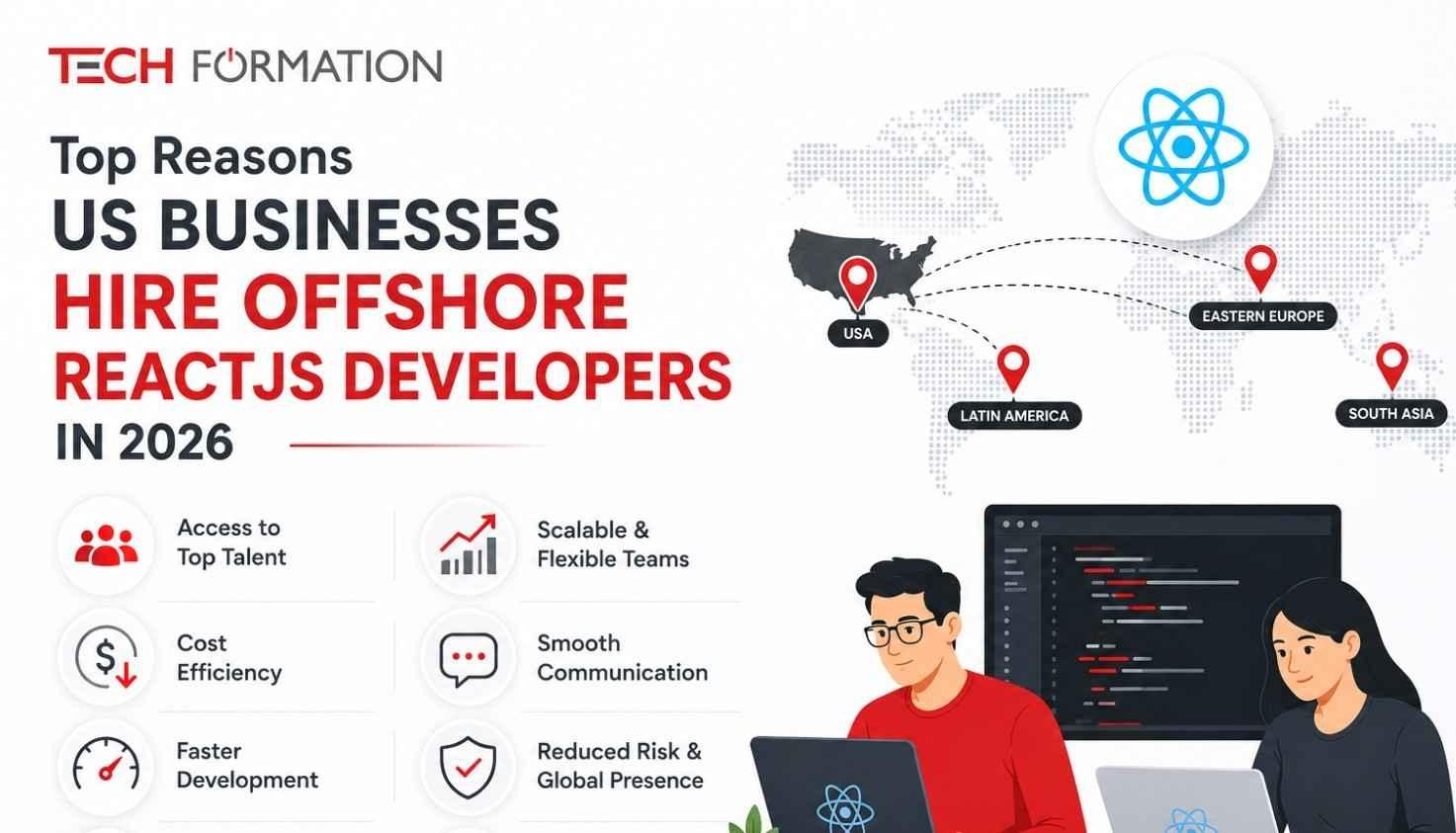
Over the last few years, ReactJS has become a core technology for building modern web applications. From fast-loading eCommerce platforms to dynamic SaaS dashboards, React is often the framework behind the scenes. At the same time, many US companies are looking beyond their local talent pools to build these applications.
The decision to hire offshore ReactJS developers is no longer just about saving money. It is about access, flexibility, speed, and long-term scalability. Businesses are adapting to a global talent market, and React development sits right at the center of that shift. Let’s break down why this trend continues to grow.
The Ongoing Talent Shortage in the US
Finding skilled React developers in the United States can be difficult. The demand for experienced frontend engineers has outpaced supply for years. Startups, mid-sized firms, and enterprise companies are all competing for the same limited group of developers.
When local hiring slows or becomes expensive, offshore development becomes a practical solution. Companies that hire offshore ReactJS developers gain access to a much wider talent pool. Countries in Eastern Europe, Latin America, and South Asia produce thousands of highly trained engineers each year. Many specialize in JavaScript frameworks like React.
Cost Efficiency Without Compromising Quality
Budget always plays a role in hiring decisions. However, offshore hiring is not about choosing the cheapest option. It is about balancing cost and capability. In many offshore markets, developers with strong technical skills and real-world experience can be hired at significantly lower hourly rates than US-based engineers.
This allows companies to:
- Reduce overall development costs
- Invest more in product design and marketing
- Extend project timelines without overspending
The key point is that lower cost does not automatically mean lower quality. Many offshore developers have worked with international clients, follow modern coding standards, and contribute to open-source projects. The difference often lies in the local cost of living, not skill level.
Faster Product Development Cycles
Speed matters in digital business. Whether launching a new platform or adding features to an existing one, companies need to move quickly.
When US firms hire offshore ReactJS developers, they often benefit from overlapping or extended work hours. Teams in different time zones can keep projects moving almost around the clock. While one team signs off for the day, another continues development.
This setup can shorten release cycles and accelerate MVP launches. For startups, especially, this can mean the difference between leading a market and falling behind.
Access to Specialized React Expertise
ReactJS is flexible but also deep. Building simple interfaces is one thing. Architecting complex single-page applications with optimized performance, reusable components, and clean state management is another.
Offshore markets often include developers who specialize specifically in:
- React with TypeScript
- Next.js for server-side rendering
- Redux or Context API for state management
- Performance optimization and testing
By hiring offshore ReactJS developers, companies can tap into niche expertise that may be harder to find locally. This is especially valuable for businesses upgrading legacy systems or scaling high-traffic applications.
Scalability and Flexible Team Models
Hiring full-time in-house staff is a long-term commitment. Sometimes that makes sense. Other times, companies need flexibility. Offshore development offers multiple engagement models. Businesses can build:
- Dedicated remote teams
- Project-based collaborations
- Staff augmentation partnerships
This flexibility allows companies to scale up during heavy development phases and scale down after release. It keeps operations lean without sacrificing output.
Strong Communication and Remote Work Culture
There was a time when offshore hiring raised concerns about communication gaps. That concern has largely faded.
Remote collaboration tools like Slack, Jira, Zoom, and GitHub have standardized workflows across borders. Many offshore developers work in English daily and follow Agile or Scrum methodologies. Clear documentation, sprint planning, and structured reporting have become normal practice.
Risk Diversification and Global Presence
Expanding into global talent markets can also reduce operational risk. Relying entirely on one location for technical resources makes a company vulnerable to local labor shifts or hiring freezes.
Distributed teams create resilience. They also help companies better understand international markets. A diverse development team often brings a broader perspective and fresh problem-solving approaches.
Tech Formation and the Offshore Hiring Model
Tech Formation reflects this shift toward global collaboration. As businesses look to scale efficiently, they are not just searching for developers. They are looking for structured partnerships, transparent communication, and reliable delivery.
A well-managed offshore React team functions as an extension of the company itself. It integrates with internal workflows, shares accountability, and contributes to long-term product evolution rather than short-term fixes.
Final Thoughts
The move toward offshore React development is not a passing trend. It is a response to real business pressures: talent shortages, competitive timelines, and financial discipline. Companies that hire offshore ReactJS developers are not abandoning local teams. In many cases, they are strengthening them by adding global support. The result is often a hybrid structure that combines local leadership with distributed execution.
At its core, this shift reflects a simple idea. Talent is no longer defined by geography. For US businesses building modern web products, the smartest hire might not sit in the same city or even the same country. And increasingly, that is not a limitation. It is an advantage.

 English