


 SPARK Website
Ethyl Methyl Carbonate Industry Growth, Drivers and Challenges Forecast 2025–2033
Market Size
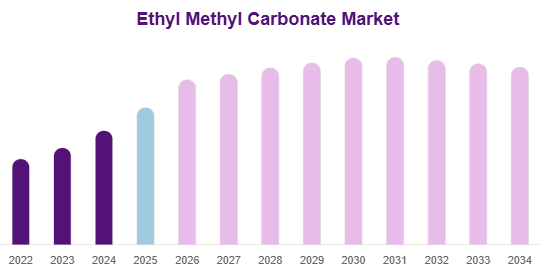
The Ethyl Methyl Carbonate Market size was USD 146.64 billion in 2024 and is projected to grow from USD 155.97 billion in 2025.
The market is expected to reach USD 238.12 billion by 2033, registering a CAGR of 5.43% during the forecast period.
Full Report: https://reedintelligence.com/market-analysis/ethyl-methyl-carbonate-market
Introduction
The Ethyl Methyl Carbonate (EMC) Market is an important segment within the global specialty chemicals and battery electrolyte industry. EMC is an organic carbonate solvent widely used in lithium-ion battery electrolytes due to its excellent electrochemical stability, low viscosity, and high dielectric constant. It plays a crucial role in enhancing battery performance, efficiency, and safety.
With the rapid expansion of electric vehicles (EVs), renewable energy storage systems, and portable electronic devices, the demand for high-performance lithium-ion batteries has surged significantly. This, in turn, has directly boosted the demand for ethyl methyl carbonate as a key electrolyte component.
The market is also benefiting from increasing investments in battery manufacturing infrastructure, technological advancements in energy storage systems, and rising global focus on clean energy transition.
Market Drivers
Rapid growth of electric vehicle industry
One of the primary drivers of the Ethyl Methyl Carbonate Market is the exponential growth of the electric vehicle industry. EMC is widely used in lithium-ion battery electrolytes, which power EVs.
Governments worldwide are promoting EV adoption through subsidies, emission regulations, and infrastructure development, significantly increasing battery production demand.
Expansion of energy storage systems
Energy storage systems (ESS) are becoming critical for balancing renewable energy sources such as solar and wind. EMC-based electrolytes enhance battery efficiency and longevity, making them essential for large-scale energy storage applications.
Rising demand for consumer electronics
Smartphones, laptops, wearable devices, and other portable electronics rely heavily on lithium-ion batteries. The continuous growth in consumer electronics adoption is driving steady demand for EMC.
Technological advancements in battery chemistry
Ongoing research in lithium-ion battery chemistry is improving energy density and charging speed. EMC is an important component in advanced electrolyte formulations, supporting these technological advancements.
Government support for clean energy transition
Global initiatives aimed at reducing carbon emissions and promoting sustainable energy are accelerating battery production and indirectly boosting EMC demand.
Market Challenges
High production cost and raw material dependency
The production of ethyl methyl carbonate involves complex chemical processes and relies on raw materials that can experience price fluctuations, impacting overall production costs.
Environmental and safety concerns
Although EMC is widely used in battery applications, handling and production require strict safety measures due to its chemical nature. Environmental regulations also add compliance challenges.
Supply chain instability
Global supply chain disruptions, particularly in chemical manufacturing sectors, can affect raw material availability and transportation, impacting EMC market stability.
Competition from alternative solvents
Alternative carbonate solvents used in battery electrolytes pose competitive pressure, especially as research continues into more efficient or cost-effective materials.
Get Your Sample Report Here: https://reedintelligence.com/market-analysis/ethyl-methyl-carbonate-market/request-sample
Market Segmentation Analysis
By application
Lithium-ion battery electrolytes
The largest application segment for EMC is lithium-ion battery electrolytes. EMC improves ionic conductivity and battery efficiency, making it essential in EV batteries and energy storage systems.
Capacitors and electronic components
EMC is also used in specialized capacitors and electronic components where stable dielectric properties are required.
Industrial chemical applications
Beyond batteries, EMC is used as a solvent in various chemical processes due to its stability and low toxicity profile.
By end-use industry
Automotive industry
The automotive sector is the dominant consumer due to increasing electric vehicle production. EMC is a key electrolyte component in EV battery packs.
Electronics industry
The electronics sector utilizes EMC in batteries for smartphones, laptops, and other portable devices.
Energy and power sector
Renewable energy storage systems rely on lithium-ion batteries incorporating EMC-based electrolytes.
Industrial sector
Industrial applications include chemical processing and specialized manufacturing uses.
By purity grade
Battery-grade EMC
Battery-grade EMC dominates the market due to stringent requirements for high purity and performance in lithium-ion batteries.
Industrial-grade EMC
Industrial-grade EMC is used in chemical and non-battery applications where ultra-high purity is not required.
Regional Analysis
Asia-Pacific
Asia-Pacific dominates the EMC market due to strong lithium-ion battery manufacturing bases in China, Japan, and South Korea. The region is a global hub for EV production and electronics manufacturing.
North America
North America is experiencing rapid growth driven by EV adoption and government support for clean energy technologies.
Europe
Europe’s strong regulatory push toward carbon neutrality is boosting demand for electric vehicles and energy storage systems, supporting EMC market growth.
Rest of the World
Emerging economies in Latin America and the Middle East are gradually increasing adoption of energy storage and electronic technologies.
Competitive Landscape and Top Players Analysis
The Ethyl Methyl Carbonate Market is moderately consolidated with key players focusing on capacity expansion, technological innovation, and strategic partnerships.
1. BASF SE
BASF SE is a leading global chemical company producing high-quality electrolyte solvents, including ethyl methyl carbonate, for battery applications.
2. Mitsubishi Chemical Corporation
Mitsubishi Chemical Corporation plays a significant role in battery materials production, offering advanced carbonate solvents for lithium-ion batteries.
3. UBE Corporation
UBE Corporation is a major supplier of electrolyte solvents and chemicals used in energy storage and electronic applications.
4. Shandong Shida Shenghua Chemical Group
This company is one of the largest producers of carbonate solvents in Asia, supplying EMC for battery manufacturing industries.
5. Lotte Chemical Corporation
Lotte Chemical is actively involved in producing high-purity chemical materials used in lithium-ion battery electrolytes.
6. Mitsubishi Gas Chemical Company
The company focuses on high-performance chemical solutions including electrolyte components for advanced battery systems.
7. Tokyo Chemical Industry (TCI)
TCI supplies high-purity EMC for research and industrial applications in battery chemistry.
8. Merck KGaA
Merck KGaA provides specialty chemicals including carbonate solvents used in scientific and industrial applications.
9. Guangzhou Tinci Materials Technology
Tinci Materials is a leading battery chemical supplier, specializing in electrolyte materials for EV batteries.
10. Capchem Technology
Capchem Technology focuses on electrolyte production and advanced chemical solutions for lithium-ion battery manufacturers.
Future Outlook
The Ethyl Methyl Carbonate Market is expected to witness strong and sustained growth through 2033, driven by the global transition toward electric mobility and renewable energy systems. Increasing investments in battery manufacturing capacity, coupled with technological advancements in electrolyte formulations, will continue to support market expansion.
The rising penetration of electric vehicles, coupled with the growing need for high-performance energy storage systems, will remain the primary growth catalyst. Additionally, innovation in sustainable and high-efficiency battery chemistries is expected to further strengthen EMC demand.
Conclusion
The Ethyl Methyl Carbonate Market is a critical component of the global battery materials ecosystem. Its role in lithium-ion battery electrolytes makes it indispensable in the era of electric vehicles and renewable energy storage. Despite challenges such as raw material cost fluctuations and environmental regulations, the market is positioned for robust long-term growth driven by technological innovation and clean energy adoption.

 English