


 SPARK Website
How Does a Cardiac Modular OT Differ from a Traditional OT?
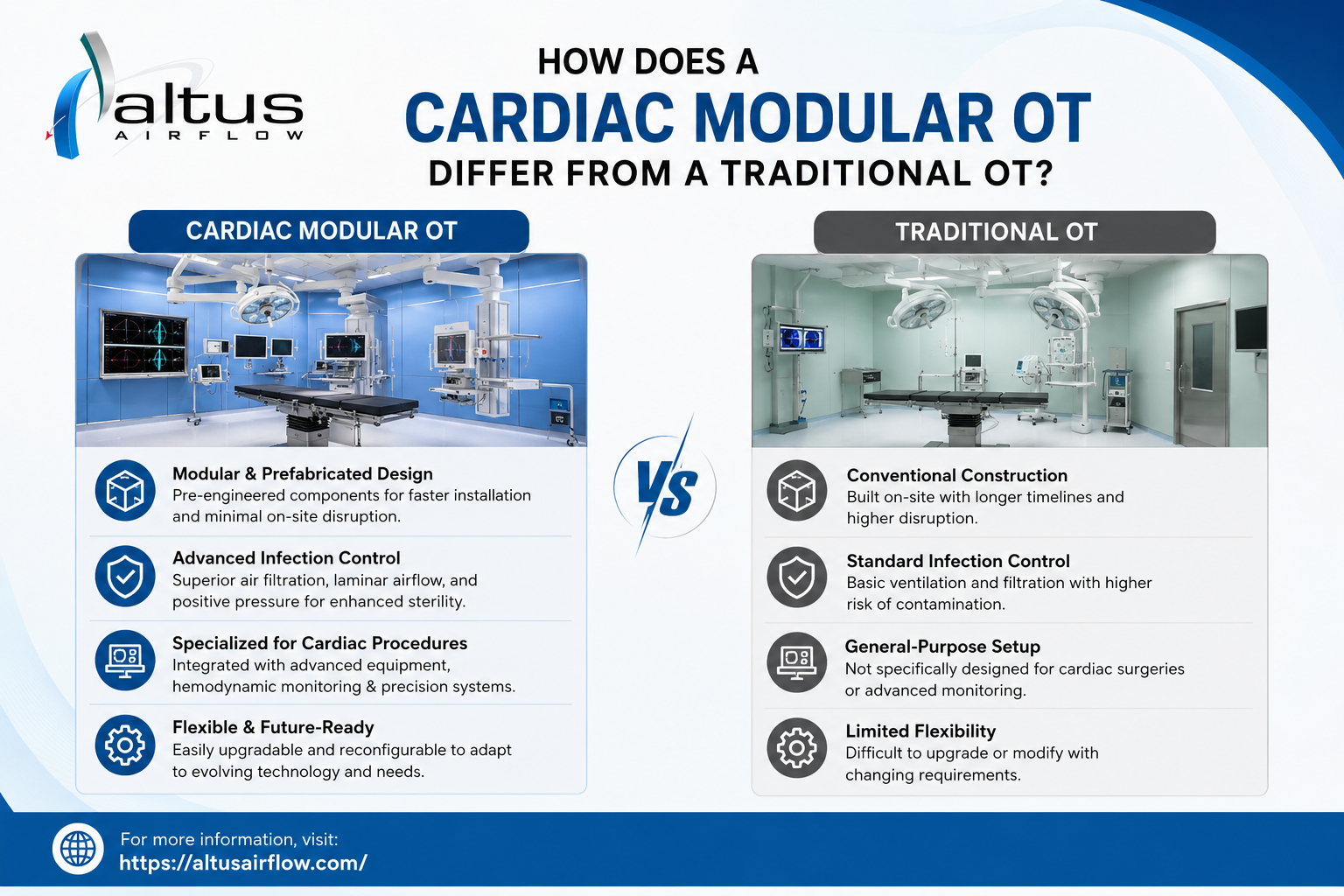
Introduction
The healthcare industry has witnessed significant advancements in surgical infrastructure over the past few decades. As hospitals strive to improve patient outcomes, infection control, and operational efficiency, the design of operation theatres has evolved considerably. One of the most important innovations in modern healthcare facilities is the Cardiac Modular Operation Theatre. Unlike traditional operation theatres, modular cardiac OTs are engineered using advanced technologies, cleanroom concepts, and integrated healthcare systems to create highly controlled surgical environments. Organizations such as Altus Airflow contribute to the development of modern cardiac surgical facilities by providing specialized engineering solutions that support sterility, safety, and operational excellence.
Cardiac surgeries are among the most complex and sensitive procedures performed in hospitals. These surgeries require precise environmental control, advanced equipment integration, and strict infection prevention measures. Traditional operation theatres, while functional, often lack the technological sophistication and environmental control capabilities required for modern cardiac procedures. In contrast, modular cardiac OTs are specifically designed to meet the demanding requirements of cardiac surgery through advanced construction methods, superior airflow management, and intelligent infrastructure integration.
Understanding Traditional Operation Theatres
Traditional operation theatres are constructed using conventional building methods.
They typically include:
- Brick-and-mortar walls
- Standard ventilation systems
- Basic lighting infrastructure
- Conventional electrical systems
While these theatres can support many surgical procedures, they may not provide the level of environmental control required for advanced cardiac surgeries.
Understanding a Cardiac Modular Operation Theatre
A Cardiac Modular Operation Theatre is a highly engineered surgical environment designed using prefabricated modular components and advanced healthcare technologies.
These theatres include:
- HEPA filtration systems
- Laminar airflow systems
- Modular wall panels
- Integrated HVAC systems
- Smart monitoring technologies
The primary goal is to create a sterile and controlled environment that enhances patient safety and surgical performance.
Construction Method Differences
One of the biggest differences lies in the construction approach.
Traditional OT Construction
Traditional operation theatres are built using:
- Cement
- Brick walls
- Conventional finishing materials
Construction can take several months and often causes disruptions within the hospital.
Modular OT Construction
Modular operation theatres use prefabricated components manufactured in controlled environments.
Benefits include:
- Faster installation
- Better quality control
- Reduced construction time
Hospitals can begin operations much sooner.
Infection Control Capabilities
Infection prevention is one of the most important factors in cardiac surgery.
Traditional OT
Traditional OTs may rely on basic ventilation systems and standard cleaning procedures.
Challenges include:
- Limited contamination control
- Air quality inconsistencies
- Higher maintenance requirements
Modular OT
A Cardiac Modular Operation Theatre is designed with advanced infection control technologies.
Features include:
- HEPA filtration
- Laminar airflow
- Positive pressure systems
- Antimicrobial surfaces
These systems significantly reduce contamination risks.
Air Quality Management
Air quality directly impacts surgical outcomes.
Traditional OT Air Systems
Traditional theatres often use standard air conditioning systems.
Limitations include:
- Inconsistent airflow
- Limited particle control
- Reduced filtration efficiency
Modular OT Air Systems
Modular cardiac OTs use advanced HVAC systems designed specifically for surgical environments.
Benefits include:
- Controlled airflow
- Stable temperature
- Balanced humidity
- Superior air filtration
This creates a safer surgical environment.
HEPA Filtration Integration
HEPA filtration is a major distinction between modern and traditional OTs.
HEPA filters remove:
- Dust particles
- Bacteria
- Airborne contaminants
Traditional OTs may not always have advanced filtration systems integrated into their infrastructure.
Laminar Airflow Technology
Laminar airflow systems are commonly used in modular cardiac OTs.
These systems:
- Deliver clean air uniformly
- Minimize turbulence
- Protect the surgical field
Traditional operation theatres often rely on mixed airflow systems that provide less contamination control.
Environmental Monitoring
Modern cardiac surgeries require continuous environmental monitoring.
Traditional OT Monitoring
Monitoring may be limited to:
- Basic temperature checks
- Manual inspections
Modular OT Monitoring
Advanced systems continuously track:
- Air quality
- Pressure levels
- Temperature
- Humidity
Real-time monitoring improves reliability and safety.
Wall and Ceiling Design
Construction materials significantly affect cleanliness and maintenance.
Traditional OT Surfaces
Traditional walls may develop:
- Cracks
- Surface damage
- Difficult-to-clean areas
These issues can compromise hygiene.
Modular OT Surfaces
Modular systems use seamless wall and ceiling panels that are:
- Hygienic
- Durable
- Easy to clean
This improves infection control.
Electrical System Integration
Cardiac surgeries require uninterrupted power.
Traditional OT Electrical Systems
Conventional systems may require multiple upgrades to support modern equipment.
Modular OT Electrical Systems
Integrated infrastructure includes:
- UPS systems
- Backup generators
- Isolated power systems
Reliable power improves patient safety.
Medical Gas Pipeline Systems
Medical gases are essential during cardiac procedures.
Modular OTs include integrated pipelines for:
- Oxygen
- Medical air
- Vacuum systems
Traditional OTs may require separate retrofitting for these systems.
Lighting Technology
Lighting quality directly affects surgical precision.
Traditional OT Lighting
Older systems may have:
- Limited adjustability
- Uneven illumination
Modular OT Lighting
Modern surgical lights provide:
- Shadow-free illumination
- Energy efficiency
- Adjustable intensity
Improved lighting supports surgical accuracy.
Workflow Optimization
Efficient workflows improve OT performance.
Traditional Layouts
Traditional operation theatres may have limitations in:
- Equipment placement
- Staff movement
- Space utilization
Modular Layouts
A Cardiac Modular Operation Theatre is designed to optimize workflow.
Benefits include:
- Better accessibility
- Improved coordination
- Enhanced productivity
Compliance with Healthcare Standards
Modern healthcare facilities must meet strict regulatory requirements.
Traditional OTs
Older facilities may require significant modifications to meet updated standards.
Modular OTs
Modular systems are designed to comply with:
- NABH guidelines
- ISO standards
- Healthcare engineering regulations
Compliance improves accreditation readiness.
Energy Efficiency
Energy consumption is a major consideration for hospitals.
Traditional OTs
Older systems may consume more energy due to inefficient infrastructure.
Modular OTs
Energy-efficient technologies include:
- LED lighting
- Smart HVAC controls
- Automated monitoring systems
Reduced energy usage lowers operating costs.
Maintenance Requirements
Maintenance impacts long-term performance and costs.
Traditional OTs
Repairs often involve:
- Extensive downtime
- Structural modifications
Modular OTs
Modular components allow:
- Quick repairs
- Easy replacements
- Reduced maintenance costs
Flexibility and Future Expansion
Healthcare technology continues to evolve.
Traditional OTs
Expansion often requires extensive renovation.
Modular OTs
Flexible designs allow:
- Equipment upgrades
- Infrastructure expansion
- Layout modifications
This supports future growth.
Smart Technology Integration
Modern surgical facilities increasingly depend on digital systems.
Modular OTs support:
- Automated controls
- Digital monitoring
- Equipment connectivity
Traditional theatres may require additional infrastructure for integration.
Patient Safety Improvements
Every aspect of a modular OT is designed to enhance patient safety.
Benefits include:
- Reduced infection risks
- Better environmental control
- Reliable equipment operation
Patient safety remains the primary objective.
Long-Term Cost Benefits
Although modular OTs involve a larger initial investment, they offer long-term savings through:
- Reduced maintenance
- Energy efficiency
- Lower infection-related costs
These financial benefits make them a valuable investment.
Enhanced Hospital Reputation
Hospitals with advanced surgical facilities often gain:
- Greater patient trust
- Better clinical outcomes
- Improved healthcare reputation
Modern infrastructure strengthens healthcare credibility.
Why Hospitals Are Transitioning to Modular Cardiac OTs
Healthcare facilities are increasingly replacing traditional OTs with modular systems because they provide:
- Better infection control
- Improved compliance
- Faster construction
- Superior operational performance
These advantages support modern healthcare delivery.
Conclusion
A professionally designed Cardiac Modular Operation Theatre provides hospitals with a future-ready solution that improves patient safety, surgical outcomes, and regulatory compliance. Companies like Altus Airflow contribute to the development of advanced cardiac surgical facilities through innovative engineering solutions and cleanroom technologies. By partnering with experienced healthcare infrastructure providers such as Altus Airflow, hospitals can establish high-performance surgical environments that support long-term healthcare excellence and superior patient care.
FAQs
1. What is a Cardiac Modular Operation Theatre?
A Cardiac Modular Operation Theatre is a technologically advanced surgical environment designed with modular construction, cleanroom systems, HEPA filtration, and integrated healthcare infrastructure.
2. How is a modular OT different from a traditional OT?
A modular OT offers better infection control, advanced airflow systems, faster construction, and integrated technologies compared to traditional OTs.
3. Why is laminar airflow important in modular cardiac OTs?
Laminar airflow helps maintain sterile conditions by providing controlled and uniform clean air movement.
4. Are modular cardiac OTs more energy efficient?
Yes, they use smart HVAC systems, LED lighting, and automated controls to reduce energy consumption.
5. Do modular OTs support advanced cardiac surgeries?
Yes, they are specifically designed to support complex cardiac procedures with enhanced safety and environmental control.
Read Our Previous Blog ---------------> What standards are followed by modular cardiac OT manufacturers?

 English