


 SPARK Website
Understanding the Building Blocks of Data Science
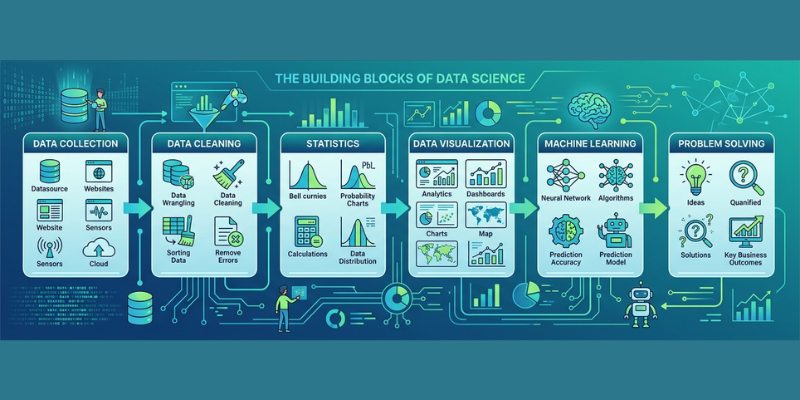
Data Science has become one of the most valuable fields in the modern world. Businesses, governments, and organizations use data to make better decisions and solve complex problems. From predicting customer behavior to improving healthcare services, data science helps turn raw information into meaningful insights. If you are beginning your journey in this field and want structured guidance, enroll in a Data Science Course in Trivandrum at FITA Academy to strengthen your foundational skills and build confidence in learning.
To understand data science, it is important to know the key components that work together. These building blocks help professionals collect, process, analyze, and interpret data. When combined effectively, they create a strong foundation for successful data-driven decision-making.
Data Collection and Data Sources
Every data science project starts with data collection. Data can come from many sources, including websites, mobile applications, surveys, sensors, and business systems. The caliber of the gathered data has a direct impact on the quality of the outcomes.
Data scientists must ensure that the data is relevant, accurate, and complete. Reliable data helps organizations gain trustworthy insights and avoid incorrect conclusions. Understanding where data comes from is the first step toward creating meaningful analyses.
Data Cleaning and Preparation
Raw data is often incomplete, inconsistent, or filled with errors. Before analysis begins, the data must be cleaned and prepared. This process involves handling missing values, removing duplicates, and correcting inaccuracies.
Data preparation also includes organizing information into a format that is easy to analyze. Numerous professionals dedicate a considerable amount of their time to data preparation, as well-maintained datasets result in more dependable results. A strong understanding of this stage helps beginners appreciate the importance of quality data in every project.
Statistics and Mathematics
The basis of data science is rooted in statistics and mathematics. These subjects help professionals identify patterns, measure relationships, and make predictions based on available information.
Concepts such as probability, averages, distributions, and hypothesis testing allow data scientists to interpret data effectively. Mathematics also supports machine learning algorithms and optimization techniques. If you are looking to deepen your understanding of these concepts, join a Data Science Course in Kochi to gain practical exposure while developing stronger analytical thinking skills.
Without statistical knowledge, it becomes difficult to understand whether observed trends are meaningful or simply random occurrences. This is why statistics remains a critical building block in the field.
Data Visualization
Data visualization helps transform complex information into easy-to-understand charts, graphs, and dashboards. Visual representations facilitate the recognition of trends, patterns, and atypical observations.
Good visualizations help stakeholders understand insights quickly. They also improve communication between technical teams and decision-makers. By presenting data visually, organizations can make informed choices with greater confidence.
Machine Learning Fundamentals
Machine learning plays a crucial role in contemporary data science. It enables systems to learn from data and improve performance without being explicitly programmed for every task.
Machine learning models identify patterns within datasets and use them to make predictions or classifications. Common applications include recommendation systems, fraud detection, and demand forecasting. Understanding machine learning fundamentals helps learners see how data science creates intelligent solutions for real-world challenges.
The Importance of Problem Solving
Data science is not only about tools and techniques. It is also about solving business and real-world problems. Data scientists must understand objectives, ask the right questions, and interpret results accurately.
Strong problem-solving skills help professionals connect data insights to practical actions. This ability ensures that data science projects create value rather than simply generating reports.
The building blocks of data science include data collection, data preparation, statistics, mathematics, visualization, machine learning, and problem-solving. Each component plays a vital role in transforming raw information into actionable insights. By mastering these fundamentals, beginners can build a strong foundation for future learning and career growth. If you are ready to advance your expertise, you can take a Data Science Course in Pune to expand your knowledge through hands-on learning and industry-focused training opportunities.
Also check: The Fundamentals of Hypothesis Testing for Data Insights

 عربي
عربي